Wani Ishfaq Ahmad, Kumar Vijay, Verma Susheel, Tasleem Jan Arif, Rather Irfan A
Department of Botany, Baba Ghulam Shah Badshah University, Rajouri 185234, India.
Department of Biotechnology, Yeungnam University, Gyeongsan, Gyeongbuk 38541, Korea.
Plants (Basel). 2020 Nov 25;9(12):1644. doi: 10.3390/plants9121644.
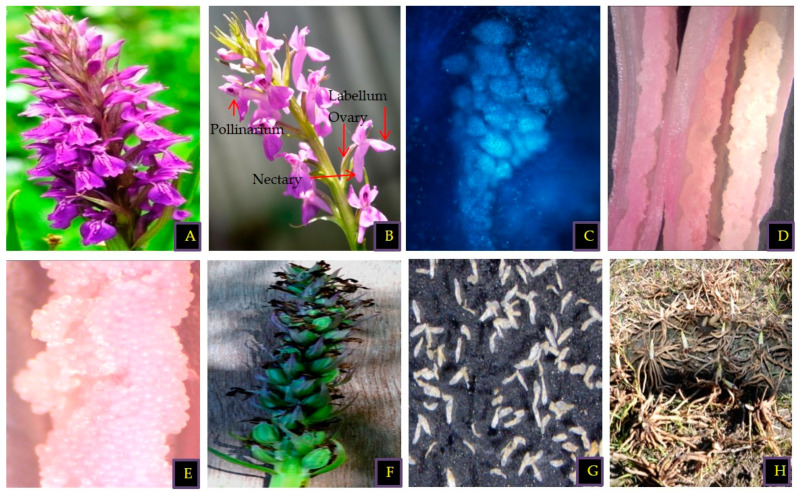
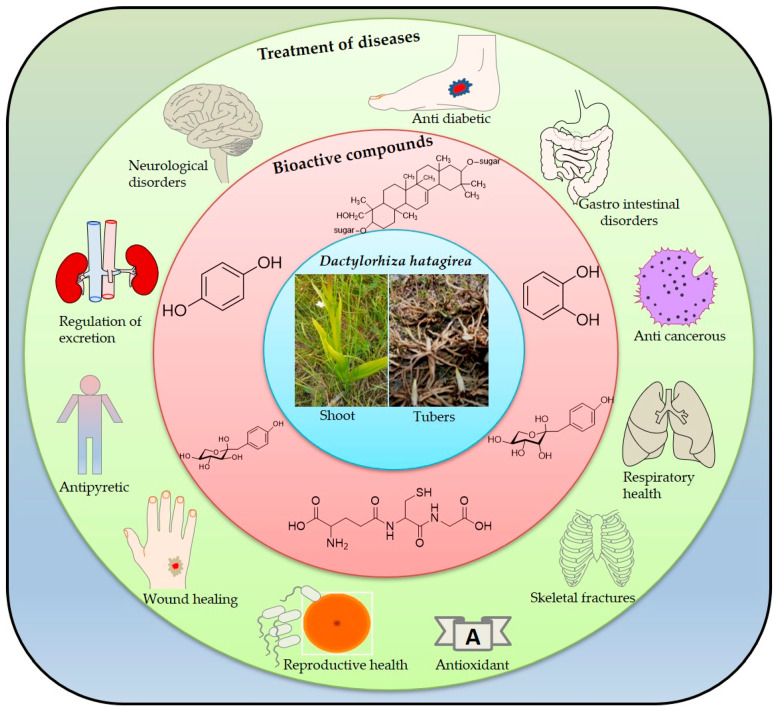
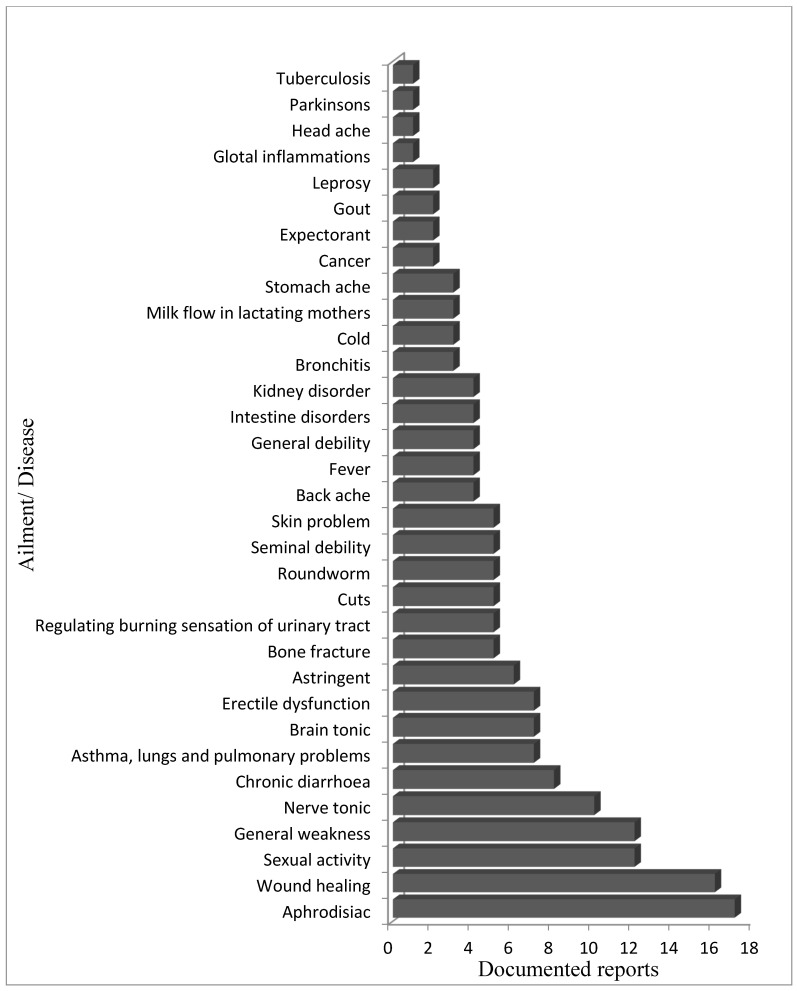
(Orchidaceae) is a perennial herb inhabiting sub-alpine to alpine regions, ranging at elevations between 2500 and 5000 m.a.s.l. With palmately lobed rhizome and lanceolate leaves having a sheathing leaf base, it bears pink flowers with purple-colored notches and a curved spur. It finds wide use in ayurveda, siddha, unani, and folk medicine in curing disorders of the circulatory, respiratory, nervous, digestive, skeletal, and reproductive systems, besides boosting the immune system to fight infectious diseases. Secondary metabolites such as dactylorhins A-E, dactyloses A-B, and others exhibit a wide spectrum of pharmacological activities (antioxidant, antimicrobial, antiseptic, anticancer, and immune enhancing activities). Its use as a dietary supplement was found to be beneficial in increasing testosterone levels, resulting in improved sexual desire and arousal. Incessant overexploitation of this medicinally important herb has resulted in the dwindling of its populations in the wild, which has resulted in its classification as a critically endangered plant species. Efforts involving mass reproduction through in vitro (through tissue culture) and in vivo (by vegetative propagation) means are currently being made to maintain the germplasm of this critically endangered orchid. Holding immense significance in clinical research and drug discovery, work on the genomic front (transcriptomics) has recently been carried out to discover the wealth of unexplored genetic information for this perennial herb. The present study is aimed at reviewing different aspects of the orchid to present collective (summarized) information on this medicinally important herb in the present, particularly its botany, ethnobotanical uses, phytochemistry, and pharmacognosy, along with the strategies that need to be adopted to prevent its overexploitation in natural habitats.
(兰科)是一种多年生草本植物,生长于亚高山至高山地区,海拔范围在2500至5000米之间。它有掌状浅裂的根茎和披针形叶子,叶基部有叶鞘,开粉色花,有紫色缺刻和弯曲的距。它在阿育吠陀医学、悉达医学、尤那尼医学和民间医学中广泛用于治疗循环系统、呼吸系统、神经系统、消化系统、骨骼系统和生殖系统的疾病,还能增强免疫系统以对抗传染病。次生代谢产物如石斛素A - E、石斛糖A - B等具有广泛的药理活性(抗氧化、抗菌、防腐、抗癌和免疫增强活性)。人们发现将其用作膳食补充剂有助于提高睾酮水平,从而改善性欲和性唤起。这种具有重要药用价值的草本植物因持续过度开发,导致其野生种群数量减少,已被列为极度濒危植物物种。目前正在通过体外(组织培养)和体内(营养繁殖)方式进行大规模繁殖,以保存这种极度濒危兰花的种质资源。在临床研究和药物发现方面具有重要意义,最近在基因组领域(转录组学)开展了工作,以发现这种多年生草本植物尚未被探索的丰富遗传信息。本研究旨在综述该兰花的不同方面,以呈现关于这种重要药用植物的综合(总结)信息,特别是其植物学、民族植物学用途、植物化学和生药学,以及为防止其在自然栖息地被过度开发而需采取的策略。