Department of Clinical and Experimental Medicine, University of Pisa, Pisa, Italy.
Institute of Cardiovascular Science, University College London, London, UK.
Eur Heart J. 2021 Jul 8;42(26):2590-2604. doi: 10.1093/eurheartj/ehaa857.
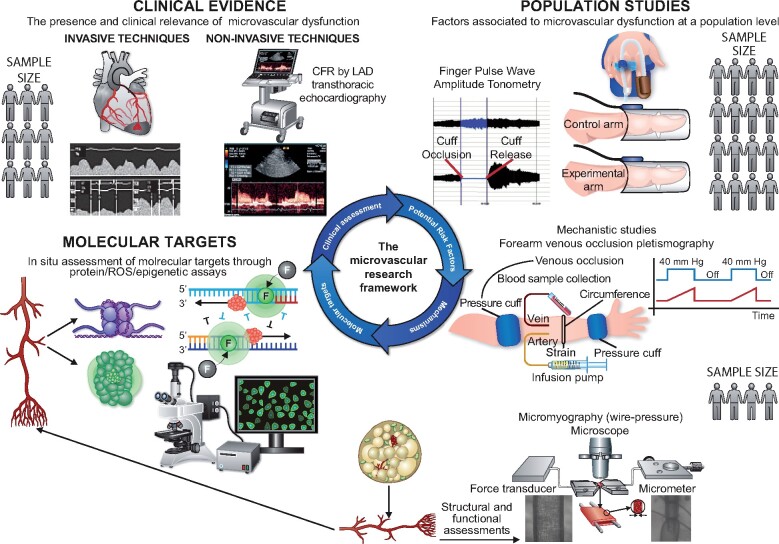
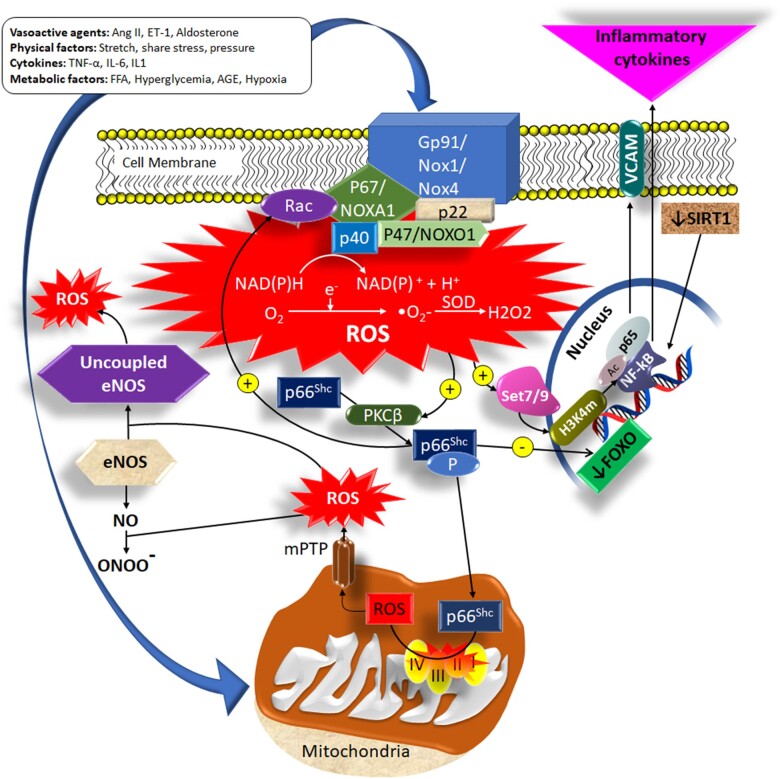
The development of novel, non-invasive techniques and standardization of protocols to assess microvascular dysfunction have elucidated the key role of microvascular changes in the evolution of cardiovascular (CV) damage, and their capacity to predict an increased risk of adverse events. These technical advances parallel with the development of novel biological assays that enabled the ex vivo identification of pathways promoting microvascular dysfunction, providing novel potential treatment targets for preventing cerebral-CV disease. In this article, we provide an update of diagnostic testing strategies to detect and characterize microvascular dysfunction and suggestions on how to standardize and maximize the information obtained from each microvascular assay. We examine emerging data highlighting the significance of microvascular dysfunction in the development CV disease manifestations. Finally, we summarize the pathophysiology of microvascular dysfunction emphasizing the role of oxidative stress and its regulation by epigenetic mechanisms, which might represent potential targets for novel interventions beyond conventional approaches, representing a new frontier in CV disease reduction.
新型非侵入性技术的发展和评估微血管功能障碍的方案标准化阐明了微血管变化在心血管(CV)损害演变中的关键作用,以及它们预测不良事件风险增加的能力。这些技术进步与新型生物检测方法的发展相平行,这些方法使人们能够在体外识别促进微血管功能障碍的途径,为预防脑-CV 疾病提供了新的潜在治疗靶点。在本文中,我们提供了一种更新的诊断检测策略,用于检测和表征微血管功能障碍,并就如何标准化和最大化从每个微血管检测中获得的信息提出了建议。我们研究了新的数据,强调了微血管功能障碍在 CV 疾病表现发展中的重要性。最后,我们总结了微血管功能障碍的病理生理学,强调了氧化应激的作用及其受表观遗传机制的调节,这可能代表超越传统方法的新型干预的潜在靶点,是 CV 疾病减少的新前沿。