Innovation Center for Biomedical Informatics, Georgetown University Medical Center, Washington, DC, USA.
Department of Biomedical Informatics, Vanderbilt University Medical Center, Nashville, Tennessee, USA.
J Am Med Inform Assoc. 2021 Feb 15;28(2):393-401. doi: 10.1093/jamia/ocaa287.
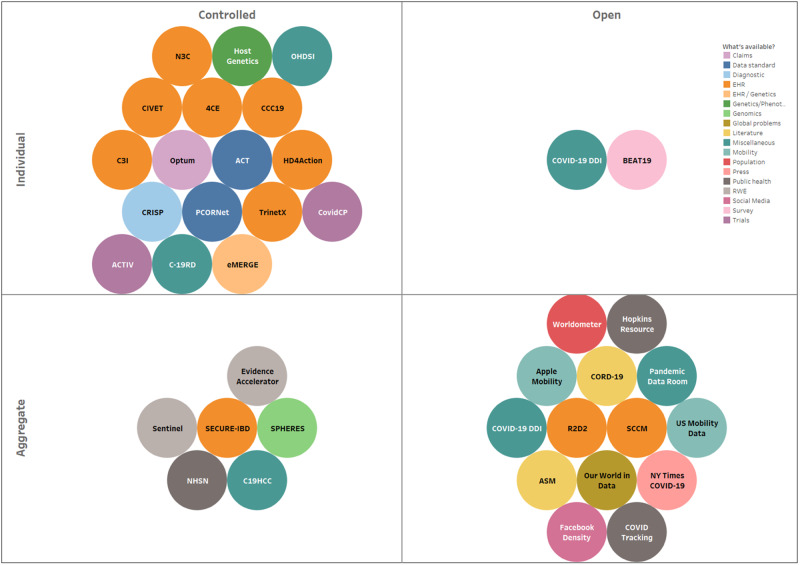
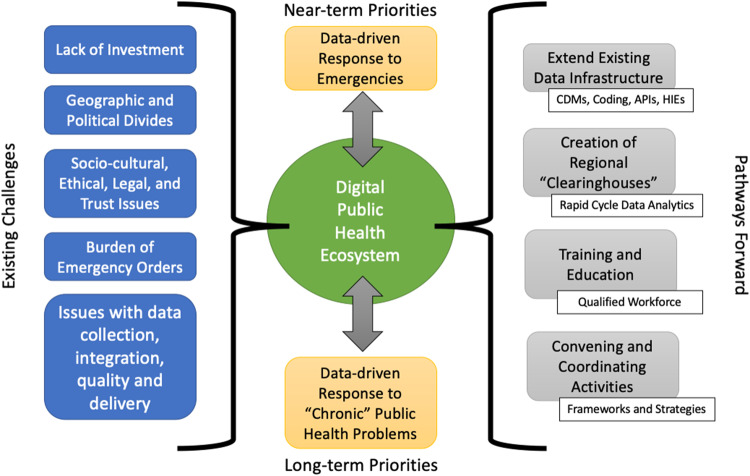
Our goal is to summarize the collective experience of 15 organizations in dealing with uncoordinated efforts that result in unnecessary delays in understanding, predicting, preparing for, containing, and mitigating the COVID-19 pandemic in the US. Response efforts involve the collection and analysis of data corresponding to healthcare organizations, public health departments, socioeconomic indicators, as well as additional signals collected directly from individuals and communities. We focused on electronic health record (EHR) data, since EHRs can be leveraged and scaled to improve clinical care, research, and to inform public health decision-making. We outline the current challenges in the data ecosystem and the technology infrastructure that are relevant to COVID-19, as witnessed in our 15 institutions. The infrastructure includes registries and clinical data networks to support population-level analyses. We propose a specific set of strategic next steps to increase interoperability, overall organization, and efficiencies.
我们的目标是总结 15 个组织在应对美国 COVID-19 大流行过程中因协调不力而导致的不必要延误方面的集体经验。应对措施涉及医疗保健组织、公共卫生部门、社会经济指标以及直接从个人和社区收集的其他信号的数据收集和分析。我们专注于电子健康记录 (EHR) 数据,因为 EHR 可以被利用和扩展以改善临床护理、研究,并为公共卫生决策提供信息。我们概述了当前数据生态系统中的挑战以及我们 15 个机构中与 COVID-19 相关的技术基础设施。该基础设施包括支持人群水平分析的登记处和临床数据网络。我们提出了一系列具体的战略下一步措施,以提高互操作性、整体组织效率。