Systematic Review and Meta-analysis Expert Group (SRMEG), Universal Scientific Education and Research Network (USERN), Tehran, Iran; Research Center for Immunodeficiencies, Children's Medical Center, Tehran University of Medical Sciences, Tehran, Iran.
Research Center for Immunodeficiencies, Children's Medical Center, Tehran University of Medical Sciences, Tehran, Iran; Department of Immunology, School of Medicine, Tehran University of Medical Sciences, Tehran, Iran; Network of Immunity in Infection, Malignancy and Autoimmunity (NIIMA), Universal Scientific Education and Research Network (USERN), Tehran, Iran.
Bioorg Chem. 2021 Jan;106:104490. doi: 10.1016/j.bioorg.2020.104490. Epub 2020 Nov 19.
Since the beginning of the novel coronavirus (SARS-CoV-2) disease outbreak, there has been an increasing interest in finding a potential therapeutic agent for the disease. Considering the matter of time, the computational methods of drug repurposing offer the best chance of selecting one drug from a list of approved drugs for the life-threatening condition of COVID-19. The present systematic review aims to provide an overview of studies that have used computational methods for drug repurposing in COVID-19.
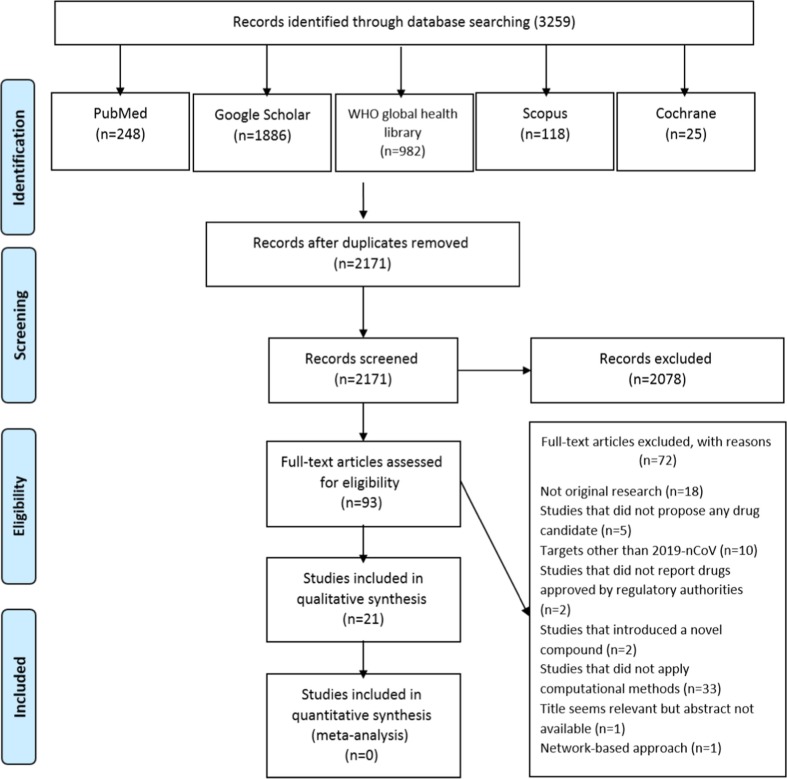
We undertook a systematic search in five databases and included original articles in English that applied computational methods for drug repurposing in COVID-19.
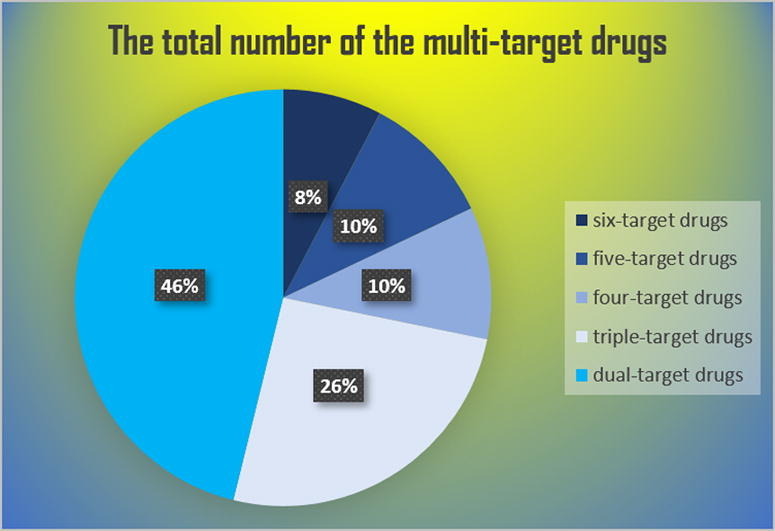
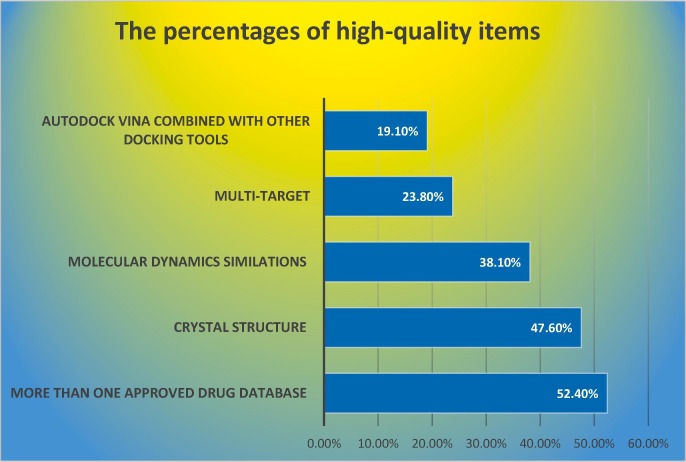
Twenty-one original articles utilizing computational drug methods for COVID-19 drug repurposing were included in the systematic review. Regarding the quality of eligible studies, high-quality items including the use of two or more approved drug databases, analysis of molecular dynamic simulation, multi-target assessment, the use of crystal structure for the generation of the target sequence, and the use of AutoDock Vina combined with other docking tools occurred in about 52%, 38%, 24%, 48%, and 19% of included studies. Studies included repurposed drugs mainly against non-structural proteins of SARS-CoV2: the main 3C-like protease (Lopinavir, Ritonavir, Indinavir, Atazanavir, Nelfinavir, and Clocortolone), RNA-dependent RNA polymerase (Remdesivir and Ribavirin), and the papain-like protease (Mycophenolic acid, Telaprevir, Boceprevir, Grazoprevir, Darunavir, Chloroquine, and Formoterol). The review revealed the best-documented multi-target drugs repurposed by computational methods for COVID-19 therapy as follows: antiviral drugs commonly used to treat AIDS/HIV (Atazanavir, Efavirenz, and Dolutegravir Ritonavir, Raltegravir, and Darunavir, Lopinavir, Saquinavir, Nelfinavir, and Indinavir), HCV (Grazoprevir, Lomibuvir, Asunaprevir, Ribavirin, and Simeprevir), HBV (Entecavir), HSV (Penciclovir), CMV (Ganciclovir), and Ebola (Remdesivir), anticoagulant drug (Dabigatran), and an antifungal drug (Itraconazole).
The present systematic review provides a list of existing drugs that have the potential to influence SARS-CoV2 through different mechanisms of action. For the majority of these drugs, direct clinical evidence on their efficacy for the treatment of COVID-19 is lacking. Future clinical studies examining these drugs might come to conclude, which can be more useful to inhibit COVID-19 progression.
自新型冠状病毒(SARS-CoV-2)疾病爆发以来,人们越来越关注寻找一种治疗该病的潜在治疗药物。考虑到时间因素,药物重定位的计算方法为从一系列已批准的药物中选择一种药物用于 COVID-19 的危及生命的情况提供了最佳机会。本系统评价旨在提供对使用计算方法进行 COVID-19 药物重定位的研究的概述。
我们在五个数据库中进行了系统搜索,并纳入了应用计算方法进行 COVID-19 药物重定位的英文原始文章。
本系统评价共纳入 21 篇利用计算药物方法进行 COVID-19 药物重定位的原始文章。关于合格研究的质量,高质量项目包括使用两种或多种已批准的药物数据库、分子动力学模拟分析、多靶点评估、使用晶体结构生成目标序列以及使用 AutoDock Vina 结合其他对接工具,分别约占纳入研究的 52%、38%、24%、48%和 19%。研究中重新利用的药物主要针对 SARS-CoV2 的非结构蛋白:主要的 3C 样蛋白酶(洛匹那韦、利托那韦、茚地那韦、阿扎那韦、奈非那韦和氯可托龙)、RNA 依赖性 RNA 聚合酶(瑞德西韦和利巴韦林)和木瓜蛋白酶样蛋白酶(霉酚酸、替拉瑞韦、博赛泼维、格拉瑞韦、达芦那韦、氯喹和福莫特罗)。综述显示,通过计算方法重新定位 COVID-19 治疗的最具文献记载的多靶点药物如下:常用于治疗艾滋病/艾滋病的抗病毒药物(阿扎那韦、依非韦伦和多替拉韦利托那韦、拉替拉韦、达芦那韦、洛匹那韦、沙奎那韦、奈非那韦和茚地那韦)、丙型肝炎病毒(格拉瑞韦、洛米夫定、阿舒瑞韦、利巴韦林和西美瑞韦)、乙型肝炎病毒(恩替卡韦)、单纯疱疹病毒(喷昔洛韦)、巨细胞病毒(更昔洛韦)和埃博拉病毒(瑞德西韦)、抗凝药物(达比加群)和抗真菌药物(伊曲康唑)。
本系统评价提供了一份现有药物的清单,这些药物有可能通过不同的作用机制影响 SARS-CoV2。对于这些药物中的大多数,直接的临床证据表明它们对 COVID-19 的治疗效果不足。未来的临床研究检查这些药物可能会得出结论,这可能对抑制 COVID-19 的进展更有用。