Hassan Faiz-Ul, Arshad Muhammad Adeel, Ebeid Hossam M, Rehman Muhammad Saif-Ur, Khan Muhammad Sajjad, Shahid Shehryaar, Yang Chengjian
Key Laboratory of Buffalo Genetics, Breeding and Reproduction Technology, Ministry of Agriculture and Guangxi Buffalo Research Institute, Chinese Academy of Agricultural Sciences, Nanning, China.
Institute of Animal and Dairy Sciences, Faculty of Animal Husbandry, University of Agriculture, Faisalabad, Pakistan.
Front Vet Sci. 2020 Nov 12;7:575801. doi: 10.3389/fvets.2020.575801. eCollection 2020.
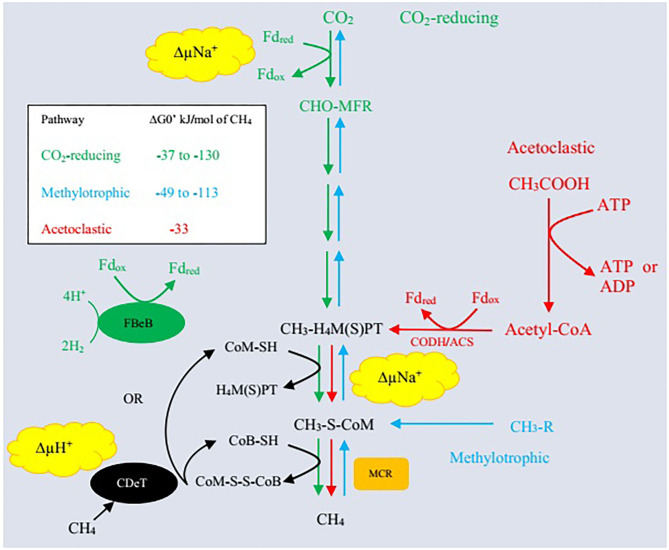
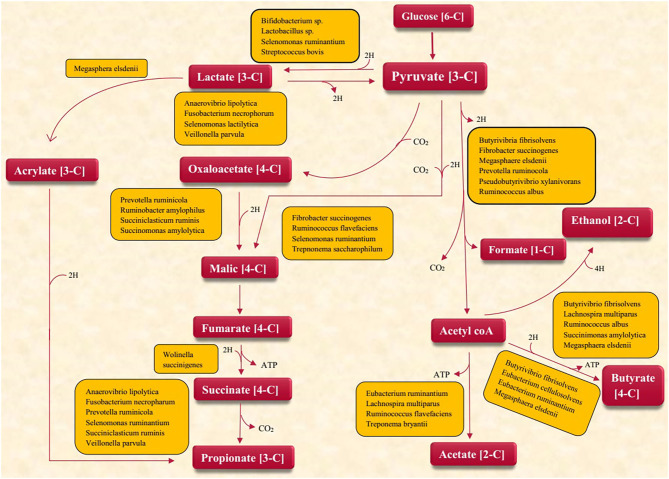
Ruminants inhabit the consortia of gut microbes that play a critical functional role in their maintenance and nourishment by enabling them to use cellulosic and non-cellulosic feed material. These gut microbes perform major physiological activities, including digestion and metabolism of dietary components, to derive energy to meet major protein (65-85%) and energy (ca 80%) requirements of the host. Owing to their contribution to digestive physiology, rumen microbes are considered one of the crucial factors affecting feed conversion efficiency in ruminants. Any change in the rumen microbiome has an imperative effect on animal physiology. Ruminal microbes are fundamentally anaerobic and produce various compounds during rumen fermentation, which are directly used by the host or other microbes. Methane (CH) is produced by methanogens through utilizing metabolic hydrogen during rumen fermentation. Maximizing the flow of metabolic hydrogen in the rumen away from CH and toward volatile fatty acids (VFA) would increase the efficiency of ruminant production and decrease its environmental impact. Understanding of microbial diversity and rumen dynamics is not only crucial for the optimization of host efficiency but also required to mediate emission of greenhouse gases (GHGs) from ruminants. There are various strategies to modulate the rumen microbiome, mainly including dietary interventions and the use of different feed additives. Phytogenic feed additives, mainly plant secondary compounds, have been shown to modulate rumen microflora and change rumen fermentation dynamics leading to enhanced animal performance. Many and studies aimed to evaluate the use of plant secondary metabolites in ruminants have been conducted using different plants or their extract or essential oils. This review specifically aims to provide insights into dietary interactions of rumen microbes and their subsequent consequences on rumen fermentation. Moreover, a comprehensive overview of the modulation of rumen microbiome by using phytogenic compounds (essential oils, saponins, and tannins) for manipulating rumen dynamics to mediate CH emanation from livestock is presented. We have also discussed the pros and cons of each strategy along with future prospective of dietary modulation of rumen microbiome to improve the performance of ruminants while decreasing GHG emissions.
反刍动物体内存在着肠道微生物群落,这些微生物通过使反刍动物能够利用纤维素和非纤维素饲料原料,在其维持生命和获取营养方面发挥着关键的功能作用。这些肠道微生物进行主要的生理活动,包括饮食成分的消化和代谢,以获取能量来满足宿主对主要蛋白质(65 - 85%)和能量(约80%)的需求。由于瘤胃微生物对消化生理的贡献,它们被认为是影响反刍动物饲料转化效率的关键因素之一。瘤胃微生物群落的任何变化都会对动物生理产生重要影响。瘤胃微生物基本上是厌氧的,在瘤胃发酵过程中会产生各种化合物,这些化合物可被宿主或其他微生物直接利用。甲烷(CH)是由产甲烷菌在瘤胃发酵过程中利用代谢氢产生的。使瘤胃中代谢氢的流动最大限度地从产生甲烷转向产生挥发性脂肪酸(VFA),将提高反刍动物的生产效率并减少其对环境的影响。了解微生物多样性和瘤胃动态不仅对于优化宿主效率至关重要,也是调节反刍动物温室气体(GHG)排放所必需的。调节瘤胃微生物群落有多种策略,主要包括饮食干预和使用不同的饲料添加剂。植物源饲料添加剂,主要是植物次生化合物,已被证明可以调节瘤胃微生物区系并改变瘤胃发酵动态,从而提高动物性能。许多研究旨在评估反刍动物中植物次生代谢产物的使用,这些研究使用了不同的植物、其提取物或精油。本综述特别旨在深入了解瘤胃微生物的饮食相互作用及其对瘤胃发酵的后续影响。此外,还全面概述了利用植物源化合物(精油、皂苷和单宁)调节瘤胃微生物群落以控制瘤胃动态从而减少家畜甲烷排放的情况。我们还讨论了每种策略的优缺点以及瘤胃微生物群落饮食调节的未来前景,以提高反刍动物的性能同时减少温室气体排放。