Lai Quirino, Spoletini Gabriele, Mennini Gianluca, Laureiro Zoe Larghi, Tsilimigras Diamantis I, Pawlik Timothy Michael, Rossi Massimo
Hepato-biliary and Organ Transplant Unit, Department of Surgery, Sapienza University of Rome, Rome 00161, Italy.
General Surgery and Liver Transplantation Unit, Fondazione Policlinico Universitario A Gemelli IRCCS, Rome 00100, Italy.
World J Gastroenterol. 2020 Nov 14;26(42):6679-6688. doi: 10.3748/wjg.v26.i42.6679.
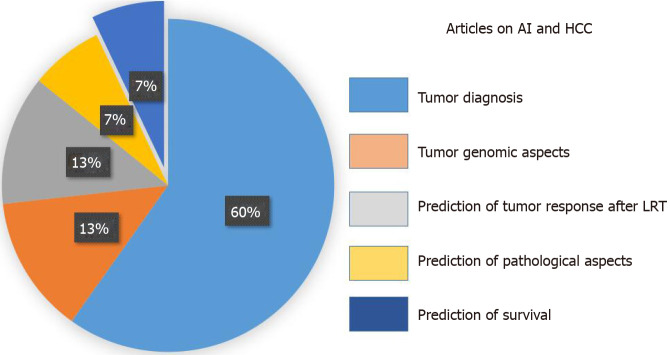
Prediction of survival after the treatment of hepatocellular carcinoma (HCC) has been widely investigated, yet remains inadequate. The application of artificial intelligence (AI) is emerging as a valid adjunct to traditional statistics due to the ability to process vast amounts of data and find hidden interconnections between variables. AI and deep learning are increasingly employed in several topics of liver cancer research, including diagnosis, pathology, and prognosis.
To assess the role of AI in the prediction of survival following HCC treatment.
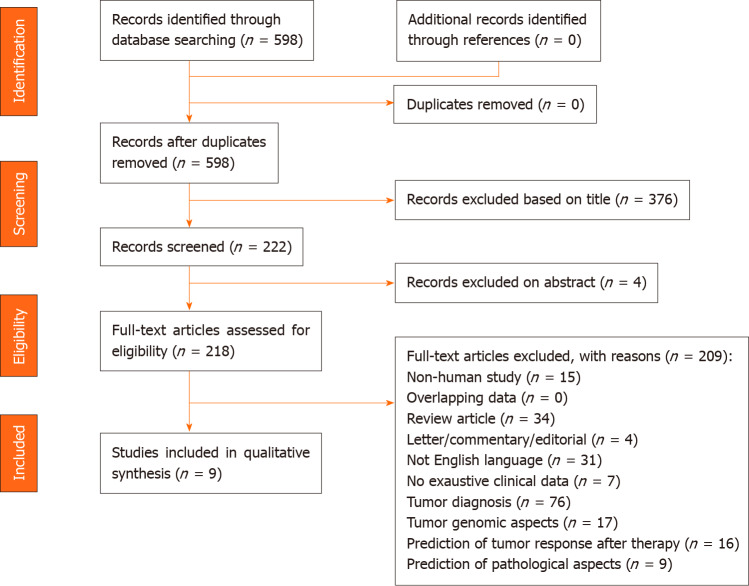
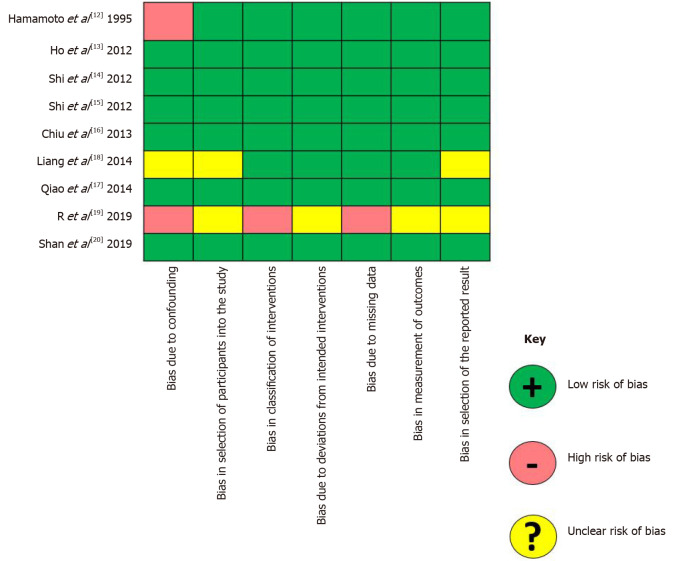
A web-based literature search was performed according to the Preferred Reporting Items for Systemic Reviews and Meta-Analysis guidelines using the keywords "artificial intelligence", "deep learning" and "hepatocellular carcinoma" (and synonyms). The specific research question was formulated following the patient (patients with HCC), intervention (evaluation of HCC treatment using AI), comparison (evaluation without using AI), and outcome (patient death and/or tumor recurrence) structure. English language articles were retrieved, screened, and reviewed by the authors. The quality of the papers was assessed using the Risk of Bias In Non-randomized Studies of Interventions tool. Data were extracted and collected in a database.
Among the 598 articles screened, nine papers met the inclusion criteria, six of which had low-risk rates of bias. Eight articles were published in the last decade; all came from eastern countries. Patient sample size was extremely heterogenous ( = 11-22926). AI methodologies employed included artificial neural networks (ANN) in six studies, as well as support vector machine, artificial plant optimization, and peritumoral radiomics in the remaining three studies. All the studies testing the role of ANN compared the performance of ANN with traditional statistics. Training cohorts were used to train the neural networks that were then applied to validation cohorts. In all cases, the AI models demonstrated superior predictive performance compared with traditional statistics with significantly improved areas under the curve.
AI applied to survival prediction after HCC treatment provided enhanced accuracy compared with conventional linear systems of analysis. Improved transferability and reproducibility will facilitate the widespread use of AI methodologies.
肝细胞癌(HCC)治疗后的生存预测已得到广泛研究,但仍存在不足。由于能够处理大量数据并发现变量之间隐藏的相互联系,人工智能(AI)的应用正成为传统统计方法的有效辅助手段。AI和深度学习在肝癌研究的多个领域中越来越多地被应用,包括诊断、病理学和预后。
评估AI在HCC治疗后生存预测中的作用。
根据系统评价和Meta分析的首选报告项目指南,使用关键词“人工智能”、“深度学习”和“肝细胞癌”(及其同义词)进行基于网络的文献检索。具体的研究问题按照患者(HCC患者)、干预措施(使用AI评估HCC治疗)、对照(不使用AI的评估)和结局(患者死亡和/或肿瘤复发)的结构来制定。作者检索、筛选并审阅了英文文章。使用干预性非随机研究中的偏倚风险工具评估论文质量。数据被提取并收集到一个数据库中。
在筛选的598篇文章中,9篇符合纳入标准,其中6篇偏倚风险率较低。8篇文章发表于过去十年;均来自东方国家。患者样本量差异极大(范围为11至22926)。所采用的AI方法包括6项研究中的人工神经网络(ANN),以及其余3项研究中的支持向量机、人工植物优化和瘤周放射组学。所有测试ANN作用的研究都将ANN的性能与传统统计方法进行了比较。训练队列用于训练神经网络,然后将其应用于验证队列。在所有情况下,AI模型与传统统计方法相比均表现出卓越的预测性能,曲线下面积显著改善。
与传统的线性分析系统相比,应用于HCC治疗后生存预测的AI具有更高的准确性。提高的可转移性和可重复性将有助于AI方法的广泛应用。