Milsom Penelope, Smith Richard, Baker Phillip, Walls Helen
Department of Global Health and Development, Faculty of Public Health and Policy, London School of Hygiene and Tropical Medicine, 15-17 Tavistock Place, Kings Cross, London WC1H 9SH, UK.
College of Medicine and Health, University of Exeter, Magdalen Road, Exeter, EX1 2LU, UK.
Health Policy Plan. 2021 May 17;36(4):493-508. doi: 10.1093/heapol/czaa148.
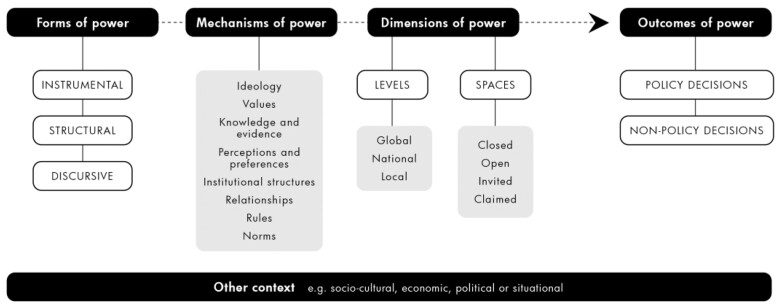
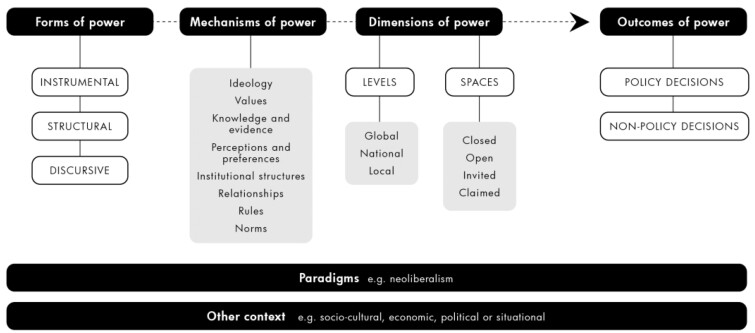
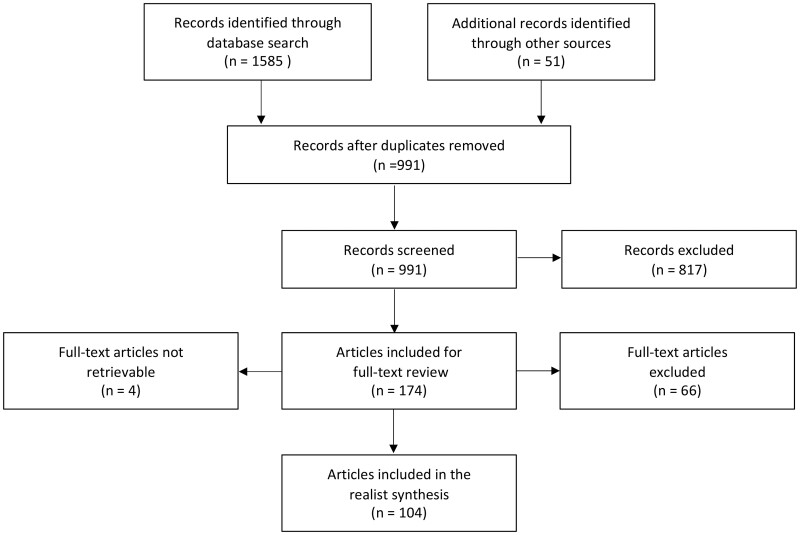
Transnational tobacco, alcohol and ultra-processed food corporations use the international trade regime to prevent policy action on non-communicable diseases (NCDs); i.e. to promote policy 'non-decisions'. Understanding policy non-decisions can be assisted by identifying power operating in relevant decision-making spaces, but trade and health research rarely explicitly engages with theories of power. This realist review aimed to synthesize evidence of different forms and mechanisms of power active in trade and health decision-making spaces to understand better why NCD policy non-decisions persist and the implications for future transformative action. We iteratively developed power-based theories explaining how transnational health-harmful commodity corporations (THCCs) utilize the international trade regime to encourage NCD policy non-decisions. To support theory development, we also developed a conceptual framework for analysing power in public health policymaking. We searched six databases and relevant grey literature and extracted, synthesized and mapped the evidence against the proposed theories. One hundred and four studies were included. Findings were presented for three key forms of power. Evidence indicates THCCs attempt to exercise instrumental power by extensive lobbying often via privileged access to trade and health decision-making spaces. When their legitimacy declines, THCCs have attempted to shift decision-making to more favourable international trade legal venues. THCCs benefit from structural power through the institutionalization of their involvement in health and trade agenda-setting processes. In terms of discursive power, THCCs effectively frame trade and health issues in ways that echo and amplify dominant neoliberal ideas. These processes may further entrench the individualization of NCDs, restrict conceivable policy solutions and perpetuate policymaking norms that privilege economic/trade interests over health. This review identifies different forms and mechanisms of power active in trade and health policy spaces that enable THCCs to prevent progressive action on NCDs. It also points to potential strategies for challenging these power dynamics and relations.
跨国烟草、酒精和超加工食品公司利用国际贸易体制来阻止针对非传染性疾病采取政策行动;也就是说,来促成政策上的“不决策”。通过识别在相关决策空间中发挥作用的权力,有助于理解政策上的不决策,但贸易与健康研究很少明确运用权力理论。这项现实主义综述旨在综合在贸易与健康决策空间中活跃的不同形式和机制的权力的证据,以便更好地理解非传染性疾病政策不决策为何持续存在以及对未来变革性行动的影响。我们反复构建了基于权力的理论,以解释跨国有害健康商品公司(THCCs)如何利用国际贸易体制来促成非传染性疾病政策的不决策。为支持理论构建,我们还开发了一个用于分析公共卫生政策制定中权力的概念框架。我们检索了六个数据库及相关灰色文献,并对照所提出的理论提取、综合和梳理了证据。共纳入104项研究。呈现了三种关键权力形式的研究结果。有证据表明,跨国有害健康商品公司常常通过获得进入贸易与健康决策空间的特权进行广泛游说,试图行使工具性权力。当其合法性下降时,跨国有害健康商品公司试图将决策转移到更有利的国际贸易法律场所。跨国有害健康商品公司通过参与健康和贸易议程设定过程的制度化而受益于结构性权力。在话语权力方面,跨国有害健康商品公司有效地构建贸易与健康问题,使其呼应并放大占主导地位的新自由主义观念。这些过程可能会进一步巩固非传染性疾病的个体化,限制可设想的政策解决方案,并使将经济/贸易利益置于健康之上的政策制定规范永久化。本综述识别出在贸易与健康政策空间中活跃的不同形式和机制的权力,这些权力使跨国有害健康商品公司能够阻止针对非传染性疾病采取进步行动。它还指出了挑战这些权力动态和关系的潜在策略。