• 文献检索
  • 文档翻译
  • 深度研究
  • 学术资讯
  • Suppr Zotero 插件Zotero 插件
  • 邀请有礼
  • 套餐&价格
  • 历史记录
应用&插件
Suppr Zotero 插件Zotero 插件浏览器插件Mac 客户端Windows 客户端微信小程序
定价
高级版会员购买积分包购买API积分包
服务
文献检索文档翻译深度研究API 文档MCP 服务
关于我们
关于 Suppr公司介绍联系我们用户协议隐私条款
关注我们

Suppr 超能文献

核心技术专利:CN118964589B侵权必究
粤ICP备2023148730 号-1Suppr @ 2026

文献检索

告别复杂PubMed语法,用中文像聊天一样搜索,搜遍4000万医学文献。AI智能推荐,让科研检索更轻松。

立即免费搜索

文件翻译

保留排版,准确专业,支持PDF/Word/PPT等文件格式,支持 12+语言互译。

免费翻译文档

深度研究

AI帮你快速写综述,25分钟生成高质量综述,智能提取关键信息,辅助科研写作。

立即免费体验

国际投资自由化、跨国公司与非传染性疾病预防政策的不作为:烟草、酒精和超加工食品的政治经济学的现实主义述评。

International investment liberalization, transnational corporations and NCD prevention policy non-decisions: a realist review on the political economy of tobacco, alcohol and ultra-processed food.

机构信息

Department of Global Health and Development, Faculty of Public Health and Policy, London School of Hygiene and Tropical Medicine, 15-17 Tavistock Place, Kings Cross, London, WC1H 9SH, UK.

College of Medicine and Health, University of Exeter, Exeter, UK.

出版信息

Global Health. 2021 Nov 24;17(1):134. doi: 10.1186/s12992-021-00784-3.

DOI:10.1186/s12992-021-00784-3
PMID:34819083
原文链接:https://pmc.ncbi.nlm.nih.gov/articles/PMC8611909/
Abstract

BACKGROUND

Public health concerns relating to international investment liberalization have centred on the potential for investor-state dispute settlement (ISDS)-related regulatory chill. However, the broader political and economic dimensions that shape the relationship between the international investment regime and non-communicable disease (NCD) policy development have been less well explored. This review aimed to synthesise the available evidence using a political economy approach, to understand why, how and under what conditions transnational corporations may use the international investment regime to promote NCD prevention policy non-decisions.

MAIN BODY

Methods: Mechanisms explaining why/how the international investment regime may be used by transnational health-harmful commodity corporations (THCCs) to encourage NCD prevention policy non-decisions, including regulatory chill, were iteratively developed. Six databases and relevant grey literature was searched, and evidence was extracted, synthesized and mapped against the various proposed explanatory mechanisms.

FINDINGS

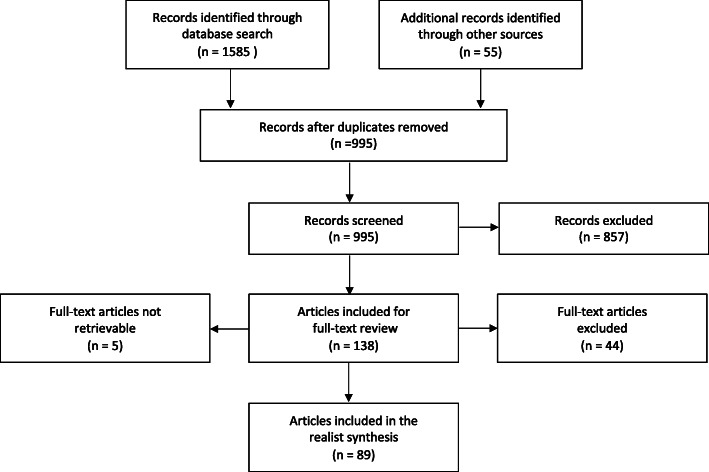
Eighty-nine sources were included. THCCs may be incentivised to use the ISDS mechanism since the costs may be outweighed by the benefits of even just delaying regulatory adoption, particularly since the chilling effect tends to ripple out across jurisdictions. Drivers of regulatory chill may include ambiguity in treaty terms, inconsistency in arbitral rulings, potential arbitrator bias and the high cost of arbitration. Evidence indicates ISDS can delay policy adoption both within the country directly involved but also in other jurisdictions. Additionally, governments are adopting standard assessments of public health regulatory proposals for trade and ISDS risk. Various economic, political and industry-related factors likely interact to increase (or decrease) the ultimate risk of regulatory chill. Some evidence indicates that THCCs take advantage of governments' prioritization of foreign investment over NCD prevention objectives to influence the NCD prevention regulatory environment.

CONCLUSIONS

While ISDS-related regulatory chill is a real risk under certain conditions, international investment-related NCD prevention policy non-decisions driven by broader political economy dynamics may well be more widespread and impactful on NCD regulatory environments. There is therefore a clear need to expand the research agenda on investment liberalization and NCD policy beyond regulatory chill and engage with theories and approaches from international relations and political science, including political economy and power analyses.

摘要

背景

国际投资自由化引发的公共卫生问题主要集中在投资者与国家争端解决(ISDS)相关监管趋冷的潜在风险上。然而,塑造国际投资体制与非传染性疾病(NCD)政策发展之间关系的更广泛政治经济层面问题还没有得到充分研究。本综述旨在采用政治经济学方法综合现有证据,以理解跨国公司为何、如何以及在何种条件下可能利用国际投资体制来推动 NCD 预防政策的不作为。

主要内容

方法:我们逐步提出解释国际投资体制为何/如何可能被跨国健康危害商品公司(THCC)用于鼓励 NCD 预防政策不作为的机制,包括监管趋冷现象。我们对六个数据库和相关灰色文献进行了检索,并对各种提出的解释机制的证据进行了提取、综合和映射。

发现

共纳入 89 项研究。THCC 可能会受到激励而利用 ISDS 机制,因为即使仅仅是延迟监管措施的采用,其收益也可能超过成本,特别是因为这种冷却效应往往会在管辖范围内蔓延。监管趋冷的驱动因素可能包括条约条款的模糊性、仲裁裁决的不一致性、潜在的仲裁员偏见以及仲裁的高成本。证据表明,ISDS 既可以延迟直接涉及的国家的政策采用,也可以延迟其他管辖范围的政策采用。此外,各国政府正在采用针对贸易和 ISDS 风险的公共卫生监管提案的标准评估。各种经济、政治和行业相关因素可能相互作用,增加(或降低)监管趋冷的最终风险。有证据表明,THCC 利用政府对外国投资的重视超过 NCD 预防目标,来影响 NCD 预防监管环境。

结论

虽然在某些条件下,ISDS 相关的监管趋冷确实存在风险,但由更广泛的政治经济动态驱动的与国际投资相关的 NCD 预防政策不作为,可能更为普遍,并对 NCD 监管环境产生更大影响。因此,显然需要在监管趋冷之外,将投资自由化与非传染性疾病政策的研究议程扩大,并利用国际关系和政治学的理论和方法,包括政治经济学和权力分析。
https://cdn.ncbi.nlm.nih.gov/pmc/blobs/7bb0/8611909/9e665ea1b1f3/12992_2021_784_Fig1_HTML.jpg

相似文献

1
International investment liberalization, transnational corporations and NCD prevention policy non-decisions: a realist review on the political economy of tobacco, alcohol and ultra-processed food.国际投资自由化、跨国公司与非传染性疾病预防政策的不作为:烟草、酒精和超加工食品的政治经济学的现实主义述评。
Global Health. 2021 Nov 24;17(1):134. doi: 10.1186/s12992-021-00784-3.
2
Corporate power and the international trade regime preventing progressive policy action on non-communicable diseases: a realist review.企业权力与国际贸易体制阻碍针对非传染性疾病采取渐进式政策行动:一项现实主义综述
Health Policy Plan. 2021 May 17;36(4):493-508. doi: 10.1093/heapol/czaa148.
3
Do international trade and investment agreements generate regulatory chill in public health policymaking? A case study of nutrition and alcohol policy in South Africa.国际贸易和投资协定是否会对公共卫生政策制定产生监管上的抑制作用?以南非营养和酒精政策为例。
Global Health. 2021 Sep 6;17(1):104. doi: 10.1186/s12992-021-00757-6.
4
Trade and investment liberalization and Asia's noncommunicable disease epidemic: a synthesis of data and existing literature.贸易与投资自由化及亚洲的非传染性疾病流行:数据与现有文献综述
Global Health. 2014 Sep 12;10:66. doi: 10.1186/s12992-014-0066-8.
5
Does international trade and investment liberalization facilitate corporate power in nutrition and alcohol policymaking? Applying an integrated political economy and power analysis approach to a case study of South Africa.国际贸易和投资自由化是否有利于营养和酒精政策制定中的企业权力?本文以南非为例,应用综合政治经济学和权力分析方法进行案例研究。
Global Health. 2022 Mar 12;18(1):32. doi: 10.1186/s12992-022-00814-8.
6
International Trade and Investment Agreements as Barriers to Food Environment Regulation for Public Health Nutrition: A Realist Review.国际贸易和投资协定对公共卫生营养食品环境监管的阻碍:一个现实主义的综述。
Int J Health Policy Manag. 2021 Dec 1;10(12):745-765. doi: 10.34172/ijhpm.2020.189.
7
The Minderoo-Monaco Commission on Plastics and Human Health.美诺集团-摩纳哥基金会塑料与人体健康委员会
Ann Glob Health. 2023 Mar 21;89(1):23. doi: 10.5334/aogh.4056. eCollection 2023.
8
The Potential Impact of the Transatlantic Trade and Investment Partnership (TTIP) on public health.跨大西洋贸易与投资伙伴关系协定(TTIP)对公共卫生的潜在影响。
Epidemiol Prev. 2016 Mar-Apr;40(2):95-102. doi: 10.19191/EP16.2.AD01.037.
9
Political Economy of Non-Communicable Disease (NCD) prevention and control in Lebanon: identifying challenges and opportunities for policy change and care provision reforms.黎巴嫩非传染性疾病(NCD)预防和控制的政治经济学:为政策变革和医疗服务改革识别挑战和机遇。
BMC Public Health. 2023 Dec 18;23(1):2526. doi: 10.1186/s12889-023-17357-1.
10
A conceptual framework for investigating the impacts of international trade and investment agreements on noncommunicable disease risk factors.探讨国际贸易和投资协定对非传染性疾病风险因素影响的概念框架。
Health Policy Plan. 2018 Jan 1;33(1):123-136. doi: 10.1093/heapol/czx133.

引用本文的文献

1
Advisory groups in realist reviews: Systematically mapping current research and recommendations for practice.现实主义综述中的咨询小组:系统梳理当前研究及实践建议
Cochrane Evid Synth Methods. 2024 Jun 11;2(6):e12073. doi: 10.1002/cesm.12073. eCollection 2024 Jun.
2
Stakeholder perceptions on the impact of trade and investment agreements on nutrition policy space in small island developing states.利益相关者对贸易和投资协定对小岛屿发展中国家营养政策空间影响的看法。
Global Health. 2025 Mar 3;21(1):7. doi: 10.1186/s12992-024-01091-3.
3
Building a Systems Map: Applying Systems Thinking to Unhealthy Commodity Industry Influence on Public Health Policy.

本文引用的文献

1
Corporate power and the international trade regime preventing progressive policy action on non-communicable diseases: a realist review.企业权力与国际贸易体制阻碍针对非传染性疾病采取渐进式政策行动:一项现实主义综述
Health Policy Plan. 2021 May 17;36(4):493-508. doi: 10.1093/heapol/czaa148.
2
Advancing alcohol research in low-income and middle-income countries: a global alcohol environment framework.推进中低收入国家的酒精研究:全球酒精环境框架。
BMJ Glob Health. 2020 Apr 16;5(4):e001958. doi: 10.1136/bmjgh-2019-001958. eCollection 2020.
3
Big Tobacco, Alcohol, and Food and NCDs in LMICs: An Inconvenient Truth and Call to Action Comment on "Addressing NCDs: Challenges From Industry Market Promotion and Interferences".
构建系统图:将系统思维应用于不健康商品行业对公共卫生政策的影响。
Int J Health Policy Manag. 2024;13:7872. doi: 10.34172/ijhpm.2024.7872. Epub 2024 Apr 7.
4
Taking on the Corporate Determinants of Ill-health and Health Inequity: A Scoping Review of Actions to Address Excessive Corporate Power to Protect and Promote the Public's Health.应对企业导致的健康不佳和健康不平等问题:对旨在应对企业过度权力以保护和促进公众健康的行动的范围界定审查。
Int J Health Policy Manag. 2023;12:7304. doi: 10.34172/ijhpm.2023.7304. Epub 2023 Sep 9.
5
A review of international trade and investment agreements and nutrition policy space in the Pacific.太平洋地区国际贸易与投资协定及营养政策空间综述
Front Nutr. 2023 Aug 30;10:1208542. doi: 10.3389/fnut.2023.1208542. eCollection 2023.
大型烟草、酒精与食品和非传染性疾病在中低收入国家:“应对非传染性疾病挑战:来自行业市场推广及干扰的阻碍”述评的另一个真相与行动呼吁
Int J Health Policy Manag. 2019 Dec 1;8(12):727-731. doi: 10.15171/ijhpm.2019.74.
4
How Neoliberalism Is Shaping the Supply of Unhealthy Commodities and What This Means for NCD Prevention.新自由主义如何塑造不健康商品的供应,以及这对非传染性疾病预防意味着什么。
Int J Health Policy Manag. 2019 Sep 1;8(9):514-520. doi: 10.15171/ijhpm.2019.56.
5
Normalizing Tobacco? The Politics of Trade, Investment, and Tobacco Control.使烟草正常化?贸易、投资和烟草控制的政治。
Milbank Q. 2019 Jun;97(2):449-479. doi: 10.1111/1468-0009.12393. Epub 2019 May 17.
6
Economic globalization, nutrition and health: a review of quantitative evidence.经济全球化、营养与健康:定量证据综述。
Global Health. 2019 Feb 20;15(1):15. doi: 10.1186/s12992-019-0456-z.
7
Analysis of tobacco control policies in Nigeria: historical development and application of multi-sectoral action.尼日利亚烟草控制政策分析:多部门行动的历史发展与应用。
BMC Public Health. 2018 Aug 15;18(Suppl 1):959. doi: 10.1186/s12889-018-5831-9.
8
Regulatory chills: tobacco industry legal threats and the politics of tobacco standardised packaging in New Zealand.监管寒流:烟草行业的法律威胁与新西兰烟草标准化包装政策
N Z Med J. 2018 Apr 13;131(1473):25-41.
9
A multi-level, multi-jurisdictional strategy: Transnational tobacco companies' attempts to obstruct tobacco packaging restrictions.多层次、多司法管辖区策略:跨国烟草公司试图阻挠烟草包装限制。
Glob Public Health. 2019 Apr;14(4):570-583. doi: 10.1080/17441692.2018.1446997. Epub 2018 Mar 9.
10
Advancing progressive health policy to reduce NCDs amidst international commercial opposition: Tobacco standardised packaging in Australia.推进有利于减少非传染性疾病的渐进式卫生政策,应对国际商业抵制:澳大利亚的烟草标准化包装。
Glob Public Health. 2018 Dec;13(12):1753-1766. doi: 10.1080/17441692.2018.1443485. Epub 2018 Feb 27.