Department of Psychology, Sun Yat-sen University, Guangzhou, China.
Cambridge Centre for Ageing and Neuroscience (Cam-CAN), University of Cambridge and MRC Cognition and Brain Sciences Unit, Cambridge, UK.
Hum Brain Mapp. 2021 Apr 1;42(5):1446-1462. doi: 10.1002/hbm.25305. Epub 2020 Dec 5.
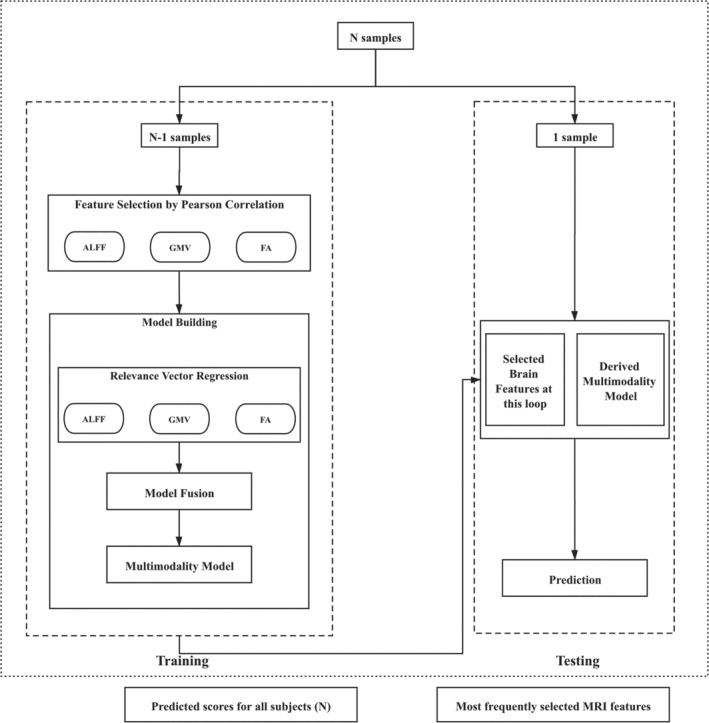
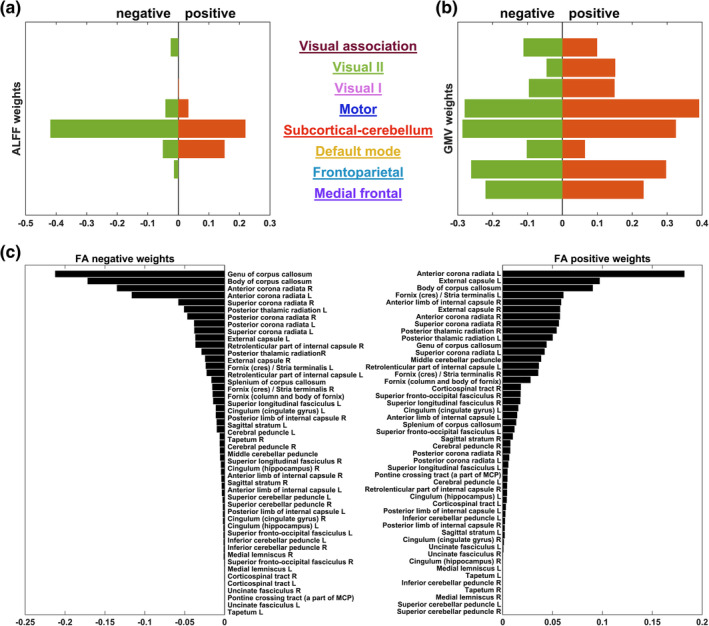
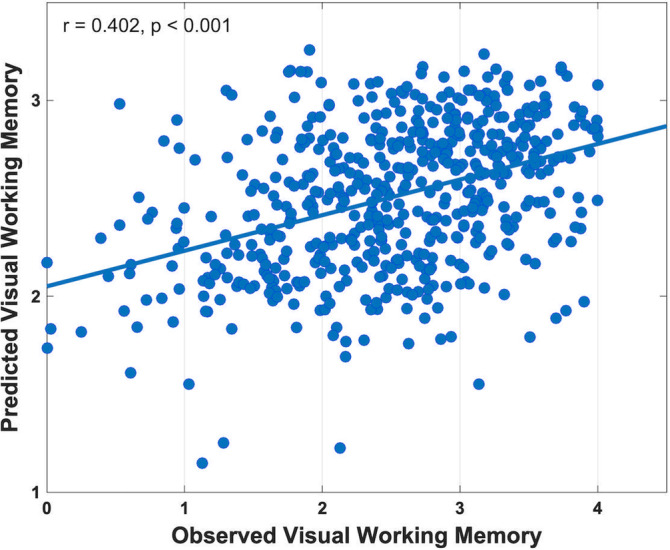
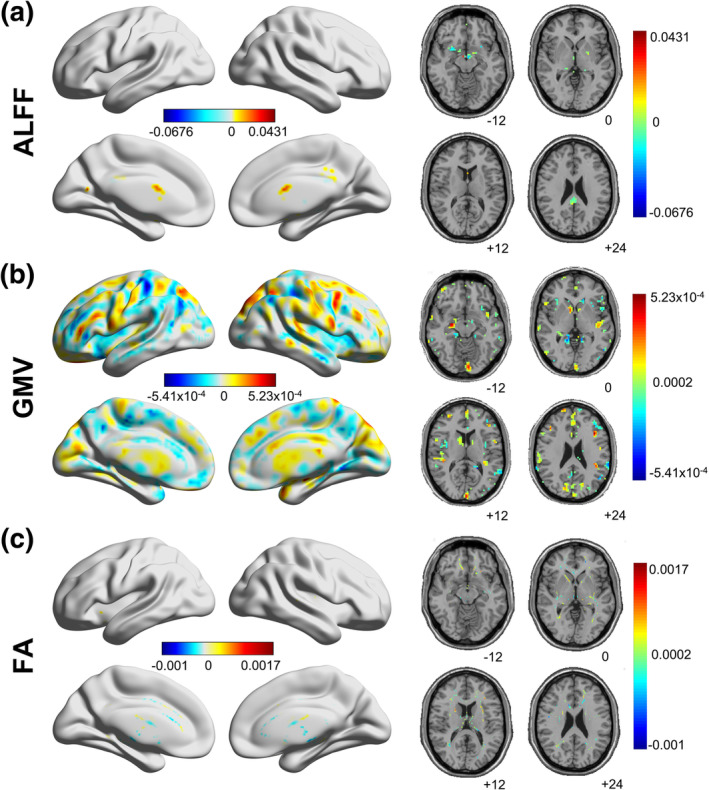
The indispensability of visual working memory (VWM) in human daily life suggests its importance in higher cognitive functions and neurological diseases. However, despite the extensive research efforts, most findings on the neural basis of VWM are limited to a unimodal context (either structure or function) and have low generalization. To address the above issues, this study proposed the usage of multimodal neuroimaging in combination with machine learning to reveal the neural mechanism of VWM across a large cohort (N = 547). Specifically, multimodal magnetic resonance imaging features extracted from voxel-wise amplitude of low-frequency fluctuations, gray matter volume, and fractional anisotropy were used to build an individual VWM capacity prediction model through a machine learning pipeline, including the steps of feature selection, relevance vector regression, cross-validation, and model fusion. The resulting model exhibited promising predictive performance on VWM (r = .402, p < .001), and identified features within the subcortical-cerebellum network, default mode network, motor network, corpus callosum, anterior corona radiata, and external capsule as significant predictors. The main results were then compared with those obtained on emotional regulation and fluid intelligence using the same pipeline, confirming the specificity of our findings. Moreover, the main results maintained well under different cross-validation regimes and preprocess strategies. These findings, while providing richer evidence for the importance of multimodality in understanding cognitive functions, offer a solid and general foundation for comprehensively understanding the VWM process from the top down.
视觉工作记忆(VWM)在人类日常生活中的不可或缺性表明了它在高级认知功能和神经疾病中的重要性。然而,尽管已经进行了广泛的研究,但大多数关于 VWM 神经基础的发现都局限于单一模态的背景(结构或功能),并且通用性较低。为了解决上述问题,本研究提出了使用多模态神经影像学结合机器学习的方法,以在大样本(N=547)中揭示 VWM 的神经机制。具体来说,从体素幅度低频波动、灰质体积和各向异性分数中提取的多模态磁共振成像特征,通过机器学习管道,包括特征选择、相关向量回归、交叉验证和模型融合,用于构建个体 VWM 容量预测模型。该模型在 VWM 上表现出有前途的预测性能(r=0.402,p<0.001),并确定了皮质下-小脑网络、默认模式网络、运动网络、胼胝体、前冠状辐射和外囊内的特征作为重要预测因子。然后将主要结果与使用相同管道在情绪调节和流体智力方面获得的结果进行比较,证实了我们发现的特异性。此外,在不同的交叉验证方案和预处理策略下,主要结果仍然保持良好。这些发现为理解认知功能中多模态的重要性提供了更丰富的证据,为从自上而下全面理解 VWM 过程提供了坚实的、一般性的基础。