Gonda Steffen, Giesen Jan, Sieberath Alexander, West Fabian, Buchholz Raoul, Klatt Oliver, Ziebarth Tim, Räk Andrea, Kleinhubbert Sabine, Riedel Christian, Hollmann Michael, Hamad Mohammad I K, Reiner Andreas, Wahle Petra
Developmental Neurobiology, Faculty of Biology and Biotechnology, Ruhr University Bochum, Bochum, Germany.
Cellular Neurobiology, Faculty of Biology and Biotechnology, Ruhr University Bochum, Bochum, Germany.
Front Neuroanat. 2020 Nov 13;14:571351. doi: 10.3389/fnana.2020.571351. eCollection 2020.
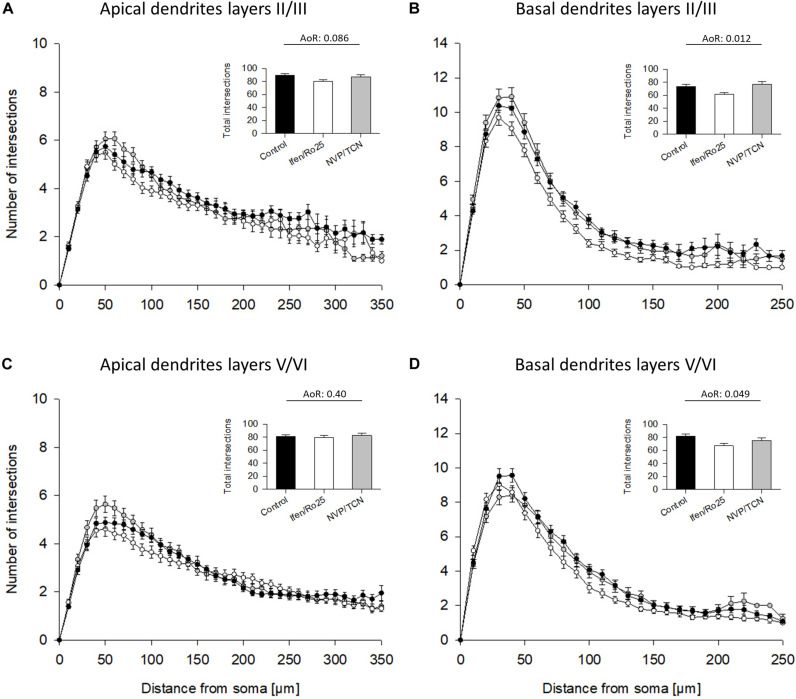
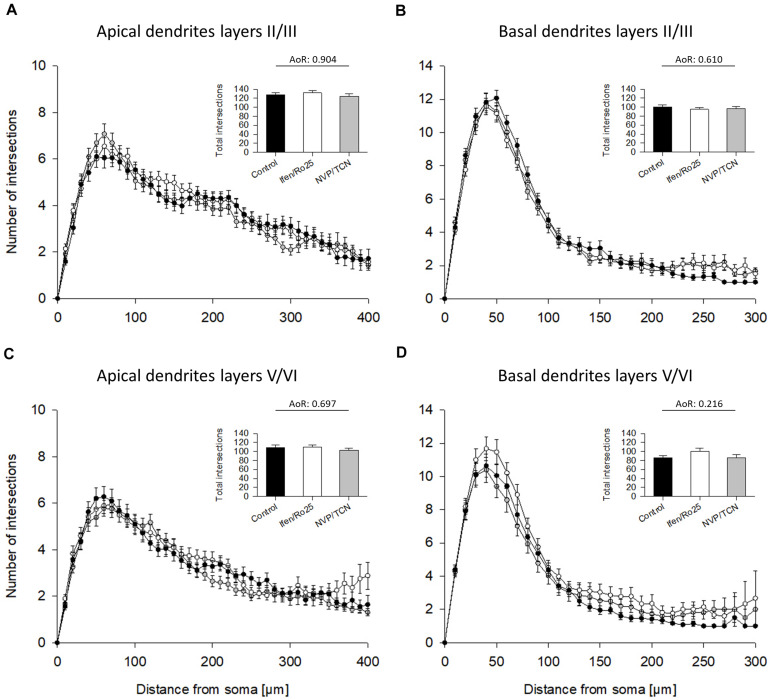
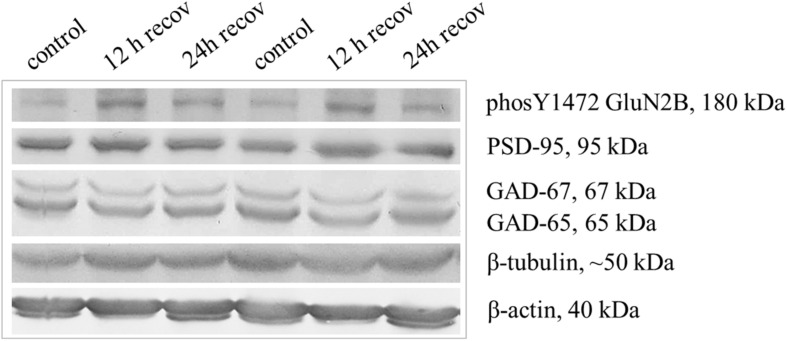
NMDA receptors are important players for neuronal differentiation. We previously reported that antagonizing NMDA receptors with APV blocked the growth-promoting effects evoked by the overexpression of specific calcium-permeable or flip-spliced AMPA receptor subunits and of type I transmembrane AMPA receptor regulatory proteins which both exclusively modify apical dendritic length and branching of cortical pyramidal neurons. These findings led us to characterize the role of GluN2B and GluN2A for dendritogenesis using organotypic cultures of rat visual cortex. Antagonizing GluN2B with ifenprodil and Ro25-6981 strongly impaired basal dendritic growth of supra- and infragranular pyramidal cells at DIV 5-10, but no longer at DIV 15-20. Growth recovered after washout, and protein blots revealed an increase of synaptic GluN2B-containing receptors as indicated by a enhanced phosphorylation of the tyrosine 1472 residue. Antagonizing GluN2A with TCN201 and NVP-AAM077 was ineffective at both ages. Dendrite growth of non-pyramidal interneurons was not altered. We attempted to overexpress GluN2A and GluN2B. However, although the constructs delivered currents in HEK cells, there were neither effects on dendrite morphology nor an enhanced sensitivity to NMDA. Further, co-expressing GluN1-1a and GluN2B did not alter dendritic growth. Visualization of overexpressed, tagged GluN2 proteins was successful after immunofluorescence for the tag which delivered rather weak staining in HEK cells as well as in neurons. This suggested that the level of overexpression is too weak to modify dendrite growth. In summary, endogenous GluN2B, but not GluN2A is important for pyramidal cell basal dendritic growth during an early postnatal time window.
N-甲基-D-天冬氨酸(NMDA)受体是神经元分化的重要参与者。我们之前报道过,用2-氨基-5-磷酸戊酸(APV)拮抗NMDA受体会阻断由特定钙通透或翻转剪接的α-氨基-3-羟基-5-甲基-4-异恶唑丙酸(AMPA)受体亚基以及I型跨膜AMPA受体调节蛋白的过表达所引发的促生长效应,这两种蛋白都专门改变皮质锥体细胞顶端树突的长度和分支。这些发现促使我们利用大鼠视皮质的器官型培养来研究GluN2B和GluN2A在树突发生中的作用。用ifenprodil和Ro25-6981拮抗GluN2B会强烈损害第5 - 10天体外培养天数(DIV)时上层和下层锥体细胞的基底树突生长,但在第15 - 20天体外培养天数时不再有影响。洗脱后生长恢复,蛋白质印迹显示含突触GluN2B的受体增加,酪氨酸1472残基的磷酸化增强表明了这一点。用TCN201和NVP - AAM077拮抗GluN2A在两个年龄段均无效。非锥体中间神经元的树突生长未改变。我们试图过表达GluN2A和GluN2B。然而,尽管构建体在人胚肾(HEK)细胞中产生电流,但对树突形态没有影响,对NMDA的敏感性也没有增强。此外,共表达GluN1 - 1a和GluN2B并没有改变树突生长。在对标签进行免疫荧光后,成功实现了对过表达的、带有标签的GluN2蛋白的可视化,该标签在HEK细胞以及神经元中染色相当弱。这表明过表达水平太弱,无法改变树突生长。总之,内源性GluN2B而非GluN2A在出生后早期时间窗内对锥体细胞基底树突生长很重要。