Brain Information Communication Research Laboratory Group, Advanced Telecommunications Research Institutes International, Kyoto, Japan.
Medical Institute of Developmental Disabilities Research, Showa University, Tokyo, Japan.
PLoS Biol. 2020 Dec 7;18(12):e3000966. doi: 10.1371/journal.pbio.3000966. eCollection 2020 Dec.
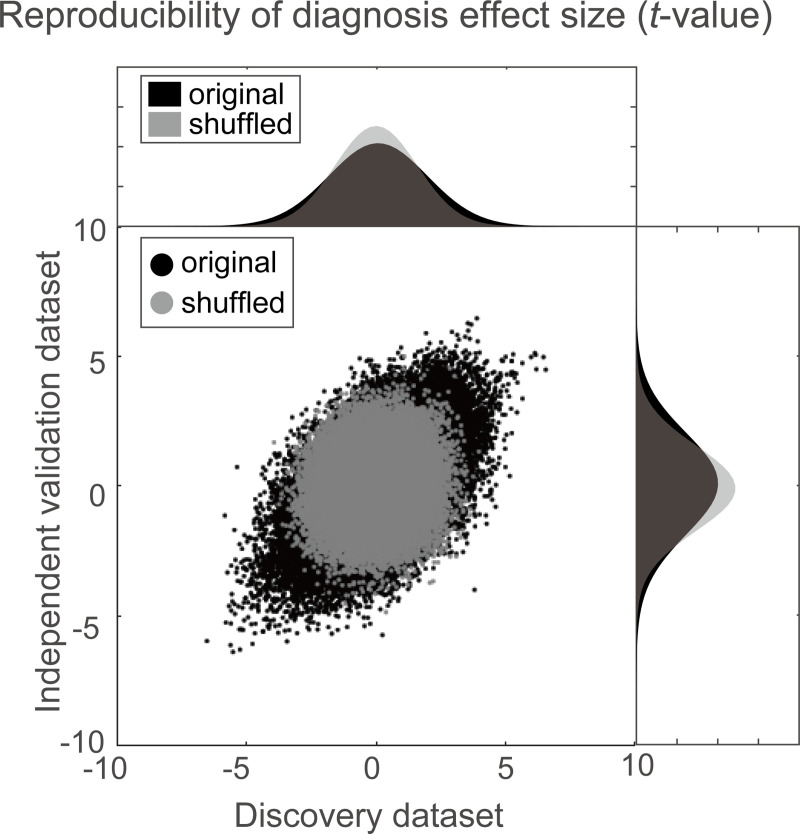
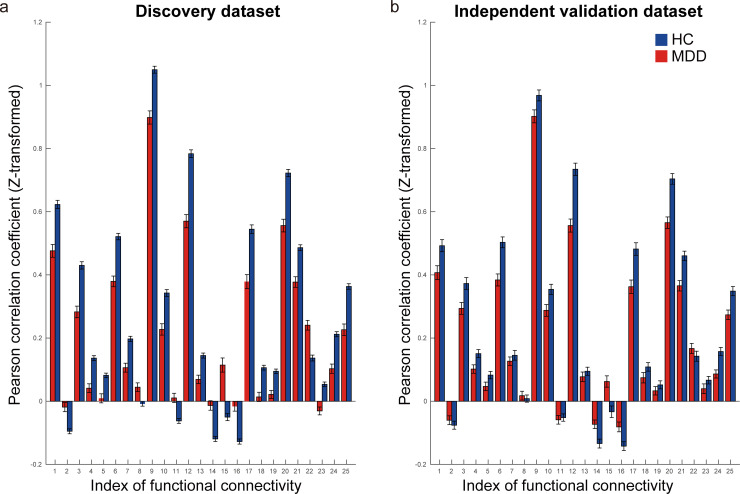
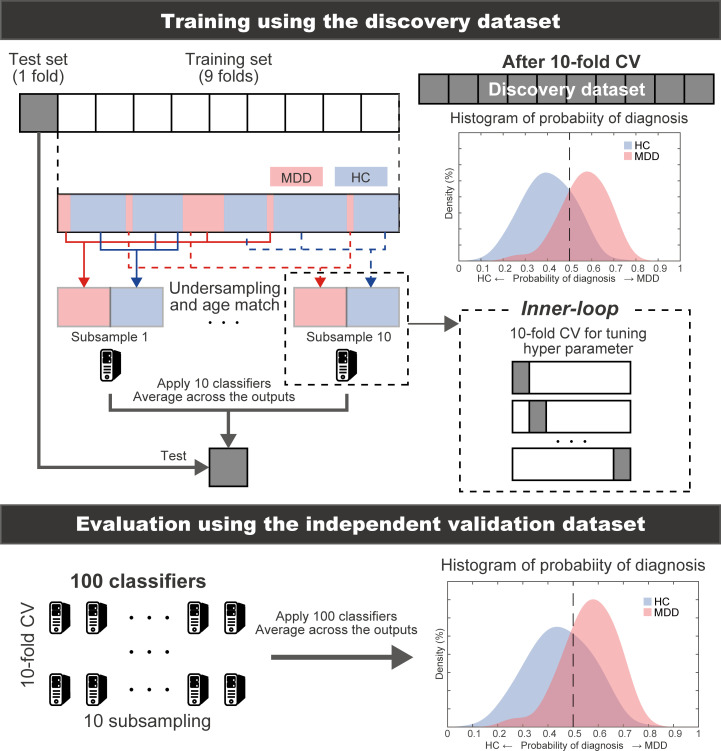
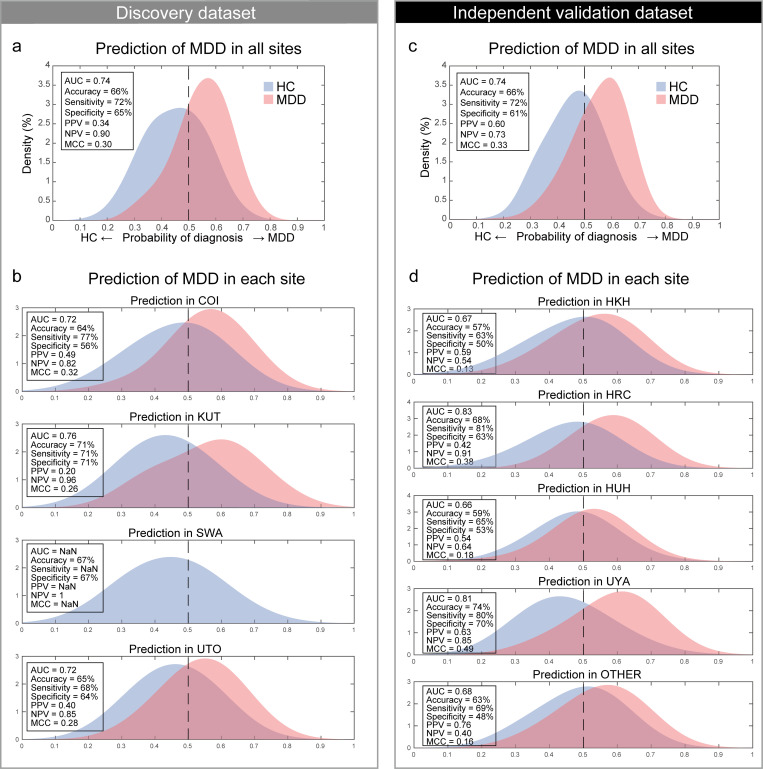
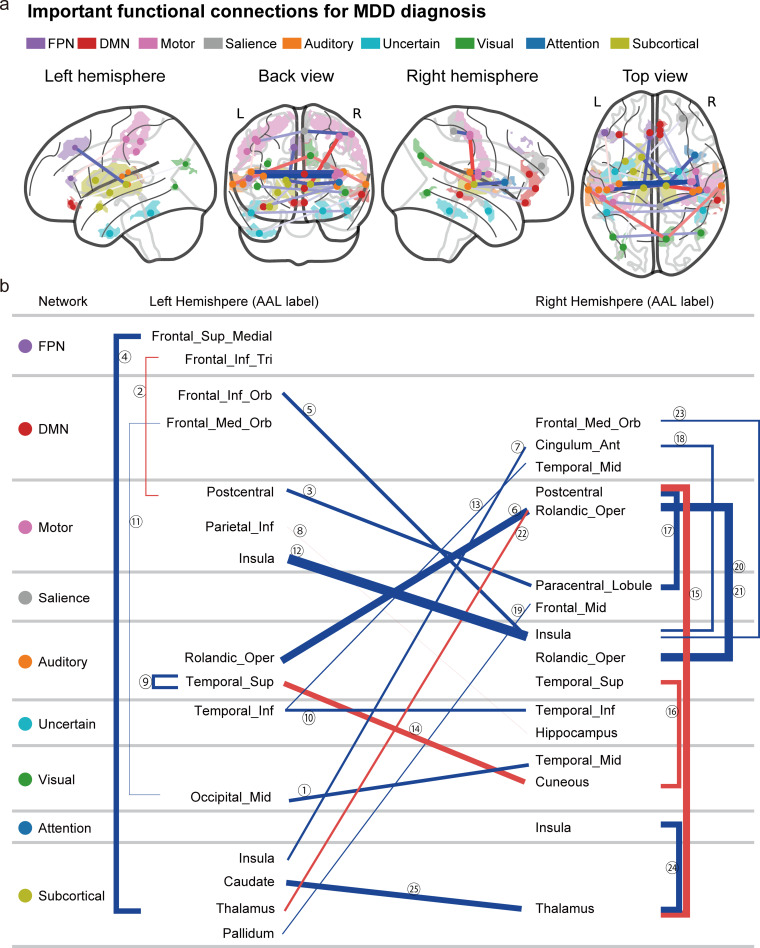
Many studies have highlighted the difficulty inherent to the clinical application of fundamental neuroscience knowledge based on machine learning techniques. It is difficult to generalize machine learning brain markers to the data acquired from independent imaging sites, mainly due to large site differences in functional magnetic resonance imaging. We address the difficulty of finding a generalizable marker of major depressive disorder (MDD) that would distinguish patients from healthy controls based on resting-state functional connectivity patterns. For the discovery dataset with 713 participants from 4 imaging sites, we removed site differences using our recently developed harmonization method and developed a machine learning MDD classifier. The classifier achieved an approximately 70% generalization accuracy for an independent validation dataset with 521 participants from 5 different imaging sites. The successful generalization to a perfectly independent dataset acquired from multiple imaging sites is novel and ensures scientific reproducibility and clinical applicability.
许多研究都强调了基于机器学习技术的基础神经科学知识在临床应用中固有的困难。由于功能磁共振成像中存在较大的站点差异,因此很难将机器学习的大脑标志物推广到从独立成像站点获得的数据中。我们解决了基于静息态功能连接模式从健康对照者中区分出重度抑郁症(MDD)患者的可推广的 MDD 标志物的发现困难。对于来自 4 个成像站点的 713 名参与者的发现数据集,我们使用我们最近开发的协调方法去除了站点差异,并开发了一个机器学习 MDD 分类器。该分类器在来自 5 个不同成像站点的 521 名参与者的独立验证数据集中实现了约 70%的泛化准确性。成功地推广到来自多个成像站点的完全独立数据集是新颖的,确保了科学的可重复性和临床适用性。