Tripathy Rajesh Kumar, Ghosh Samit Kumar, Gajbhiye Pranjali, Acharya U Rajendra
Department of Electrical and Electronics Engineering, BITS-Pilani, Hyderabad Campus, Hyderabad 500078, India.
School of Engineering, Ngee Ann Polytechnic, Singapore 599489, Singapore.
Entropy (Basel). 2020 Oct 9;22(10):1141. doi: 10.3390/e22101141.
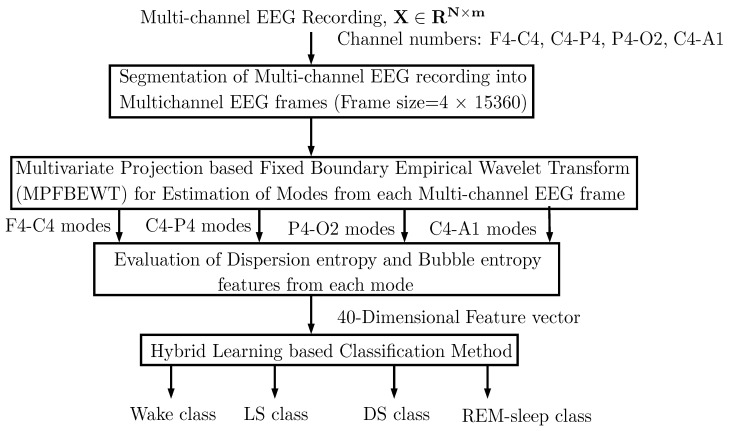
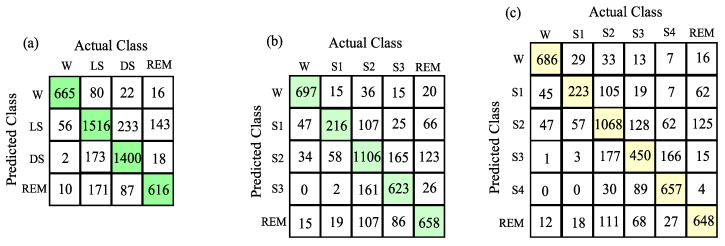
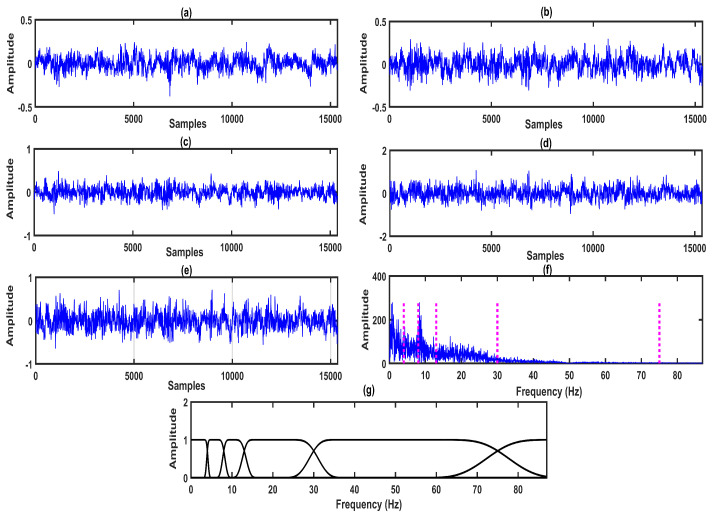
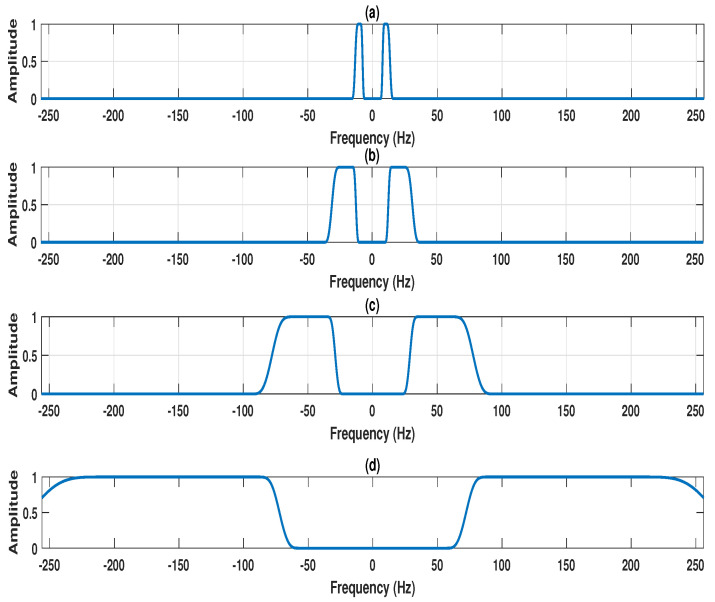
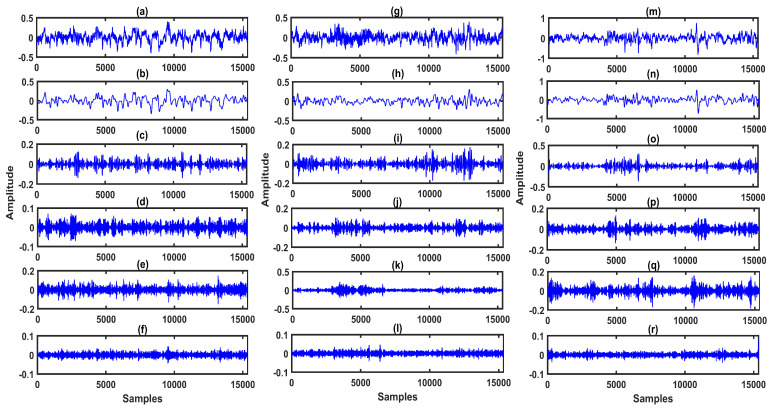
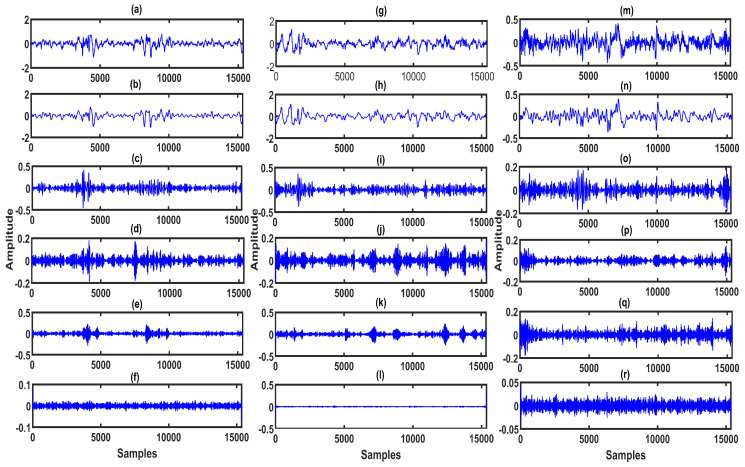
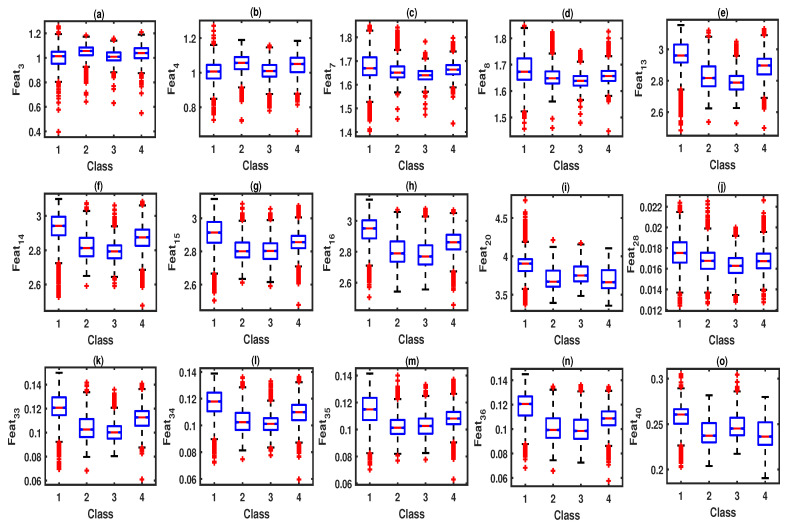
The categorization of sleep stages helps to diagnose different sleep-related ailments. In this paper, an entropy-based information-theoretic approach is introduced for the automated categorization of sleep stages using multi-channel electroencephalogram (EEG) signals. This approach comprises of three stages. First, the decomposition of multi-channel EEG signals into sub-band signals or modes is performed using a novel multivariate projection-based fixed boundary empirical wavelet transform (MPFBEWT) filter bank. Second, entropy features such as bubble and dispersion entropies are computed from the modes of multi-channel EEG signals. Third, a hybrid learning classifier based on class-specific residuals using sparse representation and distances from nearest neighbors is used to categorize sleep stages automatically using entropy-based features computed from MPFBEWT domain modes of multi-channel EEG signals. The proposed approach is evaluated using the multi-channel EEG signals obtained from the cyclic alternating pattern (CAP) sleep database. Our results reveal that the proposed sleep staging approach has obtained accuracies of 91.77%, 88.14%, 80.13%, and 73.88% for the automated categorization of wake vs. sleep, wake vs. rapid eye movement (REM) vs. Non-REM, wake vs. light sleep vs. deep sleep vs. REM sleep, and wake vs. S1-sleep vs. S2-sleep vs. S3-sleep vs. REM sleep schemes, respectively. The developed method has obtained the highest overall accuracy compared to the state-of-art approaches and is ready to be tested with more subjects before clinical application.
睡眠阶段的分类有助于诊断不同的睡眠相关疾病。本文介绍了一种基于熵的信息论方法,用于使用多通道脑电图(EEG)信号对睡眠阶段进行自动分类。该方法包括三个阶段。首先,使用一种基于多元投影的新型固定边界经验小波变换(MPFBEWT)滤波器组,将多通道EEG信号分解为子带信号或模式。其次,从多通道EEG信号的模式中计算出诸如气泡熵和离散熵等熵特征。第三,使用基于类特定残差的混合学习分类器,该分类器利用稀疏表示和与最近邻的距离,通过从多通道EEG信号的MPFBEWT域模式计算出的基于熵的特征来自动对睡眠阶段进行分类。使用从周期性交替模式(CAP)睡眠数据库获得的多通道EEG信号对所提出的方法进行评估。我们的结果表明,所提出的睡眠分期方法在清醒与睡眠、清醒与快速眼动(REM)与非快速眼动、清醒与浅睡眠与深睡眠与REM睡眠、清醒与S1睡眠与S2睡眠与S3睡眠与REM睡眠方案的自动分类中,分别获得了91.77%、88.14%、80.13%和73.88%的准确率。与现有方法相比,所开发的方法获得了最高的总体准确率,并且在临床应用之前准备好对更多受试者进行测试。