Wu Yen-Wen, Chang Ting-Ting, Chang Chia-Chi, Chen Jaw-Wen
Division of Cardiology, Cardiovascular Medical Center, Far Eastern Memorial Hospital, New Taipei City 220, Taiwan.
School of Medicine, National Yang-Ming University, Taipei 112, Taiwan.
Int J Mol Sci. 2020 Dec 3;21(23):9245. doi: 10.3390/ijms21239245.
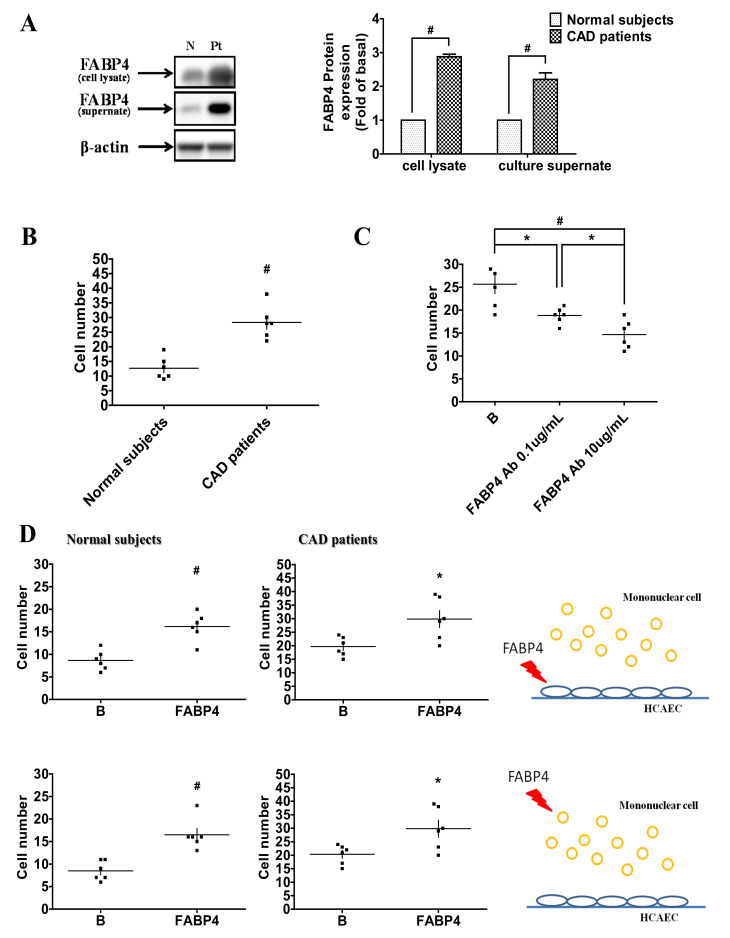
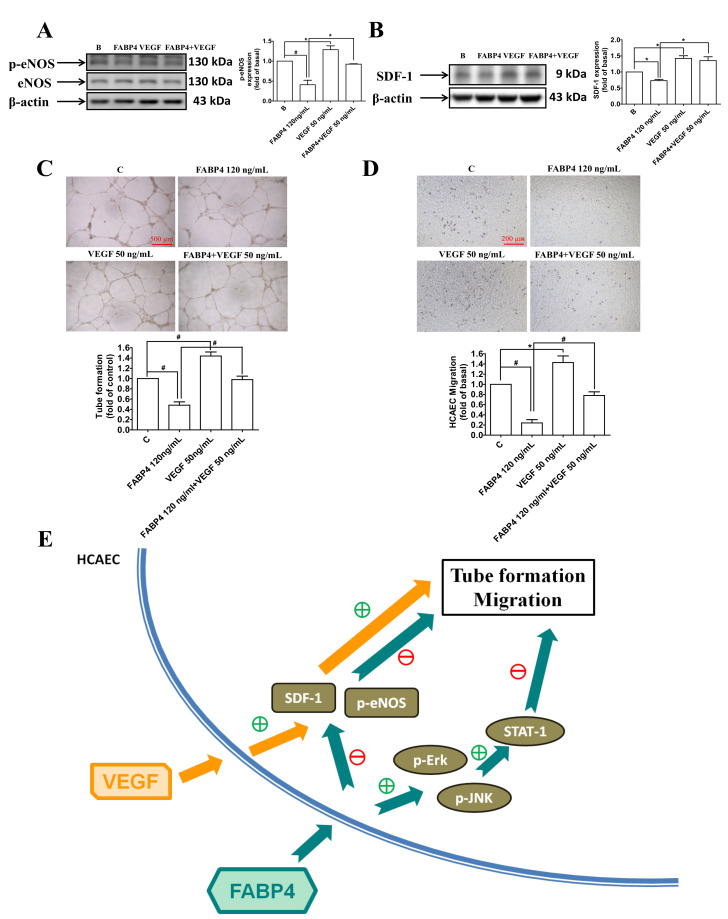
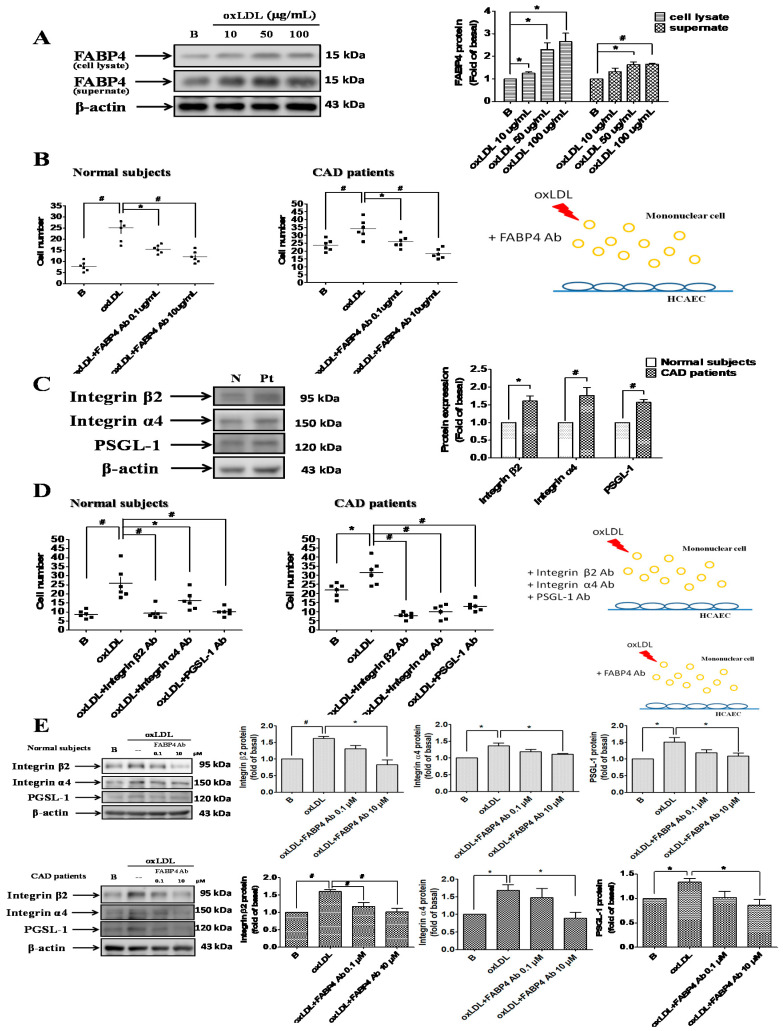
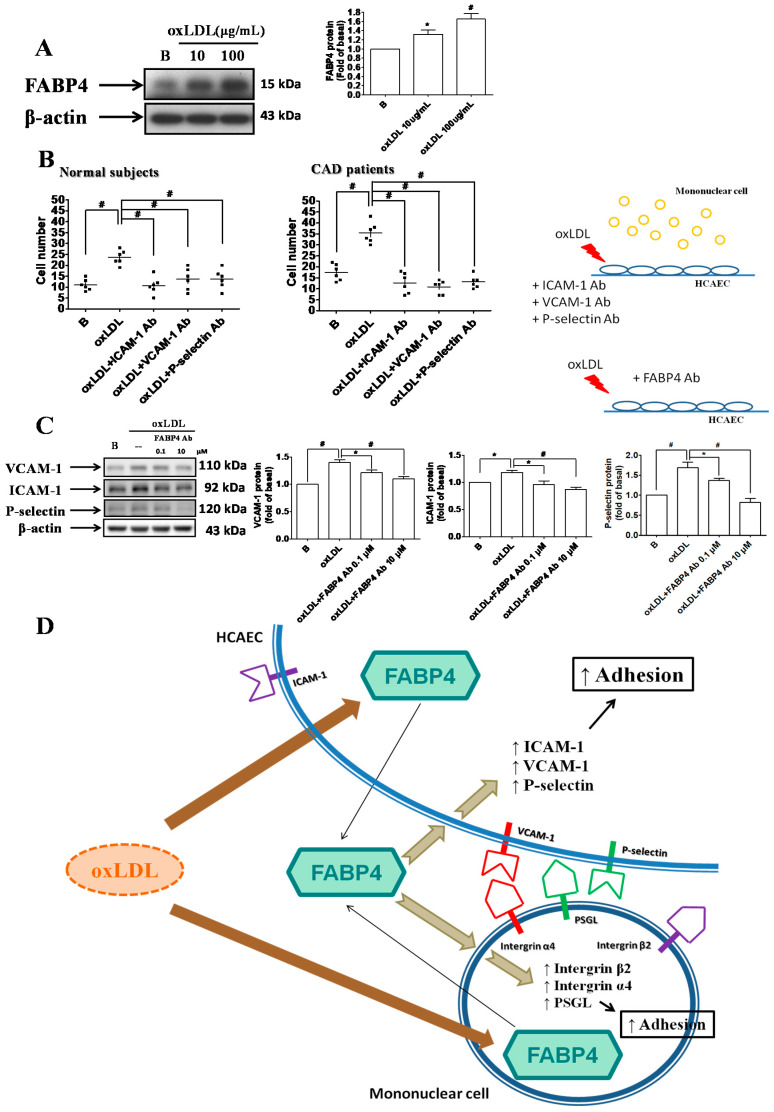
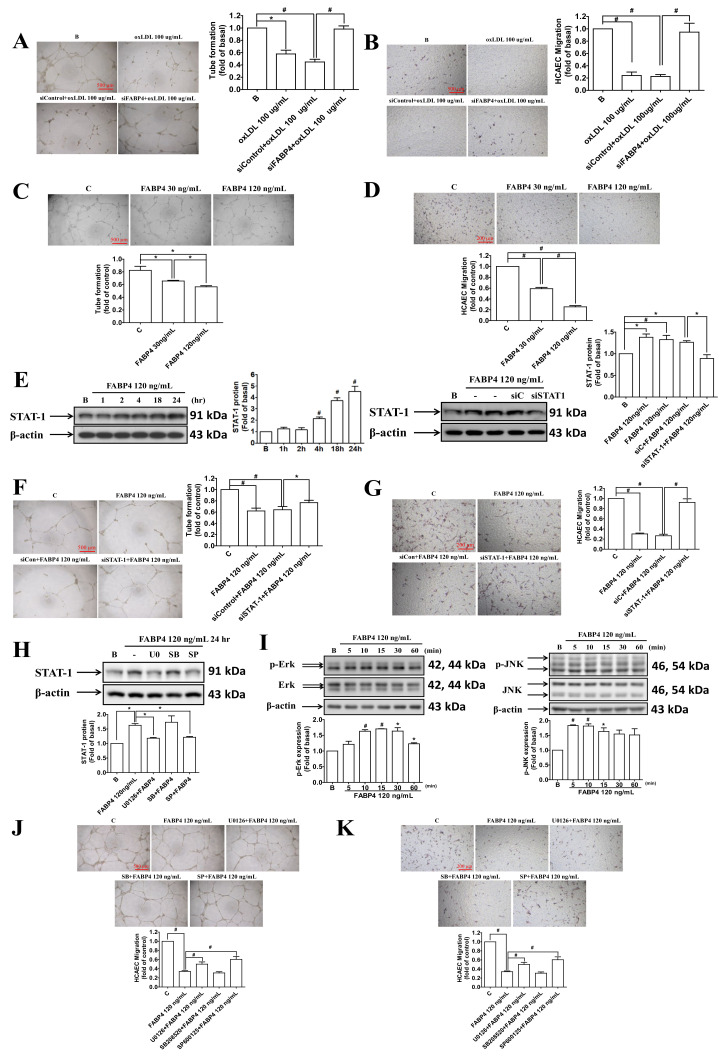
Background-Elevated circulating fatty-acid-binding protein 4 (FABP4) levels may be linked with cardiovascular events. This study aimed to investigate the mechanistic role of FABP4 in atherosclerosis. Methods-We recruited 22 patients with angiographically proven coronary artery disease (CAD) and 40 control subjects. Mononuclear cells (MNCs) and human coronary endothelial cells (HCAECs) were used for in vitro study. Results-Patients with CAD were predominantly male with an enhanced prevalence of hypertension, diabetes, and smoking history. FABP4 concentrations were up-regulated in culture supernatants of MNCs from CAD patients, which were positively correlated with the patients' age, waist-hip ratio, body mass index, serum creatinine, type 2 diabetes, and the presence of hypertension. The adhesiveness of HCAECs to monocytic cells can be activated by FABP4, which was reversed by an FABP4 antibody. FABP4 blockade attenuated the oxidized low-density lipoprotein (oxLDL)-induced expression of ICAM-1, VCAM-1, and P-selectin. FABP4 impaired the tube formation and migration via the ERK/JNK/STAT-1 signaling pathway. FABP4 suppressed phosphorylation of eNOS and expression of SDF-1 protein, both of which can be reversed by treatment with VEGF. Blockade of FABP4 also improved the oxLDL-impaired cell function. Conclusion-We discovered a novel pathogenic role of FABP4 in MNC activation and endothelial dysfunction in atherosclerosis. FABP4 may be a therapeutic target for modulating atherosclerosis.
背景——循环中脂肪酸结合蛋白4(FABP4)水平升高可能与心血管事件有关。本研究旨在探讨FABP4在动脉粥样硬化中的机制作用。方法——我们招募了22例经血管造影证实患有冠状动脉疾病(CAD)的患者和40例对照受试者。使用单核细胞(MNCs)和人冠状动脉内皮细胞(HCAECs)进行体外研究。结果——CAD患者以男性为主,高血压、糖尿病和吸烟史的患病率较高。CAD患者MNCs培养上清液中的FABP4浓度上调,且与患者年龄、腰臀比、体重指数、血清肌酐、2型糖尿病以及高血压的存在呈正相关。FABP4可激活HCAECs与单核细胞的黏附性,而FABP4抗体可逆转这种作用。FABP4阻断可减弱氧化型低密度脂蛋白(oxLDL)诱导的细胞间黏附分子1(ICAM-1)、血管细胞黏附分子1(VCAM-1)和P-选择素的表达。FABP4通过细胞外信号调节激酶/应激活化蛋白激酶/信号转导子和转录激活子1(ERK/JNK/STAT-1)信号通路损害血管生成和迁移。FABP4抑制内皮型一氧化氮合酶(eNOS)的磷酸化和基质细胞衍生因子1(SDF-1)蛋白的表达,而这两者均可通过血管内皮生长因子(VEGF)治疗逆转。FABP4阻断也改善了oxLDL损害的细胞功能。结论——我们发现FABP4在动脉粥样硬化的MNC激活和内皮功能障碍中具有新的致病作用。FABP4可能是调节动脉粥样硬化的治疗靶点。