Information Systems Department, Faculty of Computers and Artificial Intelligence, Banha University, Banha, Egypt.
Biotechnology Program, Zoology Department, Faculty of Science, Port Said University, Port Said, Egypt.
Sci Rep. 2020 Dec 7;10(1):21349. doi: 10.1038/s41598-020-78449-1.
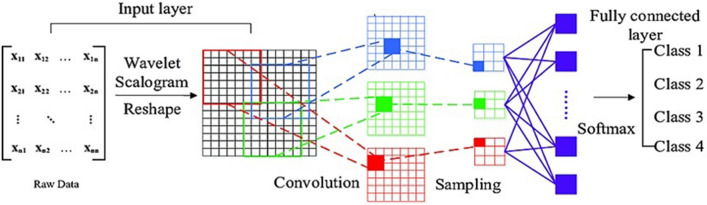
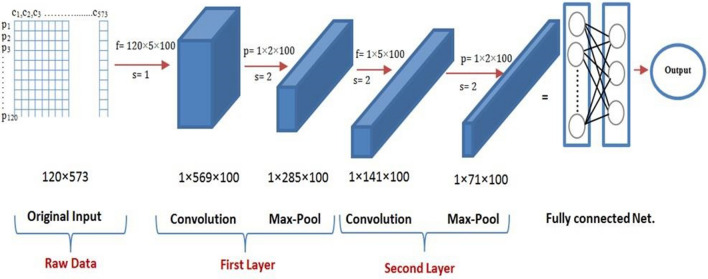
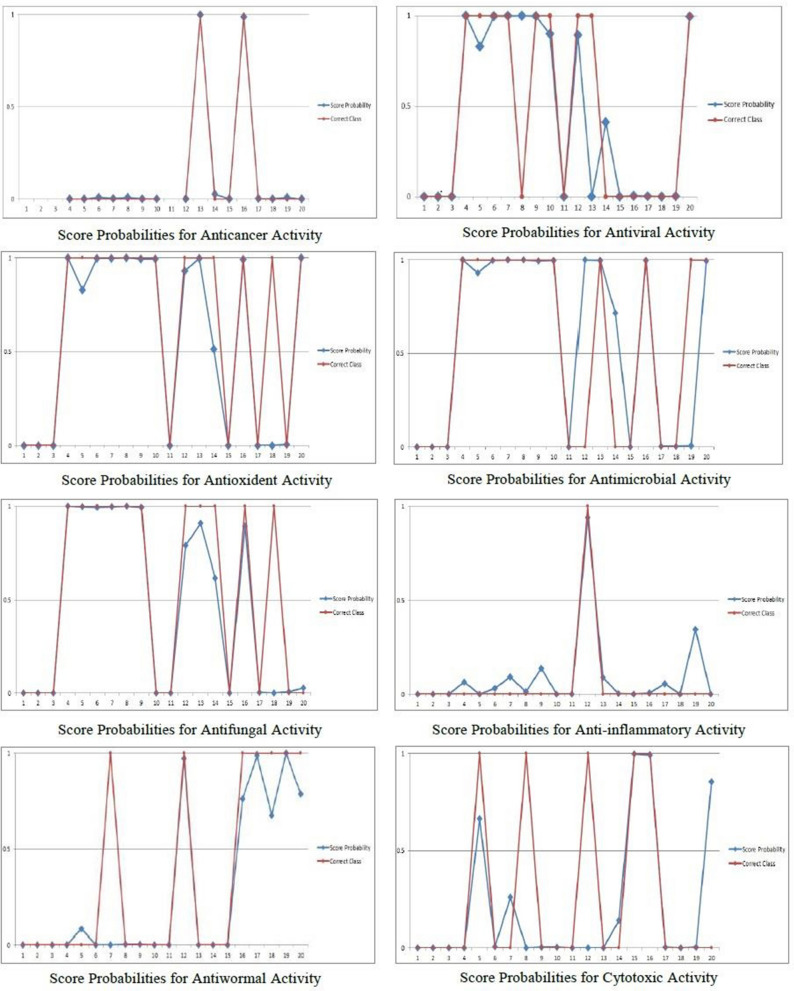
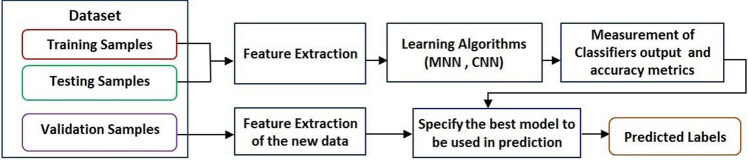
Reliance on deep learning techniques has become an important trend in several science domains including biological science, due to its proven efficiency in manipulating big data that are often characterized by their non-linear processes and complicated relationships. In this study, Convolutional Neural Networks (CNN) has been recruited, as one of the deep learning techniques, to be used in classifying and predicting the biological activities of the essential oil-producing plant/s through their chemical compositions. The model is established based on the available chemical composition's information of a set of endemic Egyptian plants and their biological activities. Another type of machine learning algorithms, Multiclass Neural Network (MNN), has been applied on the same Essential Oils (EO) dataset. This aims to fairly evaluate the performance of the proposed CNN model. The recorded accuracy in the testing process for both CNN and MNN is 98.13% and 81.88%, respectively. Finally, the CNN technique has been adopted as a reliable model for classifying and predicting the bioactivities of the Egyptian EO-containing plants. The overall accuracy for the final prediction process is reported as approximately 97%. Hereby, the proposed deep learning model could be utilized as an efficient model in predicting the bioactivities of, at least Egyptian, EOs-producing plants.
深度学习技术在多个科学领域,包括生物学,已经成为一种重要的趋势,因为它在处理通常具有非线性过程和复杂关系的大数据方面被证明是有效的。在这项研究中,卷积神经网络(CNN)作为深度学习技术之一,被用于通过植物的化学成分对产油植物/的生物活性进行分类和预测。该模型是基于一组埃及特有植物的化学成分及其生物活性的可用信息建立的。另一种机器学习算法,多类神经网络(MNN),也应用于相同的精油(EO)数据集上。这旨在公平地评估所提出的 CNN 模型的性能。在测试过程中,CNN 和 MNN 的记录准确率分别为 98.13%和 81.88%。最后,CNN 技术被采用作为一种可靠的模型,用于对埃及含精油植物的生物活性进行分类和预测。最终预测过程的总体准确率约为 97%。因此,所提出的深度学习模型可以用作预测至少埃及产油植物生物活性的有效模型。