Magni Giada, Banchelli Martina, Cherchi Federica, Coppi Elisabetta, Fraccalvieri Marco, Rossi Michele, Tatini Francesca, Pugliese Anna Maria, Rossi Degl'Innocenti Duccio, Alfieri Domenico, Matteini Paolo, Pini Roberto, Pavone Francesco S, Rossi Francesca
Istituto di Fisica Applicata "Nello Carrara", Consiglio Nazionale delle Ricerche (CNR-IFAC), 50019 Florence, Italy.
Department of Neuroscience, Psychology, Drug Research and Child Health, Section of Pharmacology and Toxicology, University of Florence, 50139 Florence, Italy.
Biomedicines. 2020 Dec 6;8(12):573. doi: 10.3390/biomedicines8120573.
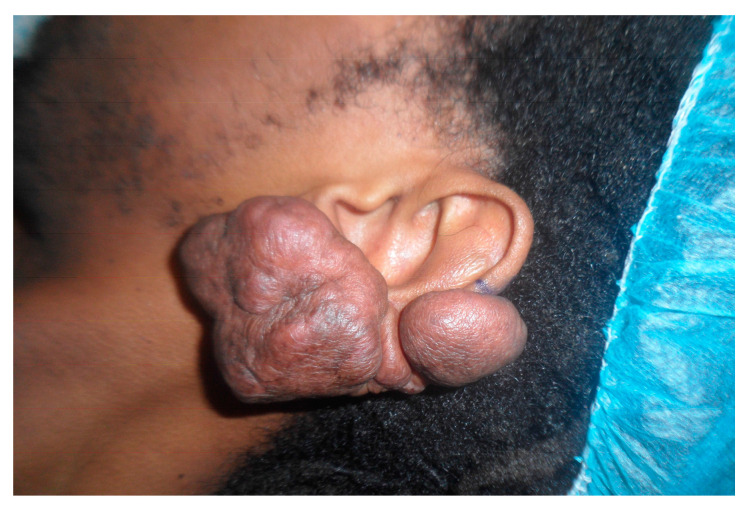
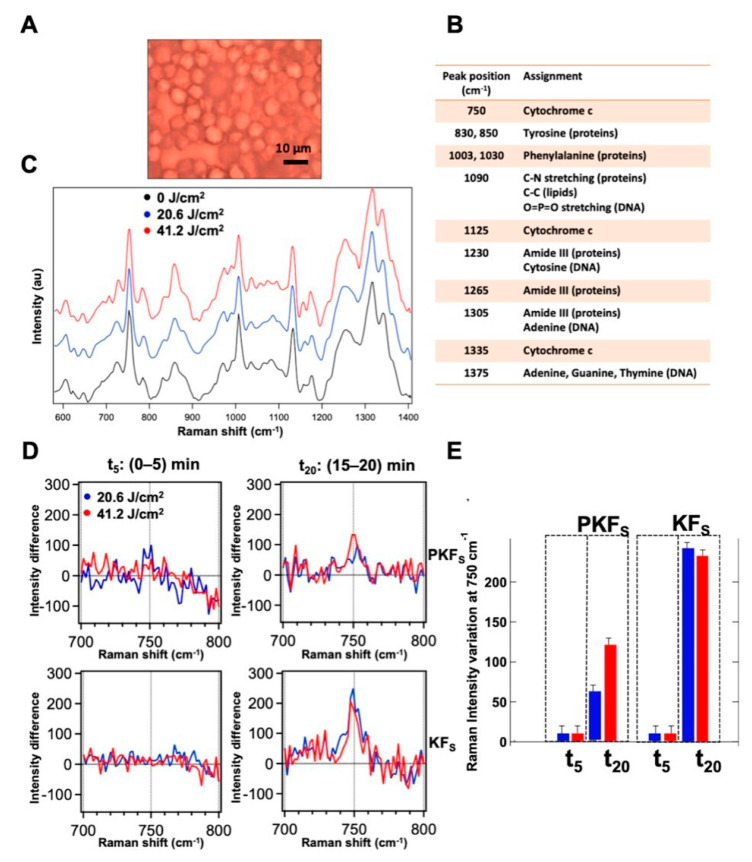
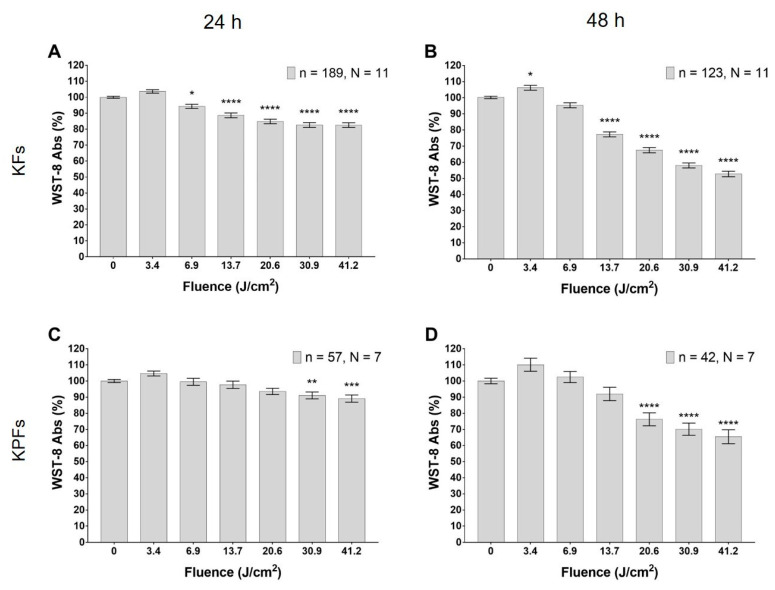
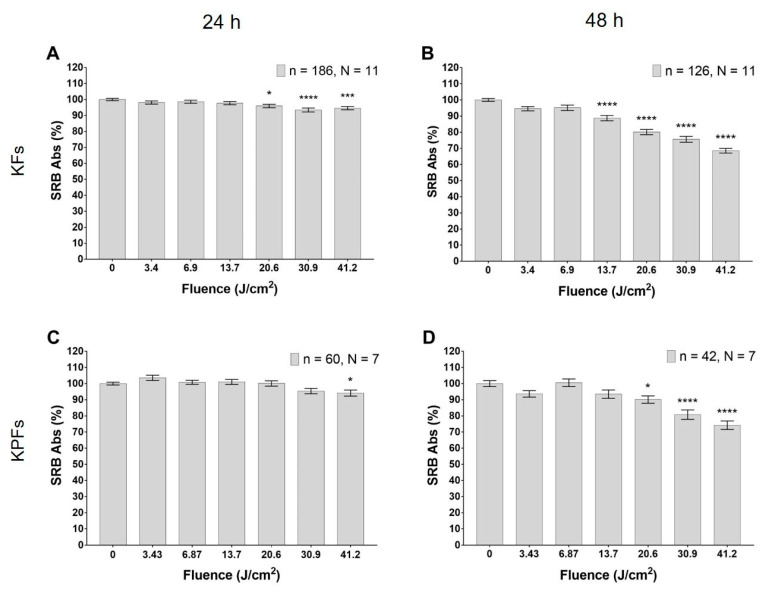
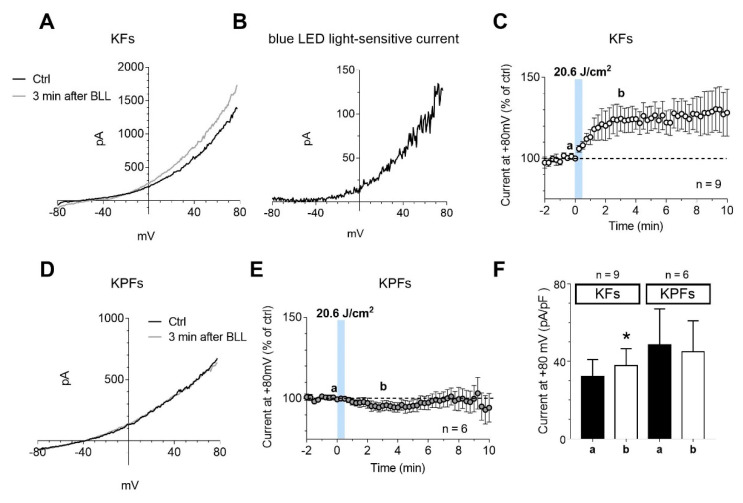
Keloids are an exuberant response to wound healing, characterized by an exaggerated synthesis of collagen, probably due to the increase of fibroblasts activity and to the reduction of their apoptosis rate: currently no standard treatments or pharmacological therapies are able to prevent keloid recurrence. To reach this goal, in recent years some physical treatments have been proposed, and among them the PhotoBioModulation therapy (PBM). This work analyses the effects of a blue LED light irradiation (410-430 nm, 0.69 W/cm power density) on human fibroblasts, isolated from both keloids and perilesional tissues. Different light doses (3.43-6.87-13.7-20.6-30.9 and 41.2 J/cm) were tested. Biochemical assays and specific staining were used to assess cell metabolism, proliferation and viability. Micro-Raman spectroscopy was used to explore direct effects of the blue LED light on the Cytochrome C (Cyt C) oxidase. We also investigated the effects of the irradiation on ionic membrane currents by patch-clamp recordings. Our results showed that the blue LED light can modulate cell metabolism and proliferation, with a dose-dependent behavior and that these effects persist at least till 48 h after treatment. Furthermore, we demonstrated that the highest fluence value can reduce cell viability 24 h after irradiation in keloid-derived fibroblasts, while the same effect is observed 48 h after treatment in perilesional fibroblasts. Electrophysiological recordings showed that the medium dose (20.6 J/cm) of blue LED light induces an enhancement of voltage-dependent outward currents elicited by a depolarizing ramp protocol. Overall, these data demonstrate the potentials that PBM shows as an innovative and minimally-invasive approach in the management of hypertrophic scars and keloids, in association with current treatments.
瘢痕疙瘩是伤口愈合的一种过度反应,其特征是胶原蛋白过度合成,这可能是由于成纤维细胞活性增加和其凋亡率降低所致:目前尚无标准治疗方法或药物疗法能够预防瘢痕疙瘩复发。为实现这一目标,近年来提出了一些物理治疗方法,其中包括光生物调节疗法(PBM)。这项工作分析了蓝色发光二极管(LED)光照射(410 - 430 nm,功率密度0.69 W/cm²)对从瘢痕疙瘩和病变周围组织分离出的人成纤维细胞的影响。测试了不同的光剂量(3.43 - 6.87 - 13.7 - 20.6 - 30.9和41.2 J/cm²)。采用生化分析和特异性染色来评估细胞代谢、增殖和活力。利用显微拉曼光谱探索蓝色LED光对细胞色素C(Cyt C)氧化酶的直接影响。我们还通过膜片钳记录研究了照射对离子膜电流的影响。我们的结果表明,蓝色LED光可以调节细胞代谢和增殖,呈现剂量依赖性,并且这些影响至少在治疗后48小时持续存在。此外,我们证明,最高通量值可在照射后24小时降低瘢痕疙瘩来源的成纤维细胞的活力,而在病变周围成纤维细胞中,相同效果在治疗后48小时观察到。电生理记录表明,蓝色LED光的中等剂量(20.6 J/cm²)可增强由去极化斜坡方案引发的电压依赖性外向电流。总体而言,这些数据证明了光生物调节疗法作为一种创新的、微创的方法在与当前治疗相结合管理增生性瘢痕和瘢痕疙瘩方面所显示的潜力。