Te Kupenga Hauora Māori, Faculty of Medical and Health Sciences, University of Auckland, Auckland 1142, New Zealand.
Department of Preventive and Social Medicine, Division of Health Sciences, University of Otago, Dunedin 9054, New Zealand.
Int J Environ Res Public Health. 2020 Dec 4;17(23):9063. doi: 10.3390/ijerph17239063.
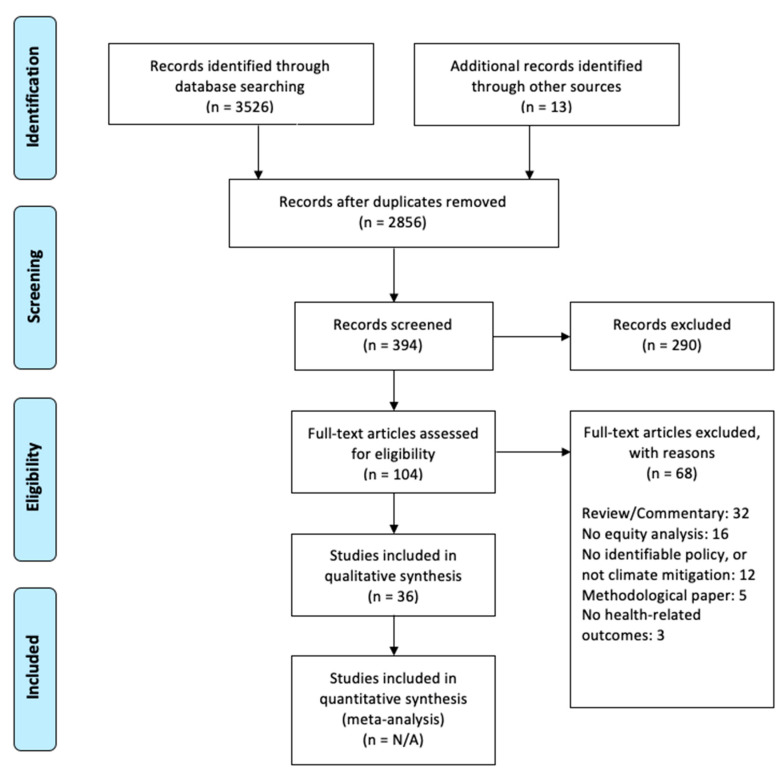
Climate change mitigation policies can either facilitate or hinder progress towards health equity, and can have particular implications for Indigenous health. We sought to summarize current knowledge about the potential impacts (co-benefits and co-harms) of climate mitigation policies and interventions on Indigenous health. Using a Kaupapa Māori theoretical positioning, we adapted a validated search strategy to identify studies for this scoping review. Our review included empirical and modeling studies that examined a range of climate change mitigation measures, with health-related outcomes analyzed by ethnicity or socioeconomic status. Data were extracted from published reports and summarized. We identified 36 studies that examined a diverse set of policy instruments, with the majority located in high-income countries. Most studies employed conventional Western research methodologies, and few examined potential impacts of particular relevance to Indigenous peoples. The existing body of knowledge is limited in the extent to which it can provide definitive evidence about co-benefits and co-harms for Indigenous health, with impacts highly dependent on individual policy characteristics and contextual factors. Improving the quality of evidence will require research partnerships with Indigenous communities and study designs that centralize Indigenous knowledges, values, realities and priorities.
气候变化减缓政策既可以促进也可以阻碍实现健康公平的进展,并且可能对原住民健康产生特殊影响。我们旨在总结关于气候变化减缓政策和干预措施对原住民健康的潜在影响(共同利益和共同危害)的现有知识。我们使用毛利理论定位方法,调整了经过验证的搜索策略,以确定本次范围审查的研究。我们的审查包括检查各种气候变化减缓措施的实证和建模研究,通过种族或社会经济地位分析与健康相关的结果。从已发表的报告中提取数据并进行总结。我们确定了 36 项研究,这些研究检查了一系列不同的政策手段,其中大多数研究在高收入国家进行。大多数研究采用了传统的西方研究方法,很少有研究考察了与原住民特别相关的潜在影响。现有知识体系在提供关于原住民健康的共同利益和共同危害的明确证据方面存在局限性,影响在很大程度上取决于个别政策特点和背景因素。要提高证据质量,就需要与原住民社区建立研究伙伴关系,并采用以原住民知识、价值观、现实和优先事项为中心的研究设计。