Kim Young Kyu, Kim Sang Eun, Chang Park Hyo, Hwang Jeong Ho, Lee Hoon Taek
Department of Stem Cell and Regenerative Biotechnology, Konkuk University, 120 Neungdong-ro, Gwangjin-gu, Seoul-si, 27478, Republic of Korea.
Department of Animal Model Research Group, Korea Institute of Toxicology, 30 Baekhak 1 gil, Jeongeup-si, Jeollabuk-do, 56212, Republic of Korea.
Biochem Biophys Rep. 2020 Nov 27;24:100857. doi: 10.1016/j.bbrep.2020.100857. eCollection 2020 Dec.
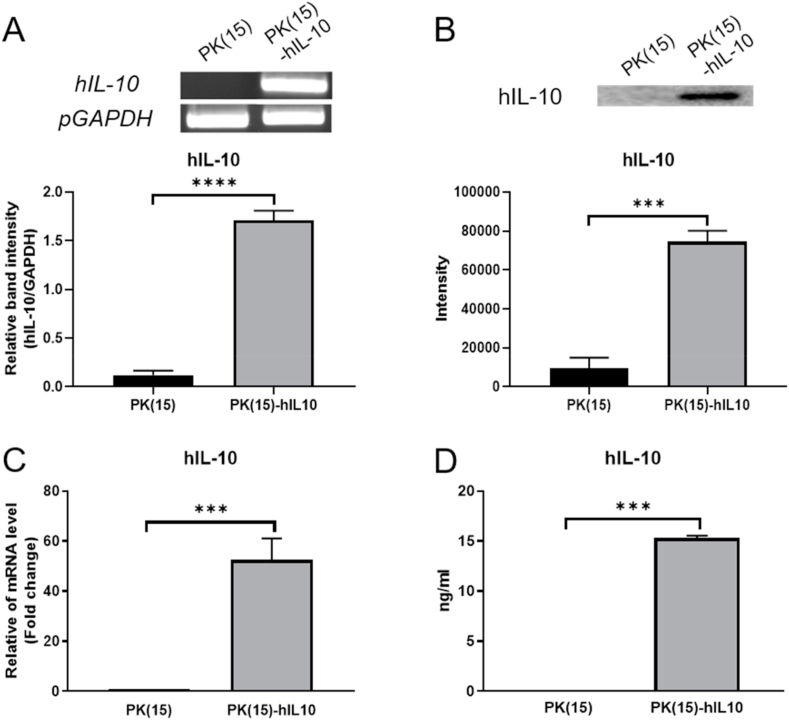
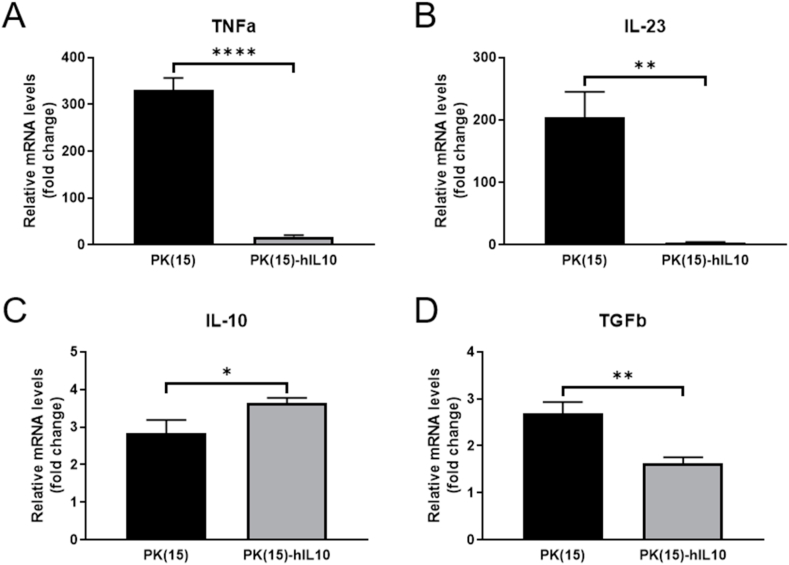
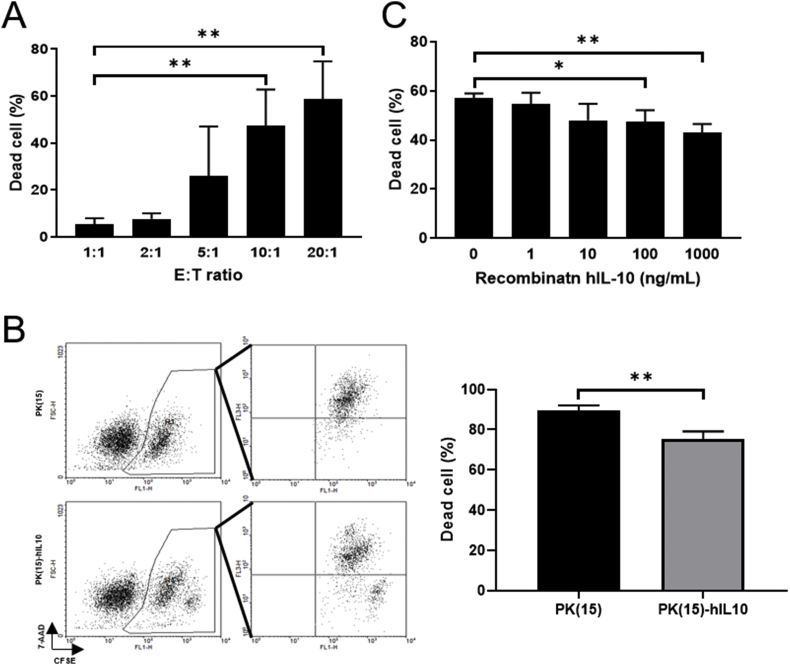
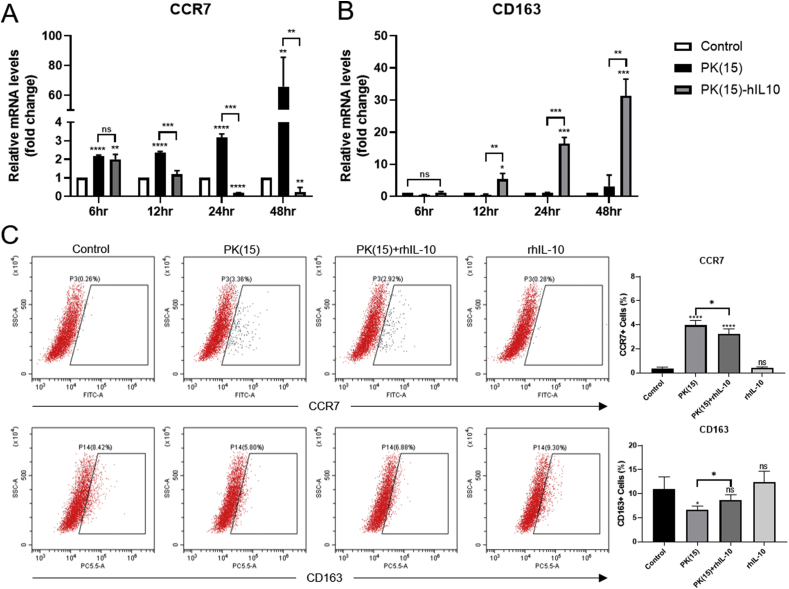
Xenotransplantation has been considered an alternative to the moderate shortage of donor organs for transplantation. To achieve successful xenotransplatation, there is the need to overcome immune rejection. Although, hyperacute rejection has been overcome by α1,3-galactosyltransferase knockout pig, cellular immune rejection remains as a subsequent barrier. Interleukin-10 (IL-10) is known as an anti-inflammatory and immunomodulatory cytokine which has been shown to limit inflammatory responses by inhibiting macrophage activation in several animal experiments. To study the effect of human IL-10 (hIL-10) on pig-to-human xenotransplantation, porcine kidney epithelial cell line (PK(15)) expressing hIL-10 was established. The cytotoxicity of macrophages decreased by hIL-10 from transgenic cells. Furthermore, there is a decreased production of pro-inflammatory cytokines, tumor necrosis factor-α and interleukin-23, and increased anti-inflammatory cytokines like IL-10, but not transforming growth factor beta, in the presence of hIL-10. Also, macrophage polarization toward M2-like phenotype were induced by hIL-10 from transgenic PK(15) cells. Finally, we suggest that the cytotoxicity of human macrophages was reduced by hIL-10 from transgenic cells, inducing M2-like macrophage polarization. Therefore, these results show that hIL-10 transgenic pig can be used as a model to overcome acute immune rejection in pig-to-human xenotransplantation.
异种移植已被视为解决移植供体器官中度短缺问题的一种替代方法。为实现成功的异种移植,有必要克服免疫排斥反应。尽管通过敲除α1,3-半乳糖基转移酶的猪已克服了超急性排斥反应,但细胞免疫排斥仍然是后续的障碍。白细胞介素-10(IL-10)是一种抗炎和免疫调节细胞因子,在多项动物实验中已证明它可通过抑制巨噬细胞活化来限制炎症反应。为研究人IL-10(hIL-10)对猪到人的异种移植的影响,建立了表达hIL-10的猪肾上皮细胞系(PK(15))。来自转基因细胞的hIL-10可降低巨噬细胞的细胞毒性。此外,在存在hIL-10的情况下,促炎细胞因子肿瘤坏死因子-α和白细胞介素-23的产生减少,而抗炎细胞因子如IL-10增加,但转化生长因子β未增加。而且,来自转基因PK(15)细胞的hIL-10可诱导巨噬细胞向M2样表型极化。最后,我们认为来自转基因细胞的hIL-10可降低人巨噬细胞的细胞毒性,诱导M2样巨噬细胞极化。因此,这些结果表明hIL-10转基因猪可作为克服猪到人的异种移植中急性免疫排斥反应的模型。