Molecular Stethoscope Inc., 3210 Merryfield Row, San Diego, CA 92121, USA.
Department of Neurosciences, University of California, San Diego, La Jolla, CA 92093, USA.
Sci Adv. 2020 Dec 9;6(50). doi: 10.1126/sciadv.abb1654. Print 2020 Dec.
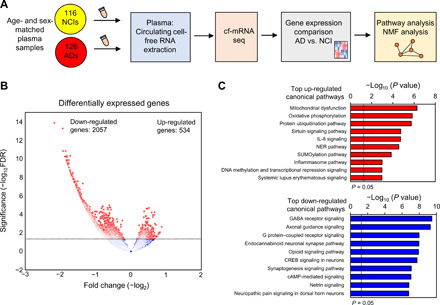
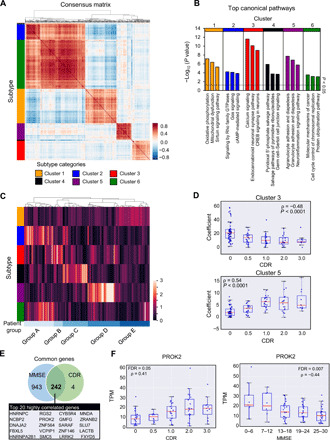
The lack of accessible noninvasive tools to examine the molecular alterations occurring in the brain limits our understanding of the causes and progression of Alzheimer's disease (AD), as well as the identification of effective therapeutic strategies. Here, we conducted a comprehensive profiling of circulating, cell-free messenger RNA (cf-mRNA) in plasma of 126 patients with AD and 116 healthy controls of similar age. We identified 2591 dysregulated genes in the cf-mRNA of patients with AD, which are enriched in biological processes well known to be associated with AD. Dysregulated genes included brain-specific genes and resembled those identified to be dysregulated in postmortem AD brain tissue. Furthermore, we identified disease-relevant circulating gene transcripts that correlated with the severity of cognitive impairment. These data highlight the potential of high-throughput cf-mRNA sequencing to evaluate AD-related pathophysiological alterations in the brain, leading to precision healthcare solutions that could improve AD patient management.
缺乏可用于检测大脑中发生的分子变化的无创工具,限制了我们对阿尔茨海默病(AD)的病因和发病进程的理解,也限制了我们对有效治疗策略的识别。在这里,我们对 126 名 AD 患者和 116 名年龄相近的健康对照者的血浆循环无细胞信使 RNA(cf-mRNA)进行了全面分析。我们在 AD 患者的 cf-mRNA 中鉴定出了 2591 个失调基因,这些基因富集在已知与 AD 相关的生物学过程中。失调基因包括大脑特异性基因,与在 AD 死后脑组织中鉴定出的失调基因相似。此外,我们还鉴定出与认知障碍严重程度相关的与疾病相关的循环基因转录本。这些数据突出了高通量 cf-mRNA 测序在评估大脑中与 AD 相关的病理生理变化方面的潜力,从而为改善 AD 患者管理的精准医疗解决方案提供了可能。