Laboratório de Parasitologia, Instituto Butantan, Sao Paulo, Brazil.
Departamento de Bioquímica, Instituto de Química, Universidade de Sao Paulo, Sao Paulo, Brazil.
Nat Commun. 2021 Oct 26;12(1):6181. doi: 10.1038/s41467-021-26497-0.
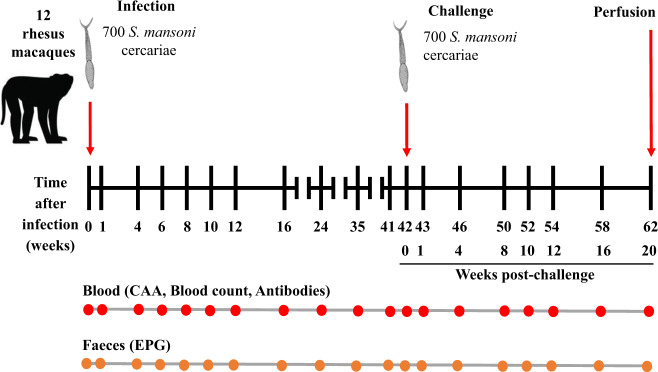
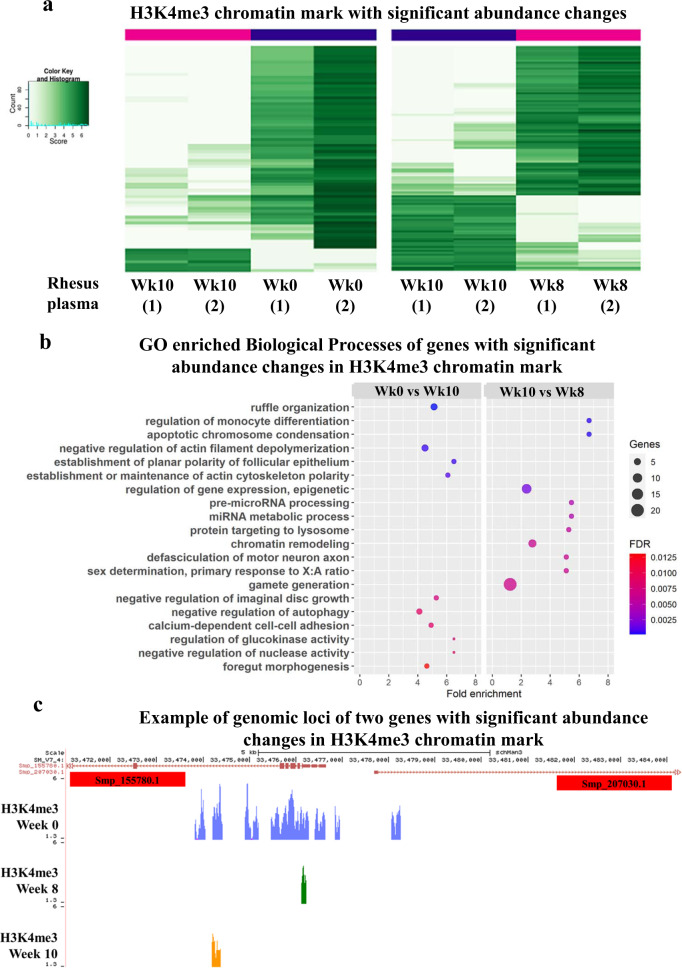
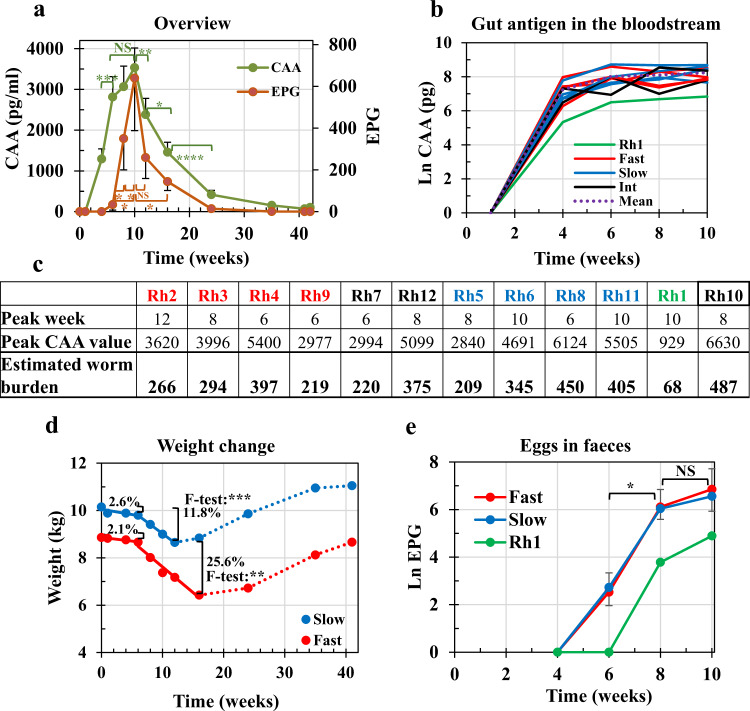
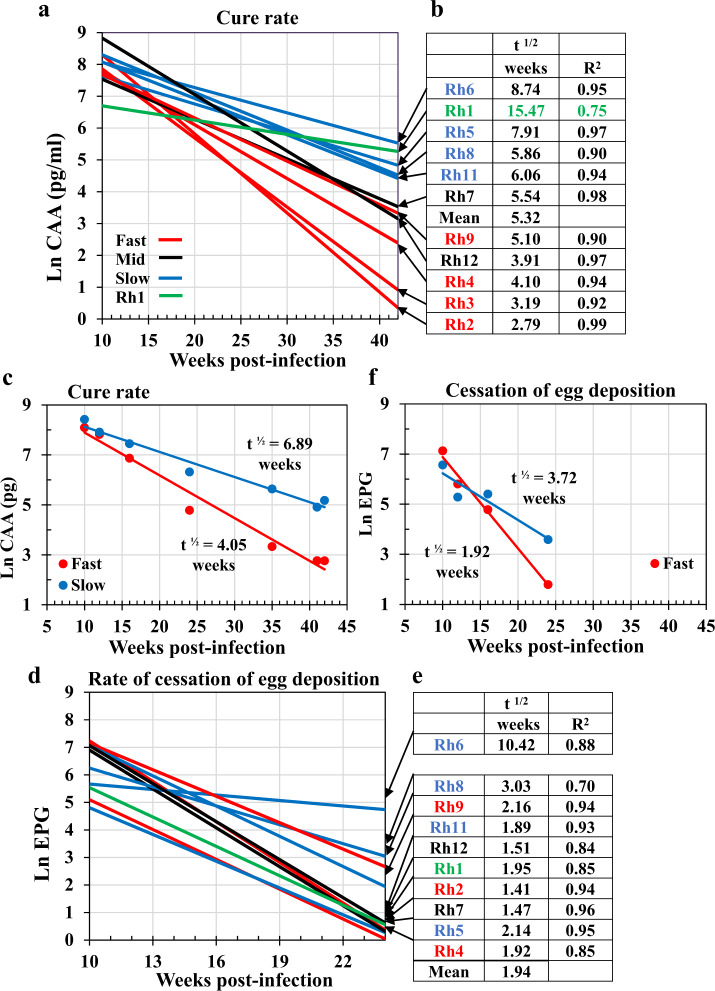
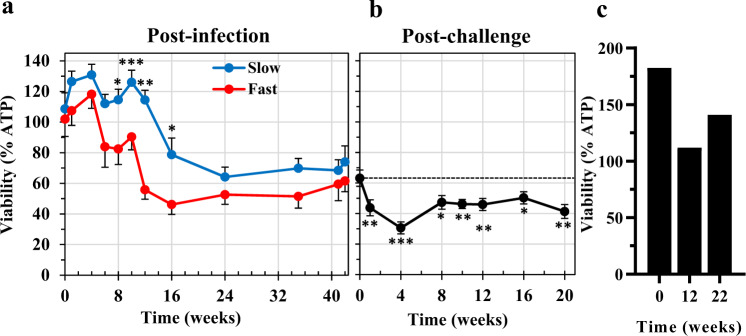
The rhesus macaque provides a unique model of acquired immunity against schistosomes, which afflict >200 million people worldwide. By monitoring bloodstream levels of parasite-gut-derived antigen, we show that from week 10 onwards an established infection with Schistosoma mansoni is cleared in an exponential manner, eliciting resistance to reinfection. Secondary challenge at week 42 demonstrates that protection is strong in all animals and complete in some. Antibody profiles suggest that antigens mediating protection are the released products of developing schistosomula. In culture they are killed by addition of rhesus plasma, collected from week 8 post-infection onwards, and even more efficiently with post-challenge plasma. Furthermore, cultured schistosomula lose chromatin activating marks at the transcription start site of genes related to worm development and show decreased expression of genes related to lysosomes and lytic vacuoles involved with autophagy. Overall, our results indicate that enhanced antibody responses against the challenge migrating larvae mediate the naturally acquired protective immunity and will inform the route to an effective vaccine.
食蟹猴为研究血吸虫获得性免疫提供了一个独特的模型,而血吸虫病影响着全球超过 2 亿人。通过监测源自寄生虫肠道的抗原在血液中的水平,我们发现从第 10 周开始,曼氏血吸虫的既定感染呈指数级清除,从而引发对再感染的抵抗。第 42 周的二次攻击表明,所有动物都具有很强的保护作用,有些动物则具有完全的保护作用。抗体谱表明,介导保护的抗原是正在发育的尾蚴释放的产物。在培养中,用感染后第 8 周开始收集的食蟹猴血浆,甚至用二次感染后的血浆处理,都可以有效地杀死这些抗原。此外,培养的尾蚴在与蠕虫发育相关的基因的转录起始位点失去染色质激活标记,并且与自噬相关的溶酶体和溶酶体空泡相关的基因表达减少。总的来说,我们的研究结果表明,针对挑战迁移幼虫的增强型抗体反应介导了自然获得的保护性免疫,这将为开发有效的疫苗指明方向。