Section of Vitreoretinal Disease and Surgery, Department of Ophthalmology, Emory Eye Center, Emory University School of Medicine, Atlanta, Georgia, United States of America.
Viral Hemorrhagic Fever Program, Kenema Government Hospital, Kenema, Sierra Leone.
PLoS One. 2020 Dec 10;15(12):e0243766. doi: 10.1371/journal.pone.0243766. eCollection 2020.
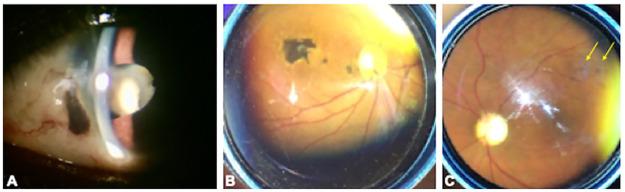
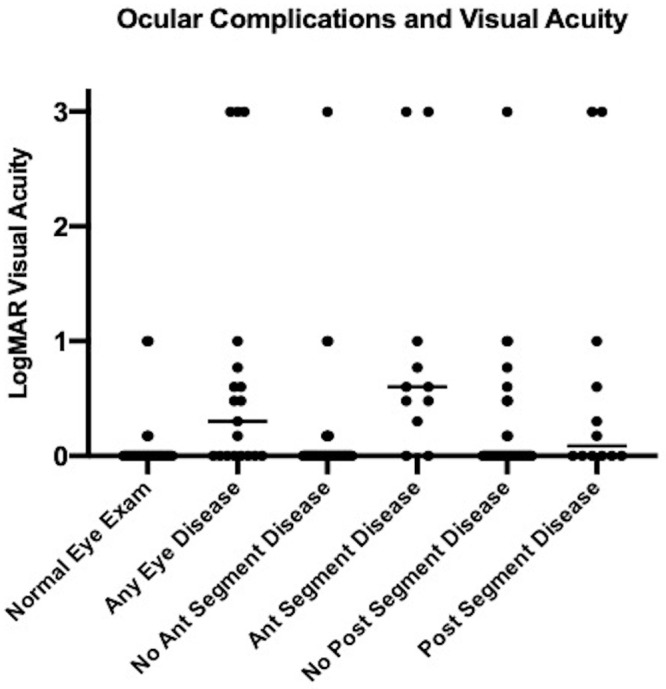
The purpose of this study was to describe the ocular findings, structural ocular complications, and vision impairment in a cohort of Lassa fever survivors in Kenema, Sierra Leone. A retrospective, uncontrolled, cross-sectional study of 31 Lassa fever survivors (62 eyes) who underwent an ophthalmic evaluation in January 2018 at the Kenema Government Hospital in Kenema, Sierra Leone was performed. Data collection included demographic information, ocular/systemic symptoms, visual acuity (VA), and ophthalmic examination findings. Main outcome measures included anterior and posterior segment ophthalmic manifestations and level of VA impairment in Lassa fever survivors. Anterior segment findings included cataract (18%) and pterygium (2%), while posterior segment manifestations consisted of glaucoma (6%), preretinal hemorrhage (2%), and lattice degeneration (2%). Findings suggestive of prior sequelae of uveitis included chorioretinal scarring (5%), retinal fibrosis (3%), and vitreous opacity (2%). Visual acuity was normal/mildly impaired in 53 eyes (85%), moderately impaired in 6 eyes (10%), and 3 eyes (5%) were considered blind by the World Health Organization (WHO) criteria. Median VA was worse in Lassa fever survivors with ophthalmic disease findings (p<0.0001) for both anterior segment (p<0.0001) and posterior segment disease (p<0.013). Untreated cataract was a significant cause of visual acuity impairment (p<0.0001). Lassa fever survivors in this cohort were found to have cataract and posterior segment findings that potentially represent sequelae of uveitis associated with visual impairment. Future studies are warranted to improve our understanding of the spectrum of ocular disease in this emerging infectious disease of public health consequence.
本研究旨在描述塞拉利昂凯内马市拉沙热幸存者的眼部发现、眼部结构并发症和视力损害。我们对 2018 年 1 月在凯内马市凯内马政府医院接受眼科评估的 31 名拉沙热幸存者(62 只眼)进行了回顾性、非对照、横断面研究。数据收集包括人口统计学信息、眼部/全身症状、视力(VA)和眼科检查结果。主要观察指标包括拉沙热幸存者的眼前段和后段眼部表现以及 VA 损害程度。眼前段表现包括白内障(18%)和翼状胬肉(2%),而后段表现包括青光眼(6%)、视网膜前出血(2%)和格子状变性(2%)。提示葡萄膜炎后遗症的发现包括脉络膜视网膜瘢痕(5%)、视网膜纤维化(3%)和玻璃体混浊(2%)。53 只眼(85%)视力正常/轻度受损,6 只眼(10%)视力中度受损,3 只眼(5%)根据世界卫生组织(WHO)标准被认为失明。有眼部疾病发现的拉沙热幸存者的平均视力更差(p<0.0001),包括前节疾病(p<0.0001)和后节疾病(p<0.013)。未经治疗的白内障是视力损害的重要原因(p<0.0001)。本队列中的拉沙热幸存者发现有白内障和后段表现,这些表现可能代表与视力损害相关的葡萄膜炎后遗症。需要进一步研究以提高我们对这种新出现的传染病眼部疾病谱的认识。