Bobermin Larissa Daniele, Quincozes-Santos André, Santos Camila Leite, Varela Ana Paula M, Teixeira Thais F, Wartchow Krista Minéia, Lissner Lílian Juliana, da Silva Amanda, Thomaz Natalie K, Santi Lucélia, Beys-da-Silva Walter O, Roehe Paulo M, Sesterheim Patrícia, Guimarães Jorge A, Gonçalves Carlos-Alberto, Souza Diogo Onofre
Programa de Pós-Graduação em Ciências Biológicas: Bioquímica, Instituto de Ciências Básicas da Saúde, Universidade Federal do Rio Grande do Sul, Rua Ramiro Barcelos, 2600 - Anexo, Bairro Santa Cecília, Porto Alegre, RS, 90035-003, Brazil.
Departamento de Bioquímica, Instituto de Ciências Básicas da Saúde, Universidade Federal do Rio Grande do Sul, Porto Alegre, RS, Brazil.
Sci Rep. 2020 Dec 10;10(1):21604. doi: 10.1038/s41598-020-78735-y.
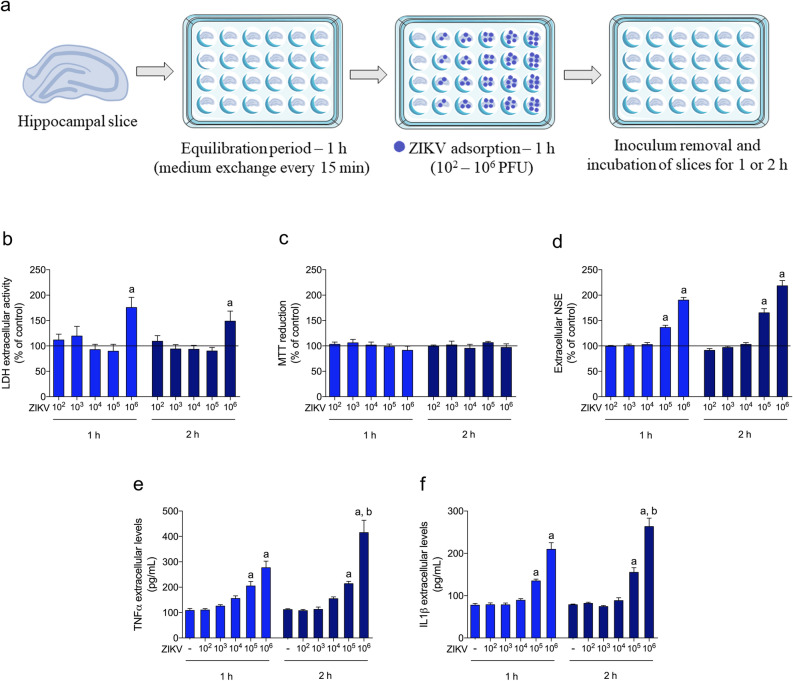
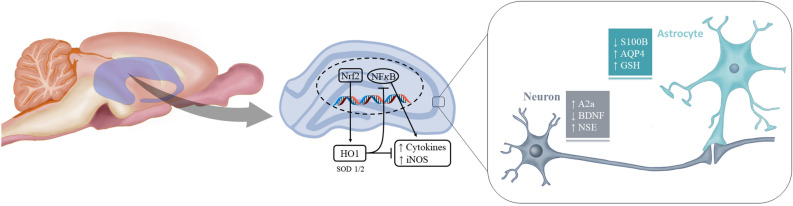
Zika virus (ZIKV) infection during pregnancy was associated with microcephaly in neonates, but clinical and experimental evidence indicate that ZIKV also causes neurological complications in adults. However, the changes in neuron-glial communication, which is essential for brain homeostasis, are still unknown. Here, we report that hippocampal slices from adult rats exposed acutely to ZIKV showed significant cellular alterations regarding to redox homeostasis, inflammatory process, neurotrophic functions and molecular signalling pathways associated with neurons and glial cells. Our findings support the hypothesis that ZIKV is highly neurotropic and its infection readily induces an inflammatory response, characterized by an increased expression and/or release of pro-inflammatory cytokines. We also observed changes in neural parameters, such as adenosine receptor A2a expression, as well as in the release of brain-derived neurotrophic factor and neuron-specific enolase, indicating plasticity synaptic impairment/neuronal damage. In addition, ZIKV induced a glial commitment, with alterations in specific and functional parameters such as aquaporin 4 expression, S100B secretion and glutathione synthesis. ZIKV also induced p21 senescence-associated gene expression, indicating that ZIKV may induce early senescence. Taken together, our results indicate that ZIKV-induced neuroinflammation, involving nuclear factor erythroid 2-related factor 2 (Nrf2) and nuclear factor κB (NFκB) pathways, affects important aspects of neuron-glia communication. Therefore, although ZIKV infection is transient, long-term consequences might be associated with neurological and/or neurodegenerative diseases.
孕期感染寨卡病毒(ZIKV)与新生儿小头畸形有关,但临床和实验证据表明,ZIKV也会导致成人出现神经并发症。然而,对于维持脑内稳态至关重要的神经元与神经胶质细胞间通讯的变化仍不清楚。在此,我们报告称,急性暴露于ZIKV的成年大鼠海马切片在氧化还原稳态、炎症过程、神经营养功能以及与神经元和神经胶质细胞相关的分子信号通路方面显示出显著的细胞改变。我们的研究结果支持以下假说:ZIKV具有高度嗜神经性,其感染容易引发炎症反应,其特征是促炎细胞因子的表达和/或释放增加。我们还观察到神经参数的变化,如腺苷A2a受体表达,以及脑源性神经营养因子和神经元特异性烯醇化酶的释放变化,这表明突触可塑性受损/神经元损伤。此外,ZIKV诱导了神经胶质细胞的变化,在水通道蛋白4表达、S100B分泌和谷胱甘肽合成等特定和功能参数方面出现改变。ZIKV还诱导了p21衰老相关基因的表达,表明ZIKV可能诱导早期衰老。综上所述,我们的结果表明,ZIKV诱导的神经炎症涉及核因子红细胞2相关因子2(Nrf2)和核因子κB(NFκB)信号通路,影响神经元与神经胶质细胞通讯的重要方面。因此,尽管ZIKV感染是短暂的,但长期后果可能与神经和/或神经退行性疾病有关。