Department of Basic Medical Sciences, College of Dentistry, Al Zulfi, Majmaah University, Al-Majmaah, Riyadh, Kingdom of Saudi Arabia.
Department of Medical Education, College of Dentistry, Al Zulfi, Majmaah University, Al Majmaah, Riyadh, Kingdom of Saudi Arabia.
PeerJ. 2022 Nov 4;10:e14227. doi: 10.7717/peerj.14227. eCollection 2022.
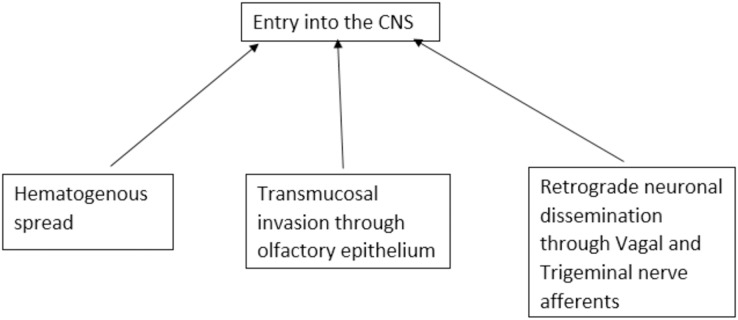
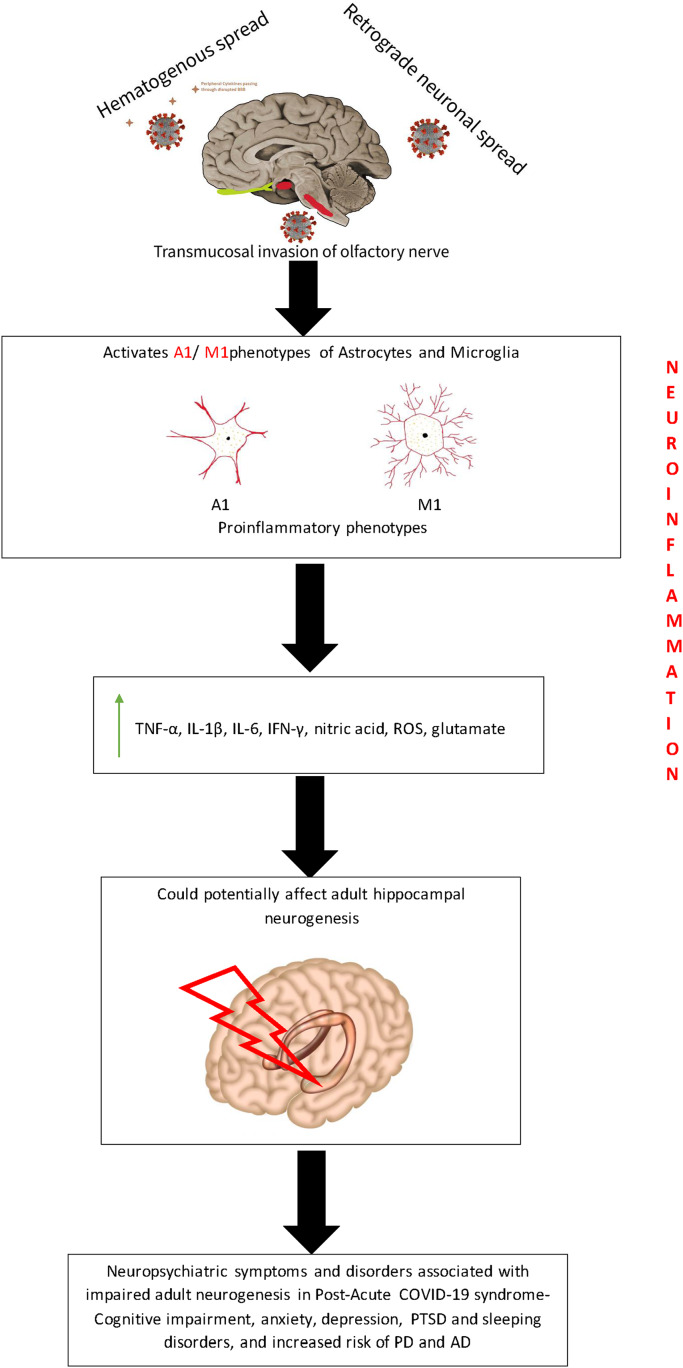
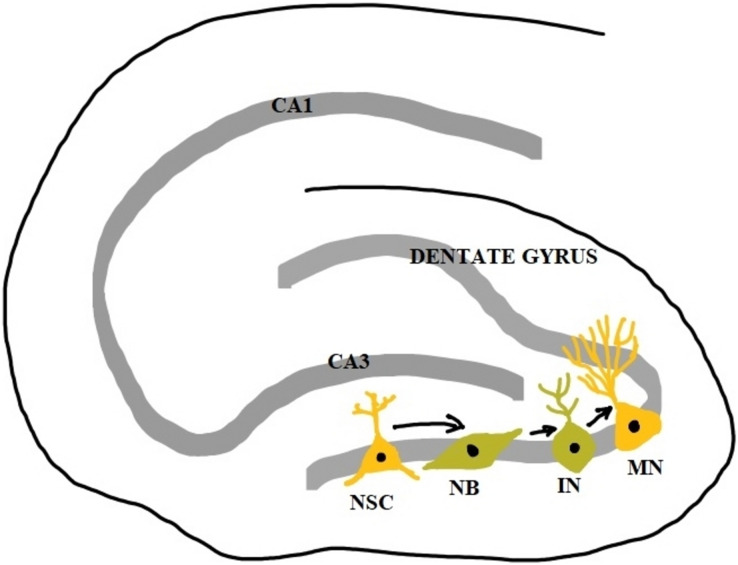
Persistence of symptoms beyond the initial 3 to 4 weeks after infection is defined as post-acute COVID-19 syndrome (PACS). A wide range of neuropsychiatric symptoms like anxiety, depression, post-traumatic stress disorder, sleep disorders and cognitive disturbances have been observed in PACS. The review was conducted based on PRISMA-S guidelines for literature search strategy for systematic reviews. A cytokine storm in COVID-19 may cause a breach in the blood brain barrier leading to cytokine and SARS-CoV-2 entry into the brain. This triggers an immune response in the brain by activating microglia, astrocytes, and other immune cells leading to neuroinflammation. Various inflammatory biomarkers like inflammatory cytokines, chemokines, acute phase proteins and adhesion molecules have been implicated in psychiatric disorders and play a major role in the precipitation of neuropsychiatric symptoms. Impaired adult neurogenesis has been linked with a variety of disorders like depression, anxiety, cognitive decline, and dementia. Persistence of neuroinflammation was observed in COVID-19 survivors 3 months after recovery. Chronic neuroinflammation alters adult neurogenesis with pro-inflammatory cytokines supressing anti-inflammatory cytokines and chemokines favouring adult neurogenesis. Based on the prevalence of neuropsychiatric symptoms/disorders in PACS, there is more possibility for a potential impairment in adult neurogenesis in COVID-19 survivors. This narrative review aims to discuss the various neuroinflammatory processes during PACS and its effect on adult neurogenesis.
症状在感染后最初的 3 到 4 周后持续存在被定义为急性新冠后综合征(PACS)。在 PACS 中观察到了广泛的神经精神症状,如焦虑、抑郁、创伤后应激障碍、睡眠障碍和认知障碍。该综述是根据 PRISMA-S 指南进行的,用于对系统评价进行文献检索策略。COVID-19 中的细胞因子风暴可能导致血脑屏障破裂,导致细胞因子和 SARS-CoV-2 进入大脑。这通过激活小胶质细胞、星形胶质细胞和其他免疫细胞在大脑中引发免疫反应,导致神经炎症。各种炎症生物标志物,如炎症细胞因子、趋化因子、急性期蛋白和粘附分子,与精神障碍有关,并在神经精神症状的发生中起主要作用。成人神经发生受损与多种疾病有关,如抑郁、焦虑、认知能力下降和痴呆。在 COVID-19 幸存者中,在康复后 3 个月观察到持续的神经炎症。慢性神经炎症改变了成年神经发生,促炎细胞因子抑制抗炎细胞因子和趋化因子,有利于成年神经发生。基于 PACS 中神经精神症状/障碍的患病率,COVID-19 幸存者中成年神经发生受损的可能性更大。本综述旨在讨论 PACS 期间的各种神经炎症过程及其对成年神经发生的影响。