Nakata Ryu, Yano Mariko, Hiraga Susumu, Teraishi Masayoshi, Okumoto Yutaka, Mori Naoki, Kaga Akito
Institute of Crop Science, National Agriculture and Food Research Organization, Tsukuba, Japan.
Division of Applied Life Sciences, Graduate School of Agriculture, Kyoto University, Kyoto, Japan.
Front Genet. 2020 Nov 13;11:581917. doi: 10.3389/fgene.2020.581917. eCollection 2020.
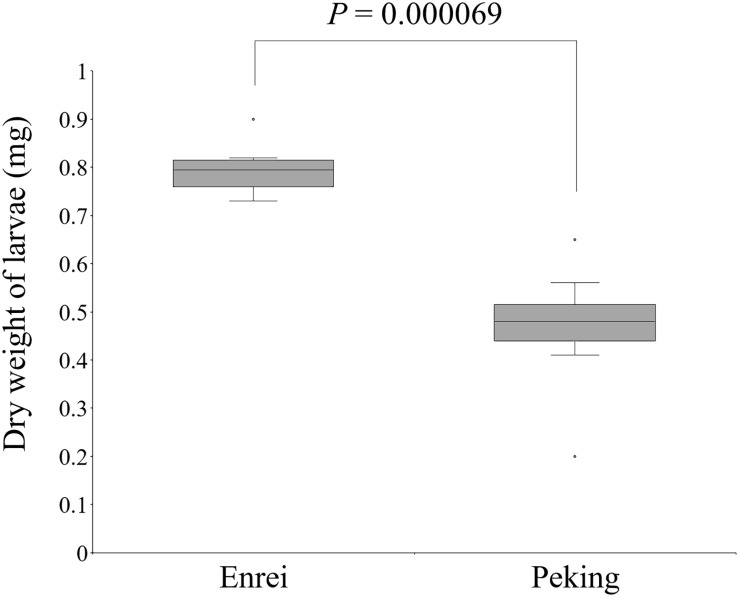
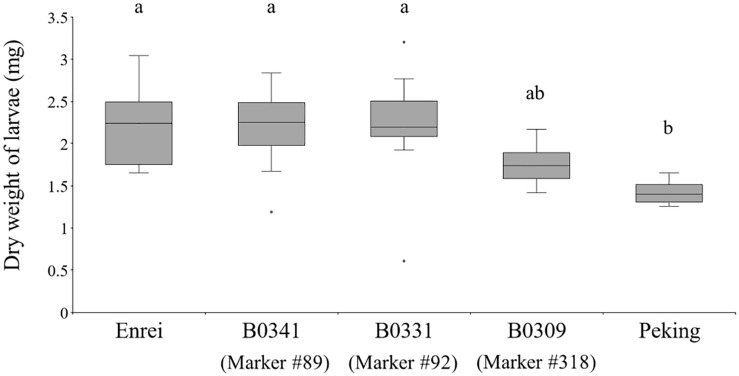
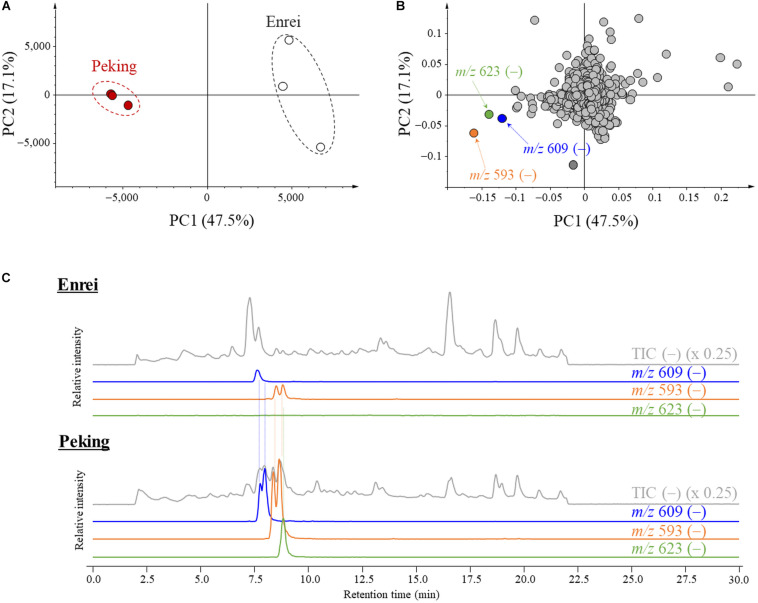
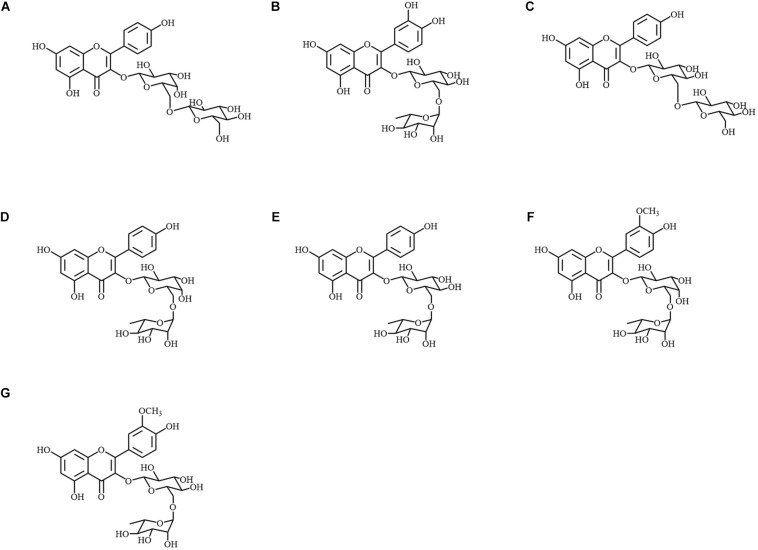
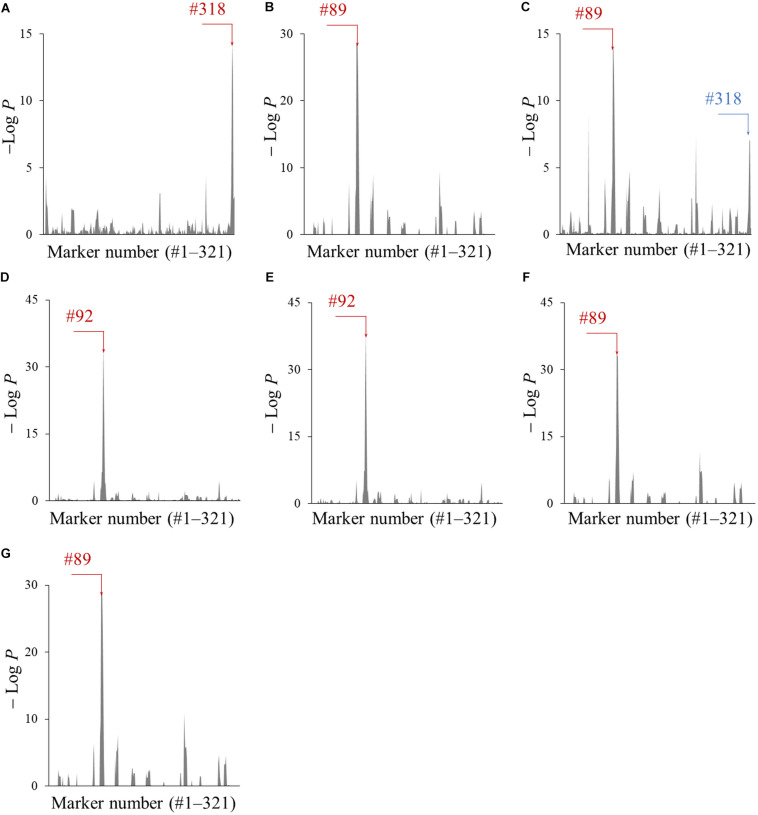
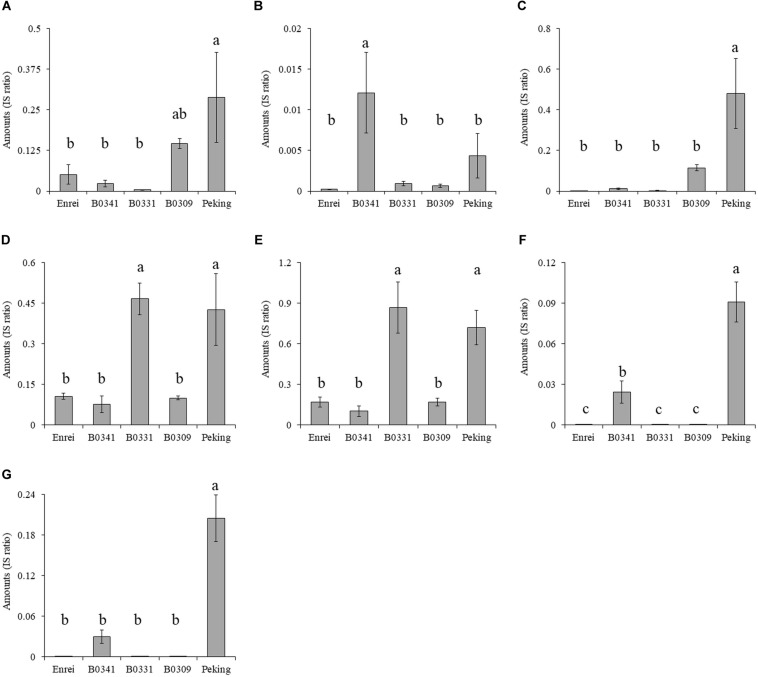
The common cutworm (CCW; ) is one of the major insect pests of soybean in Asia and Oceania. Although quantitative trail loci related to CCW resistance have been introduced into leading soybean cultivars, these do not exhibit sufficient resistance against CCW. Thus, understanding the genetic and metabolic resistance mechanisms of CCW as well as integrating other new resistance genes are required. In this study, we focused on a primitive soybean landrace, Peking, which has retained resistances to various pests. We found a resistance to CCW in Peking by the detached-leaf feeding assay, and subsequently determined the genetic and metabolic basis of the resistance mechanism using chromosome segment substitution lines (CSSLs) of Peking. Several characteristic metabolites for Peking were identified by the metabolomic approach using liquid chromatography/mass spectrometry combined with a principle component analysis. The structure of seven metabolites were determined by nuclear magnetic resonance (NMR) analysis. The genomic segments of Peking on chromosome 06 (Chr06) and Chr20 had a clear association with these metabolites. Moreover, a line possessing a Peking genomic segment on Chr20 inhibited growth of the CCW. The genetic factors and the metabolites on Chr20 in Peking will be useful for understanding mechanisms underlying CCW resistance and breeding resistant soybean cultivars.
小地老虎是亚洲和大洋洲大豆的主要害虫之一。尽管与小地老虎抗性相关的数量性状位点已被引入到主要大豆品种中,但这些品种对小地老虎并未表现出足够的抗性。因此,需要了解小地老虎的遗传和代谢抗性机制,并整合其他新的抗性基因。在本研究中,我们聚焦于一个原始大豆地方品种“北京”,它对多种害虫具有抗性。通过离体叶片饲养试验,我们发现“北京”对小地老虎具有抗性,随后利用“北京”的染色体片段代换系(CSSL)确定了抗性机制的遗传和代谢基础。使用液相色谱/质谱联用结合主成分分析的代谢组学方法,鉴定了“北京”的几种特征代谢产物。通过核磁共振(NMR)分析确定了7种代谢产物的结构。“北京”在第6号染色体(Chr06)和第20号染色体上的基因组片段与这些代谢产物有明显关联。此外,在第20号染色体上拥有“北京”基因组片段的品系抑制了小地老虎的生长。“北京”第20号染色体上的遗传因子和代谢产物将有助于理解小地老虎抗性的潜在机制以及培育抗性大豆品种。