Department of Biomedical Engineering, Rensselaer Polytechnic Institute, 110 8th St, Troy, NY, 12180, USA.
School for Engineering of Matter, Transport and Energy, Arizona State University, P.O. Box 879309, ECG 302, 501 E Tyler Mall, Tempe, AZ, 85287-9309, USA.
BMC Pediatr. 2020 Dec 14;20(1):557. doi: 10.1186/s12887-020-02437-7.
Previous research studies have demonstrated abnormalities in the metabolism of mothers of young children with autism.
Metabolic analysis was performed on blood samples from 30 mothers of young children with Autism Spectrum Disorder (ASD-M) and from 29 mothers of young typically-developing children (TD-M). Targeted metabolic analysis focusing on the folate one-carbon metabolism (FOCM) and the transsulfuration pathway (TS) as well as broad metabolic analysis were performed. Statistical analysis of the data involved both univariate and multivariate statistical methods.
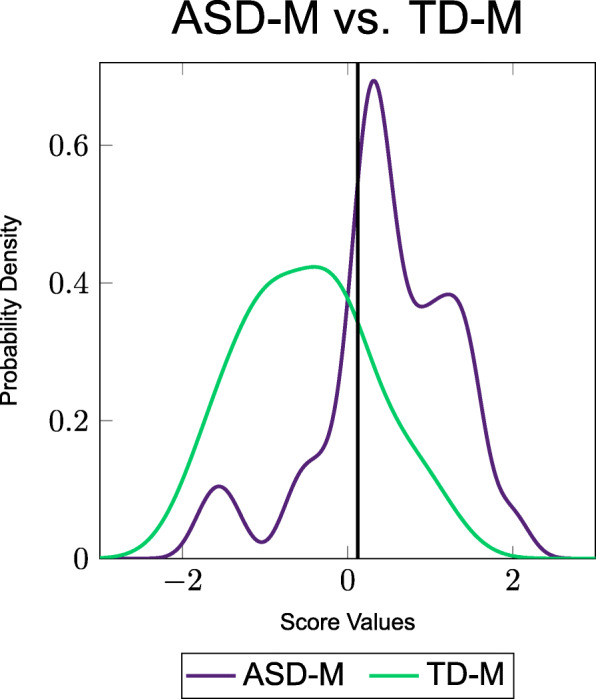
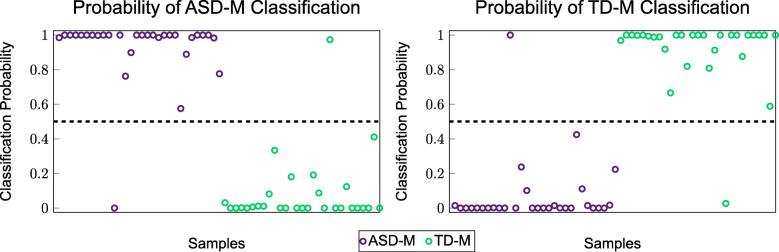
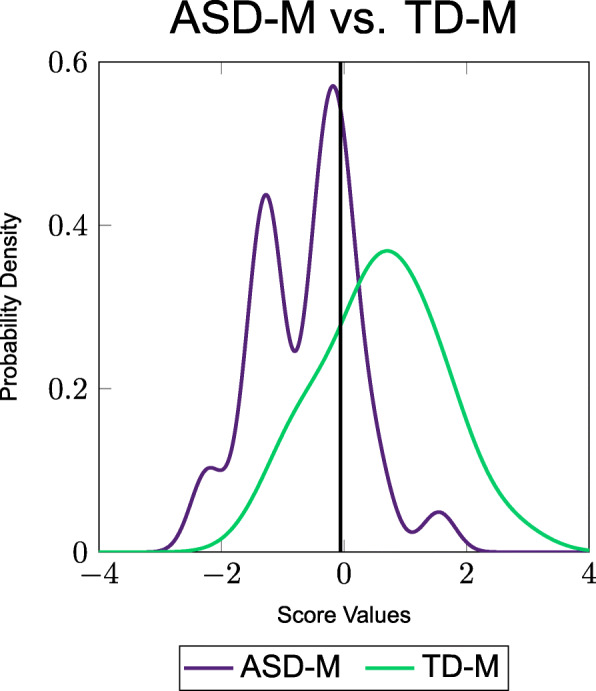
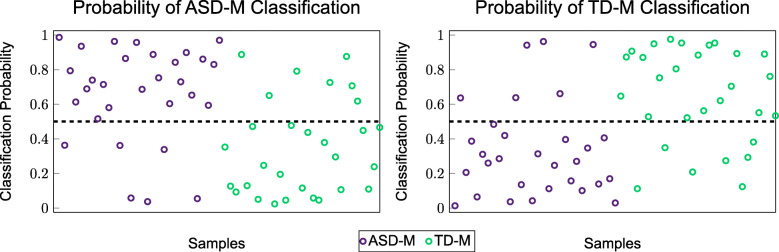
Univariate analysis revealed significant differences in 5 metabolites from the folate one-carbon metabolism and the transsulfuration pathway and differences in an additional 48 metabolites identified by broad metabolic analysis, including lower levels of many carnitine-conjugated molecules. Multivariate analysis with leave-one-out cross-validation allowed classification of samples as belonging to one of the two groups of mothers with 93% sensitivity and 97% specificity with five metabolites. Furthermore, each of these five metabolites correlated with 8-15 other metabolites indicating that there are five clusters of correlated metabolites. In fact, all but 5 of the 50 metabolites with the highest area under the receiver operating characteristic curve were associated with the five identified groups. Many of the abnormalities appear linked to low levels of folate, vitamin B12, and carnitine-conjugated molecules.
Mothers of children with ASD have many significantly different metabolite levels compared to mothers of typically developing children at 2-5 years after birth.
先前的研究表明,自闭症儿童的母亲代谢存在异常。
对 30 名自闭症谱系障碍(ASD-M)儿童的母亲和 29 名发育正常的儿童的母亲(TD-M)的血液样本进行代谢分析。进行了靶向代谢分析,重点关注叶酸一碳代谢(FOCM)和转硫途径(TS)以及广泛的代谢分析。数据的统计分析涉及单变量和多变量统计方法。
单变量分析显示,来自叶酸一碳代谢和转硫途径的 5 种代谢物存在显著差异,通过广泛代谢分析还发现了另外 48 种代谢物存在差异,包括许多肉碱缀合物的水平降低。具有留一法交叉验证的多元分析允许使用 5 种代谢物将样本分类为属于两组母亲中的一组,具有 93%的敏感性和 97%的特异性。此外,这 5 种代谢物中的每一种都与其他 8-15 种代谢物相关,表明存在 5 个相关代谢物簇。实际上,除了 50 种具有最高接收器工作特征曲线下面积的代谢物中的 5 种之外,其余代谢物都与 5 个已确定的组相关。许多异常似乎与叶酸、维生素 B12 和肉碱缀合物的水平较低有关。
与发育正常的儿童的母亲相比,自闭症儿童的母亲在出生后 2-5 岁时具有许多代谢物水平显著不同。