Department of Biotechnology, Yonsei University, Seoul 03722, Korea.
Department of Food Science and Technology, Chung-Ang University, Anseong 456-756, Korea.
Nutrients. 2020 Dec 10;12(12):3790. doi: 10.3390/nu12123790.
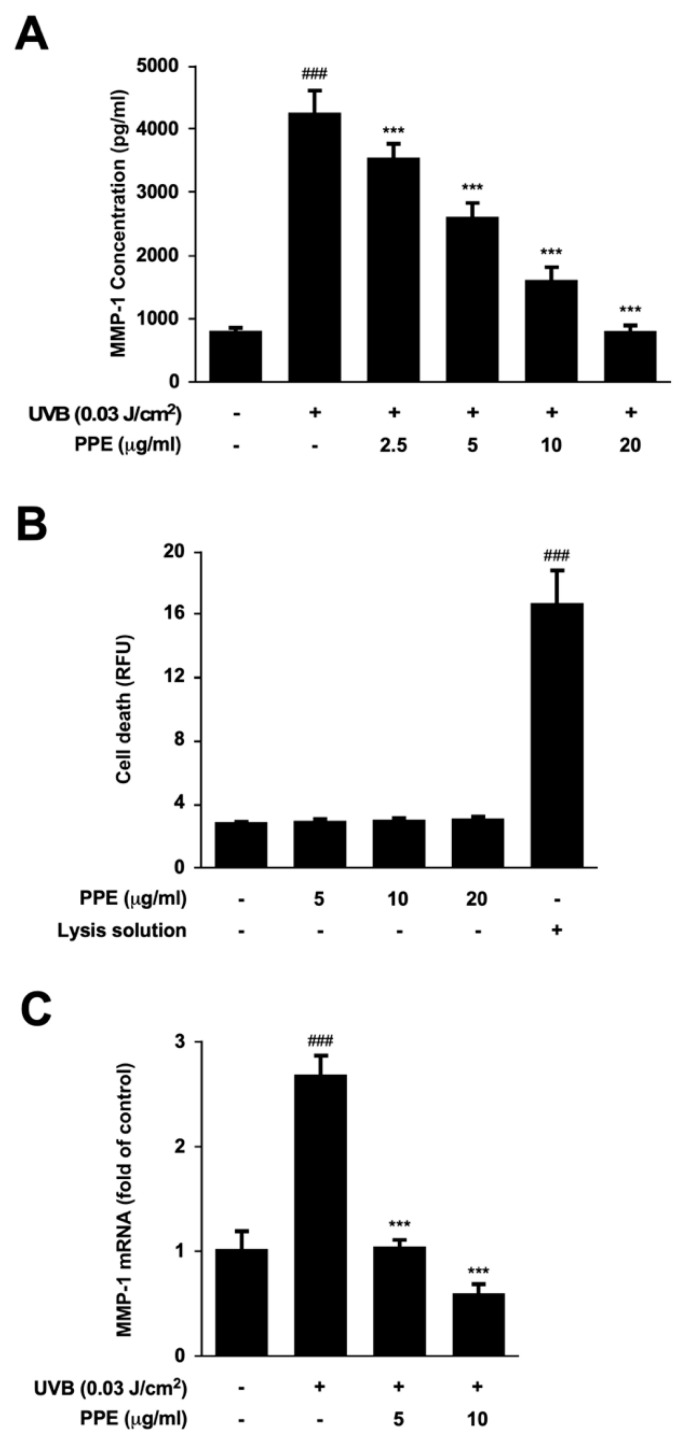
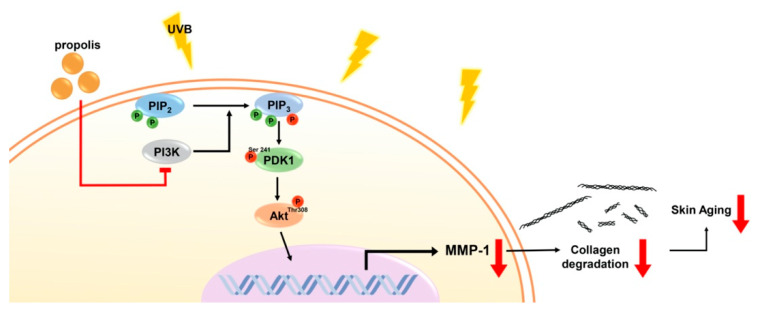
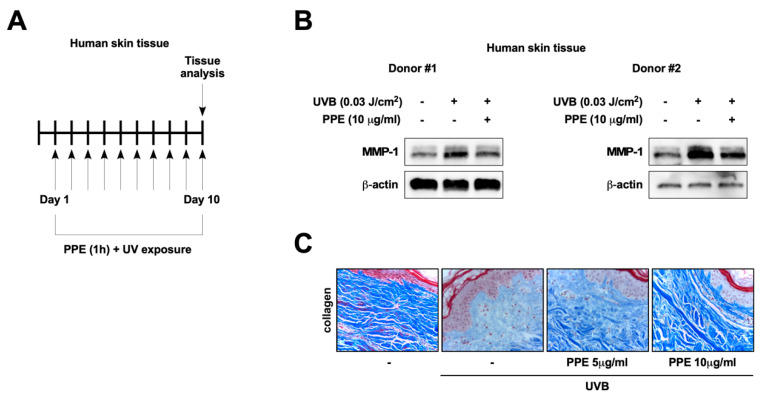
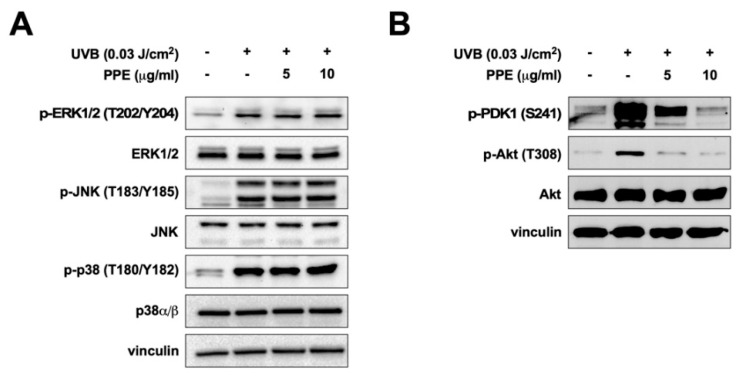
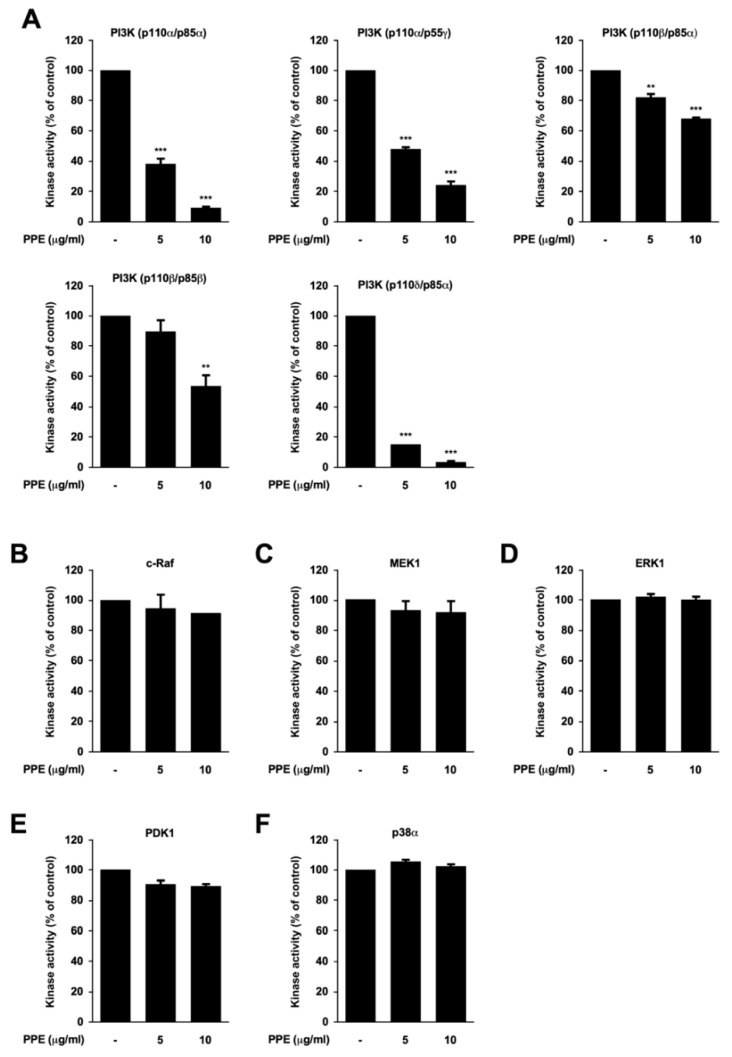
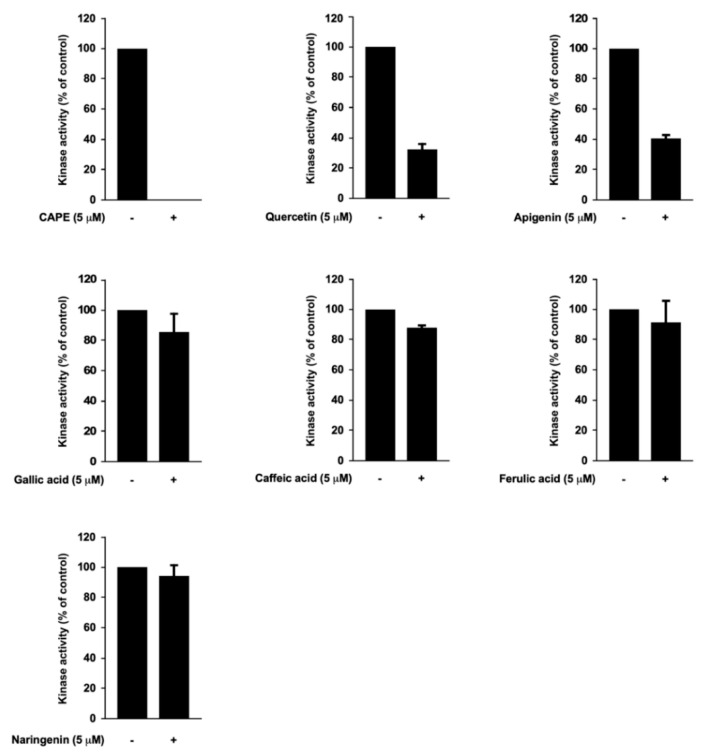
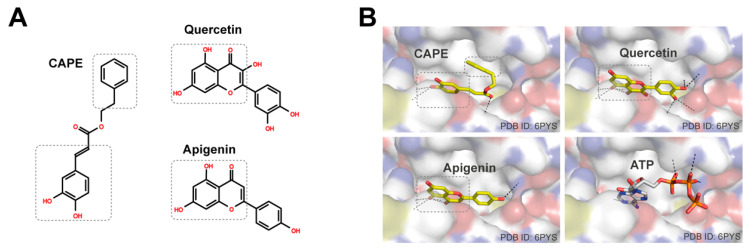
Propolis is a resinous substance generated by bees using materials from various plant sources. It has been known to exhibit diverse bioactivities including anti-oxidative, anti-microbial, anti-inflammatory, and anti-cancer effects. However, the direct molecular target of propolis and its therapeutic potential against skin aging in humans is not fully understood. Herein, we investigated the effect of propolis on ultraviolet (UV)-mediated skin aging and its underlying molecular mechanism. Propolis suppressed UV-induced matrix metalloproteinase (MMP)-1 production in human dermal fibroblasts. More importantly, propolis treatment reduced UV-induced MMP-1 expression and blocked collagen degradation in human skin tissues, suggesting that the anti-skin-aging activity of propolis can be recapitulated in clinically relevant conditions. While propolis treatment did not display any noticeable effects against extracellular signal-regulated kinase (ERK), p38, and c-jun -terminal kinase (JNK) pathways, propolis exerted significant inhibitory activity specifically against phosphorylations of phosphoinositide-dependent protein kinase-1 (PDK1) and protein kinase B (Akt). Kinase assay results demonstrated that propolis can directly suppress phosphoinositide 3-kinase (PI3K) activity, with preferential selectivity towards PI3K with p110α and p110δ catalytic subunits over other kinases. The content of active compounds was quantified, and among the compounds identified from the propolis extract, caffeic acid phenethyl ester, quercetin, and apigenin were shown to attenuate PI3K activity. These results demonstrate that propolis shows anti-skin-aging effects through direct inhibition of PI3K activity.
蜂胶是蜜蜂利用各种植物源材料生成的树脂状物质。它具有多种生物活性,包括抗氧化、抗菌、抗炎和抗癌作用。然而,蜂胶的直接分子靶标及其在人类皮肤衰老方面的治疗潜力尚未完全阐明。在此,我们研究了蜂胶对紫外线(UV)介导的皮肤衰老的影响及其潜在的分子机制。蜂胶抑制了人真皮成纤维细胞中 UV 诱导的基质金属蛋白酶(MMP)-1 的产生。更重要的是,蜂胶处理减少了 UV 诱导的 MMP-1 表达,并阻断了人皮肤组织中的胶原降解,表明蜂胶的抗皮肤衰老活性可以在临床相关条件下再现。虽然蜂胶处理对细胞外信号调节激酶(ERK)、p38 和 c-jun 末端激酶(JNK)途径没有显示出任何明显的作用,但蜂胶对磷酸肌醇依赖性蛋白激酶-1(PDK1)和蛋白激酶 B(Akt)的磷酸化具有显著的抑制活性。激酶测定结果表明,蜂胶可以直接抑制磷酸肌醇 3-激酶(PI3K)的活性,对具有 p110α 和 p110δ 催化亚基的 PI3K 具有优先选择性,而对其他激酶的选择性较低。还定量了活性化合物的含量,在蜂胶提取物中鉴定出的化合物中,咖啡酸苯乙酯、槲皮素和芹菜素被证明可以减弱 PI3K 的活性。这些结果表明,蜂胶通过直接抑制 PI3K 活性表现出抗皮肤衰老作用。