Department of Pharmaceutical Biochemistry, College of Pharmacy, Kyung Hee University, Seoul 02447, Korea.
Department of Life and Nanopharmaceutical Science, College of Pharmacy, Kyung Hee University, Seoul 02447, Korea.
Nutrients. 2019 Mar 1;11(3):533. doi: 10.3390/nu11030533.
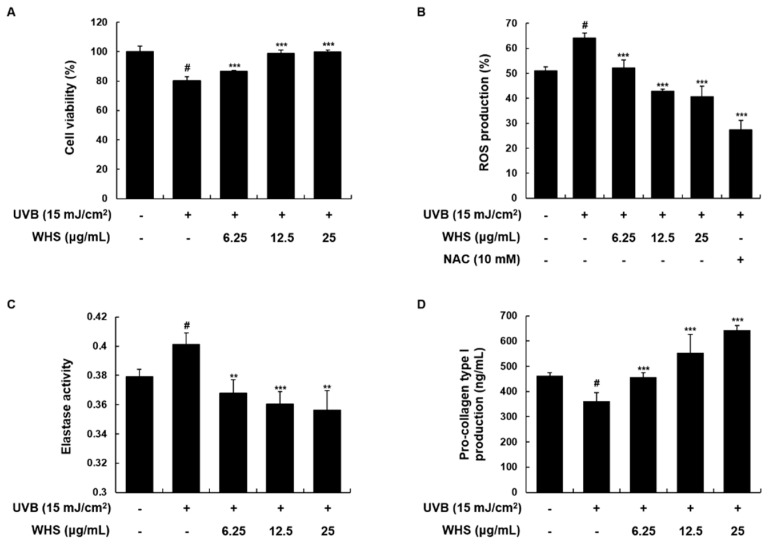
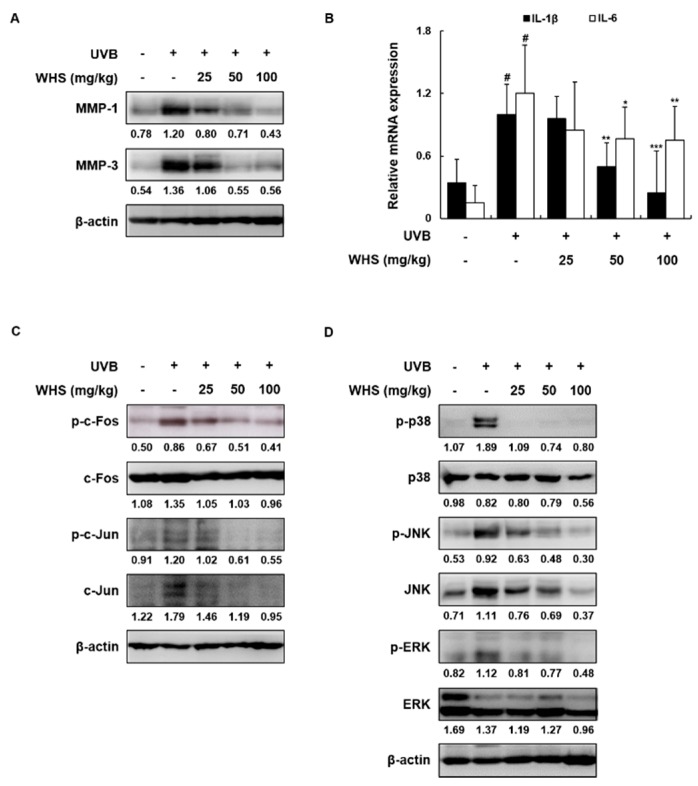
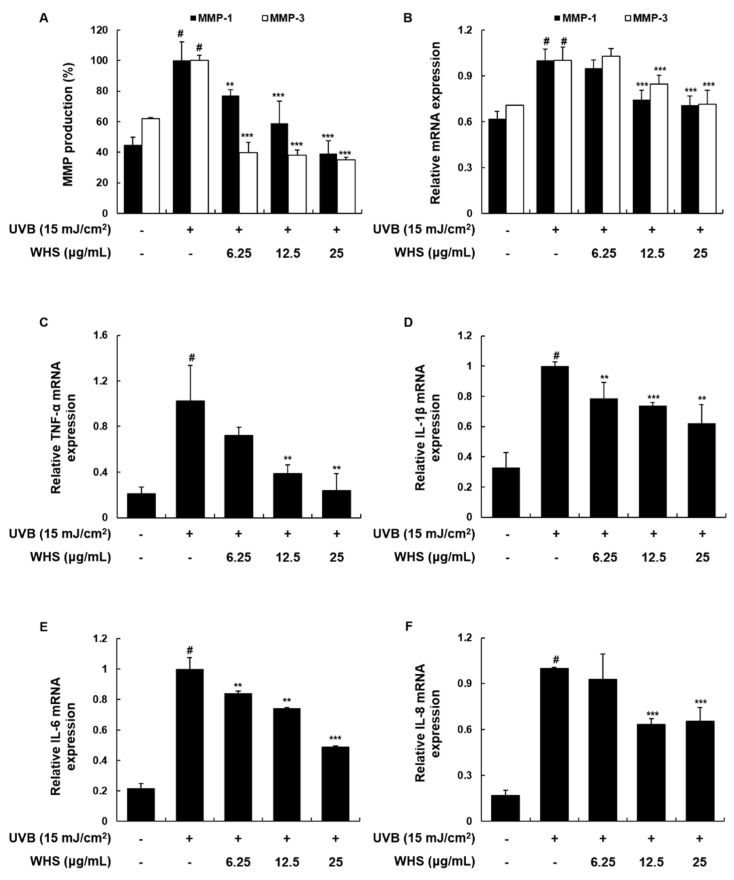
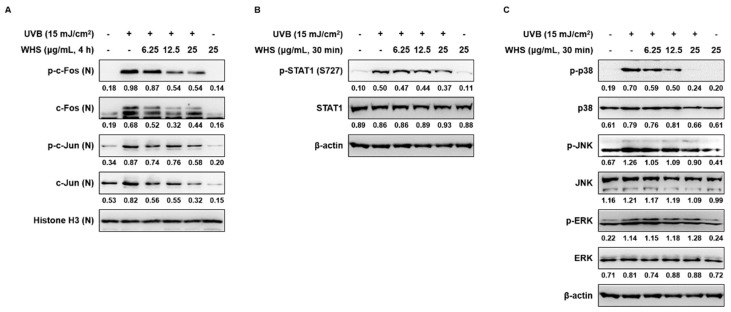
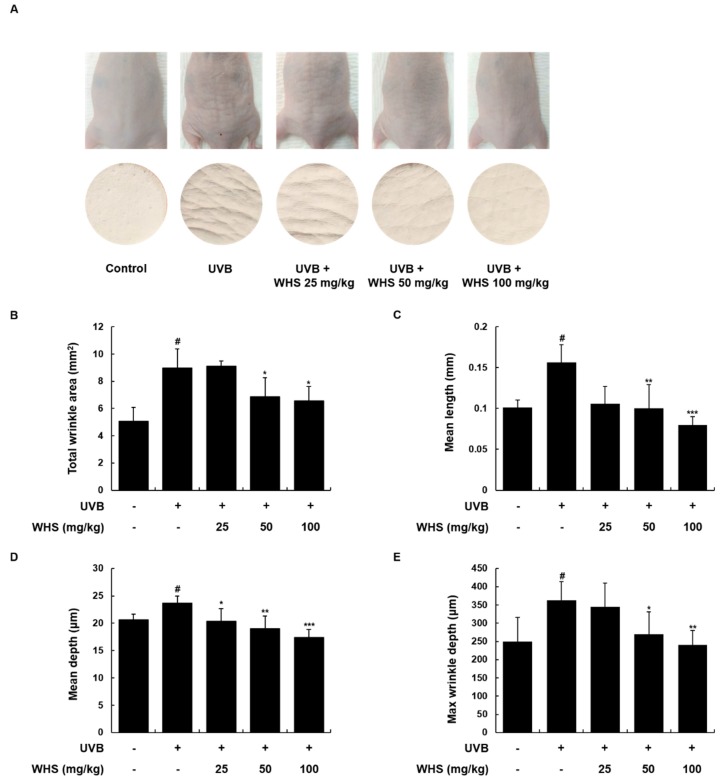
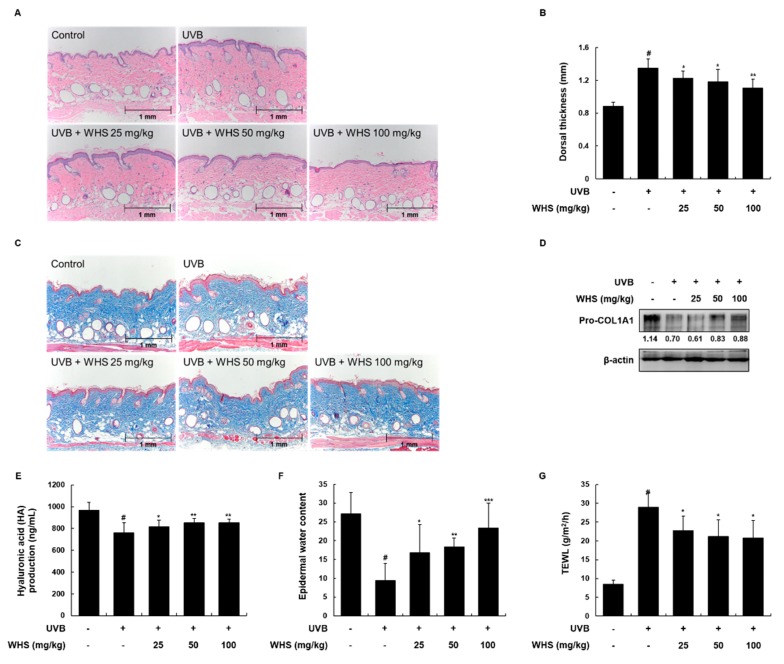
Skin photoaging is mainly caused by exposure to ultraviolet (UV) light, which increases expressions of matrix metalloproteinases (MMPs) and destroys collagen fibers, consequently inducing wrinkle formation. Nutritional factors have received scientific attention for use as agents for normal skin functions. The aim of this study was to investigate the effect of hot water extracts from the leaves of (Thunb.) Ser. (WHS) against ultraviolet B (UVB)-induced skin photoaging and to elucidate the underlying molecular mechanisms in human foreskin fibroblasts (Hs68) and HR-1 hairless mice. WHS recovered UVB-reduced cell viability and ameliorated oxidative stress by inhibiting intracellular reactive oxygen species (ROS) generation in Hs68 cells. WHS rescued UVB-induced collagen degradation by suppressing MMP expression, and reduced the mRNA levels of inflammatory cytokines. These anti-photoaging activities of WHS were associated with inhibition of the activator protein 1 (AP-1), signal transduction and activation of transcription 1 (STAT1), and mitogen-activated protein kinase (MAPK) signaling pathways. Oral administration of WHS effectively alleviated dorsal skin from wrinkle formation, epidermal thickening, collagen degradation, and skin dehydration in HR-1 hairless mice exposed to UVB. Notably, WHS suppressed UVB activation of the AP-1 and MAPK signaling pathways in dorsal mouse skin tissues. Taken together, our data indicate that WHS prevents UVB-induced skin damage due to collagen degradation and MMP activation via inactivation of MAPK/AP-1 signaling pathway.
皮肤光老化主要由紫外线 (UV) 照射引起,它会增加基质金属蛋白酶 (MMPs) 的表达并破坏胶原蛋白纤维,从而导致皱纹形成。营养因素已引起科学界的关注,可作为维持正常皮肤功能的物质。本研究旨在探讨柳叶菜(Thunb.)Ser.(WHS)的热水提取物对紫外线 B(UVB)诱导的皮肤光老化的影响,并阐明其在人包皮成纤维细胞(Hs68)和 HR-1 无毛小鼠中的潜在分子机制。WHS 通过抑制 Hs68 细胞内活性氧 (ROS) 的产生,恢复了 UVB 降低的细胞活力并改善了氧化应激。WHS 通过抑制 MMP 表达来挽救 UVB 诱导的胶原蛋白降解,并降低了促炎细胞因子的 mRNA 水平。WHS 的这些抗光老化活性与抑制激活蛋白 1 (AP-1)、信号转导和转录激活因子 1 (STAT1) 和丝裂原激活蛋白激酶 (MAPK) 信号通路有关。WHS 的口服给药有效缓解了 HR-1 无毛小鼠背部皮肤的皱纹形成、表皮增厚、胶原蛋白降解和皮肤脱水。值得注意的是,WHS 抑制了背部小鼠皮肤组织中 UVB 对 AP-1 和 MAPK 信号通路的激活。总之,我们的数据表明,WHS 通过抑制 MAPK/AP-1 信号通路的失活来防止由于胶原蛋白降解和 MMP 激活而导致的 UVB 诱导的皮肤损伤。