De Biase Gaetano, Freeman William D, Bydon Mohamad, Smith Nathan, Jerreld Daniel, Pascual Jorge, Casler John, Hasse Chris, Quiñones-Hinojosa Alfredo, Abode-Iyamah Kingsley
Department of Neurologic Surgery, Mayo Clinic, Jacksonville, FL.
Department of Neurocritical Care, Mayo Clinic, Jacksonville, FL.
Mayo Clin Proc Innov Qual Outcomes. 2020 Dec;4(6):736-744. doi: 10.1016/j.mayocpiqo.2020.07.013. Epub 2020 Dec 10.
To describe telemedicine utilization in neurosurgery at a single tertiary institution to provide outpatient care during the coronavirus disease 2019 (COVID-19) pandemic, with 315 telemedicine visits performed by the neurosurgery department.
In response to the COVID-19 pandemic national stay-at-home orders and postponed elective surgeries, we converted upcoming clinic visits into telemedicine visits and rescheduled other patients thought not to be markedly affected by surgical postponement. We reviewed the charts of all patients who had telehealth visits from April 1 through April 30, 2020, and collected demographic information, diagnosis, type of visit, and whether they received surgery; a satisfaction questionnaire was also administered.
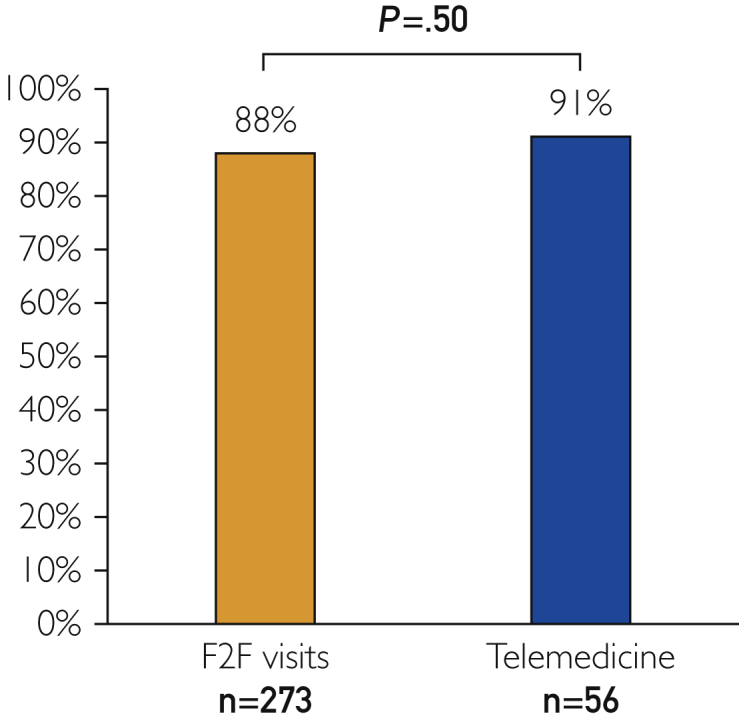
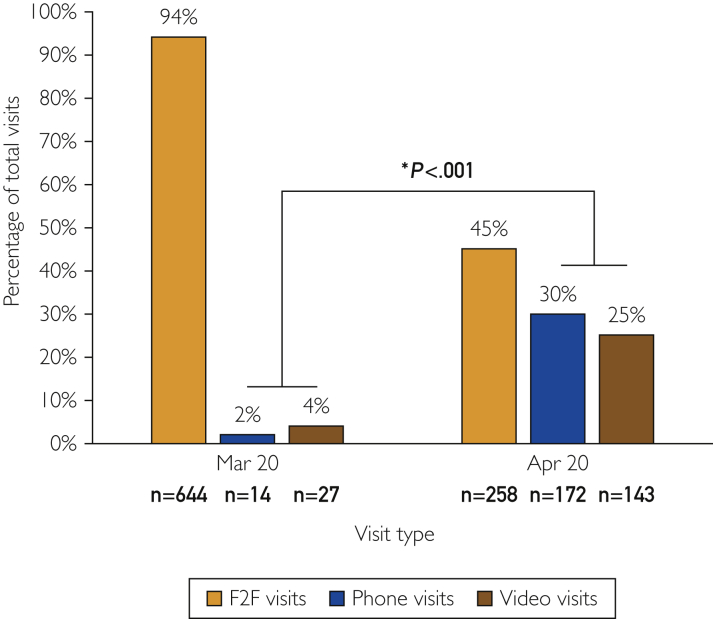
In March 2020, 94% (644 of 685) of the neurosurgery clinic visits were face-to-face, whereas in April 2020, 55% (315 of 573) of the visits were telemedicine (<.001). In April, of the 315 telemedicine visits, 172 (55%) were phone consults and 143 (45%) video consults; 101 (32%) were new consults, 195 (62%) return visits, and 18 (6%) postoperative follow-up. New consults were more likely to be video with audio than return visits and postoperative follow-up (<.001). Only 39 patients (12%) required surgery. Ninety-one percent of the questionnaire respondents were very likely to recommend telemedicine.
Rapid implementation of telemedicine to evaluate neurosurgery patients became an effective tool for preoperative consultation, postoperative and follow-up visits during the COVID-19 pandemic, and decreased risks of exposure to severe acute respiratory syndrome coronavirus 2 to patients and health care staff. Future larger studies should investigate the cost-effectiveness of telemedicine used to triage surgical from nonsurgical patients, potential cost-savings from reducing travel burdens and lost work time, improved access, reduced wait times, and impact on patient satisfaction.
描述一家三级医疗机构神经外科在2019年冠状病毒病(COVID-19)大流行期间利用远程医疗提供门诊护理的情况,神经外科共进行了315次远程医疗就诊。
为应对COVID-19大流行期间全国性的居家令和择期手术推迟,我们将即将到来的门诊就诊转换为远程医疗就诊,并重新安排了其他认为不会因手术推迟而受到明显影响的患者的就诊时间。我们回顾了2020年4月1日至4月30日期间所有进行远程医疗就诊的患者的病历,收集了人口统计学信息、诊断、就诊类型以及他们是否接受了手术;还进行了满意度问卷调查。
2020年3月,神经外科门诊就诊的94%(685例中的644例)为面对面就诊,而2020年4月,55%(573例中的315例)的就诊为远程医疗(P<0.001)。4月,在315次远程医疗就诊中,172次(55%)为电话咨询,143次(45%)为视频咨询;101次(32%)为新咨询,195次(62%)为复诊,18次(6%)为术后随访。新咨询比复诊和术后随访更有可能是带有音频的视频咨询(P<0.001)。只有39名患者(12%)需要手术。91%的问卷受访者非常可能推荐远程医疗。
在COVID-19大流行期间,迅速实施远程医疗来评估神经外科患者成为术前咨询、术后及随访就诊的有效工具,并降低了患者和医护人员接触严重急性呼吸综合征冠状病毒2的风险。未来更大规模的研究应调查远程医疗用于区分手术患者和非手术患者的成本效益、减少出行负担和工作时间损失带来的潜在成本节约、改善就医机会、减少等待时间以及对患者满意度的影响。