Fischman Jacob S, Sista Swapna, Lee DongKeun, Cuadra Giancarlo A, Palazzolo Dominic L
Department of Biology, Muhlenberg College, Allentown, PA, United States.
Department of Physiology, DeBusk College of Osteopathic Medicine, Lincoln Memorial University, Harrogate, TN, United States.
Front Physiol. 2020 Nov 23;11:585416. doi: 10.3389/fphys.2020.585416. eCollection 2020.
Electronic cigarette (ECIG) use or vaping has become popular globally. While the question "Is vaping safer than smoking?" continues, it is becoming clearer that one of the most dangerous components of E-liquids are the flavorings. Since the oral cavity is the first anatomical site to be assaulted by ECIG aerosol, the aim of this study is to test the hypothesis that flavored ECIG aerosols or E-liquids pose a more detrimental effect on the growth of commensal oral streptococcal bacteria compared to flavorless aerosols or E-liquids.
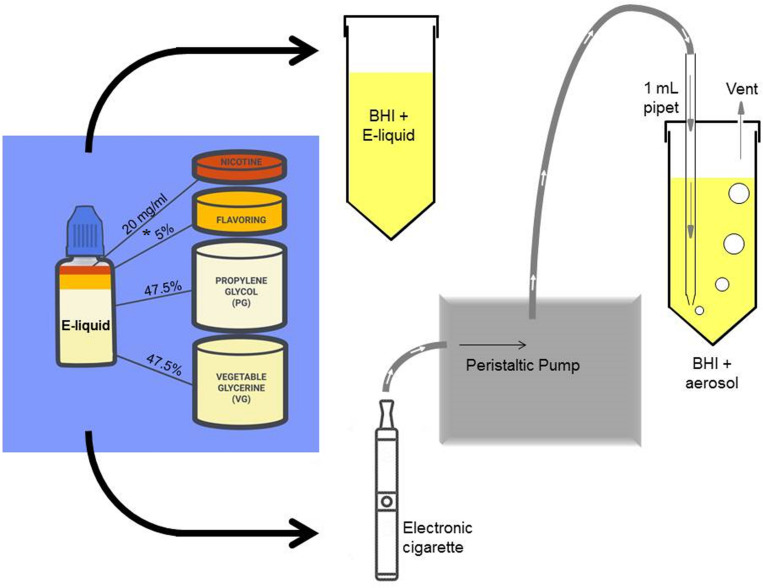
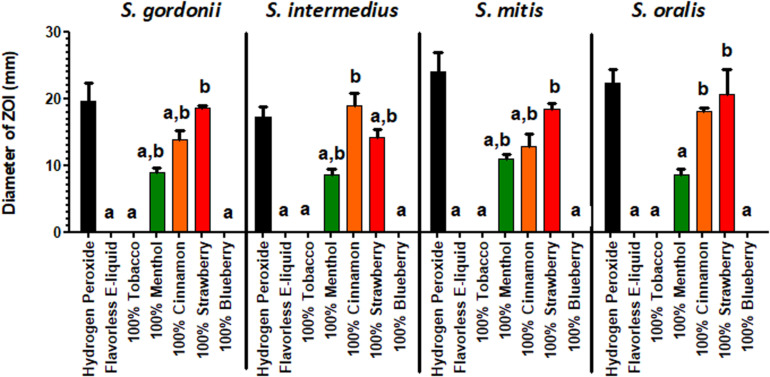
Kirby Bauer assays and 24-h planktonic growth curves were used to compare the effects of flavorless vs. flavored (tobacco, menthol, cinnamon, strawberry and blueberry) ECIG-generated aerosols and E-liquids on the growth of four common strains of oral commensal bacteria (, , and ).
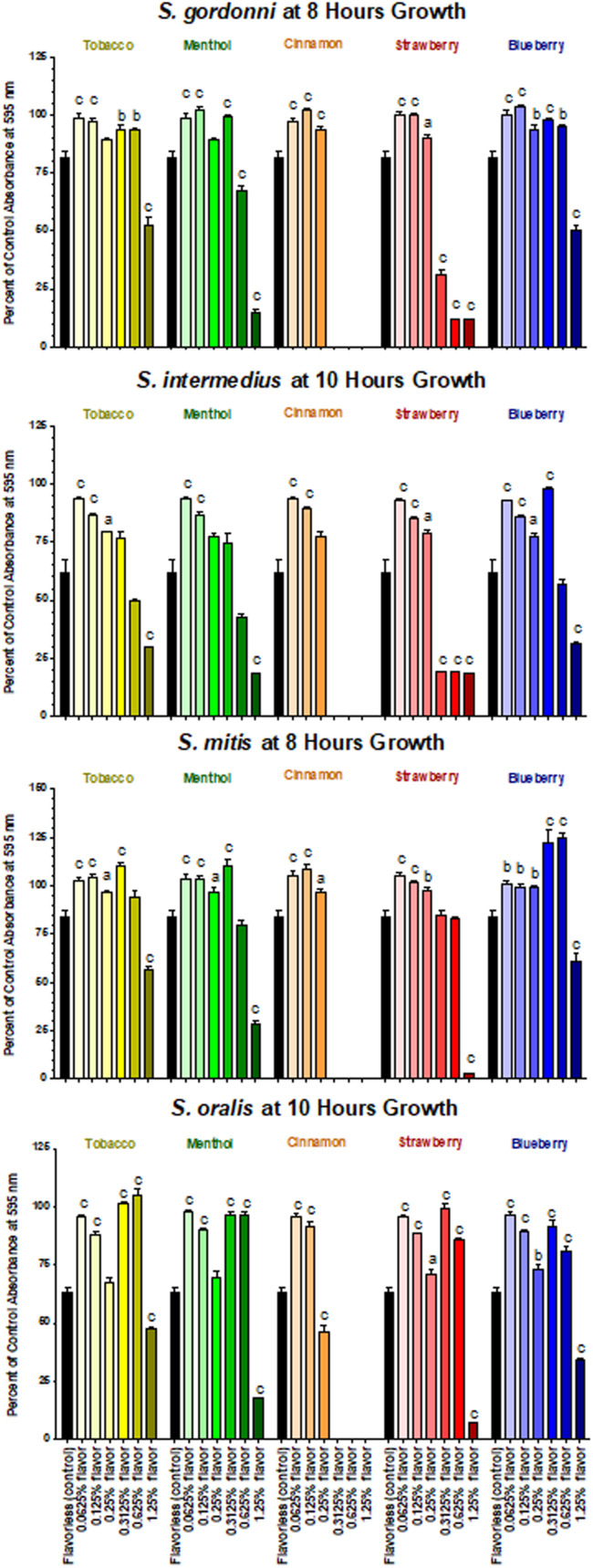
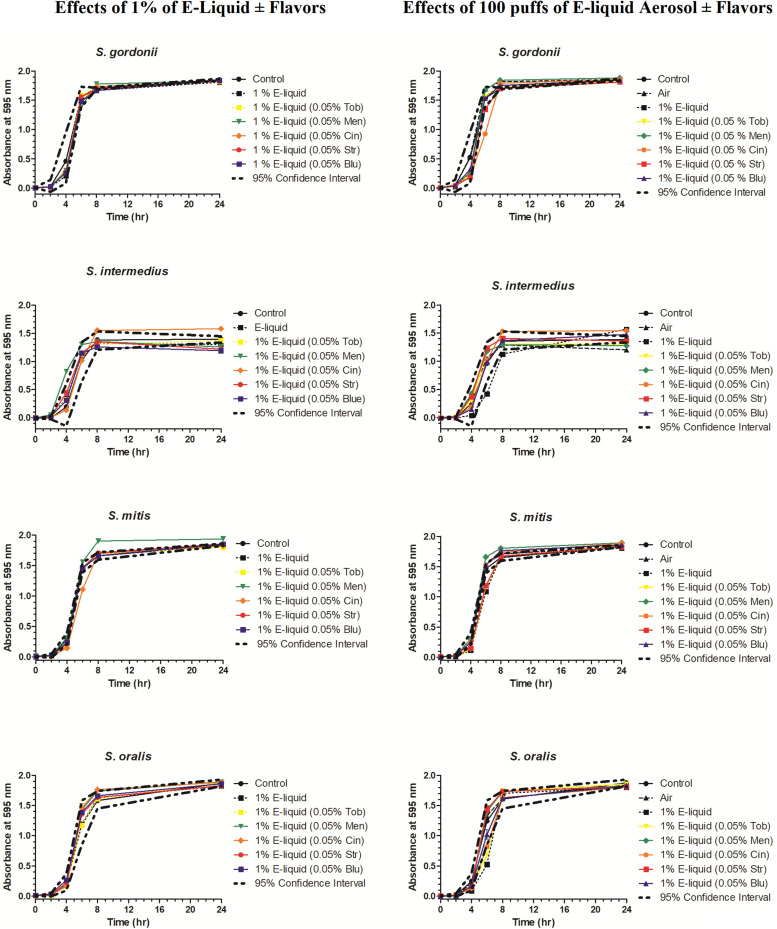
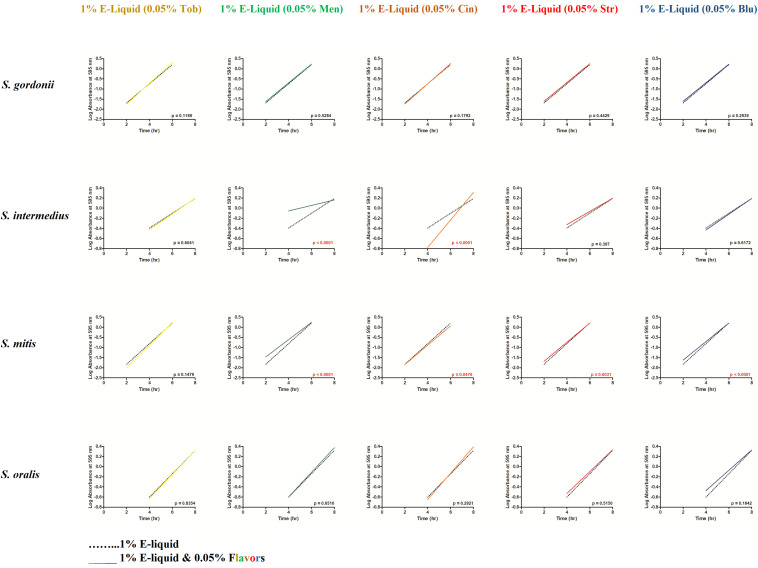
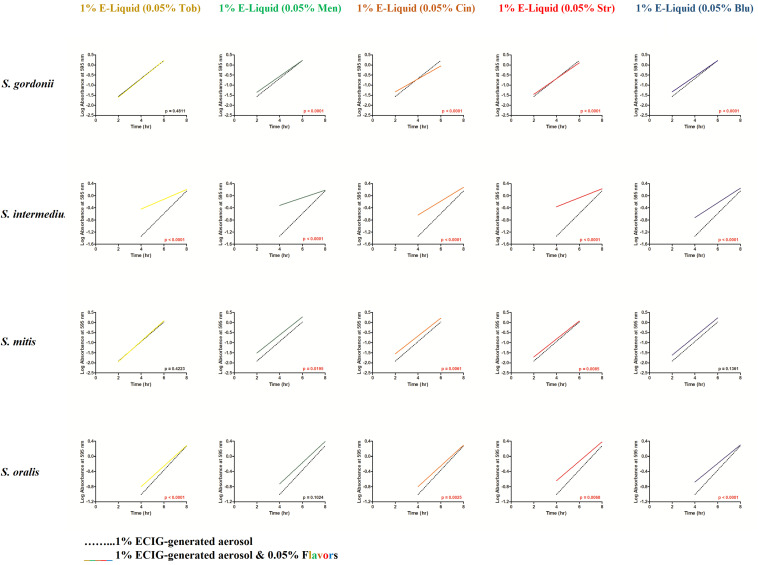
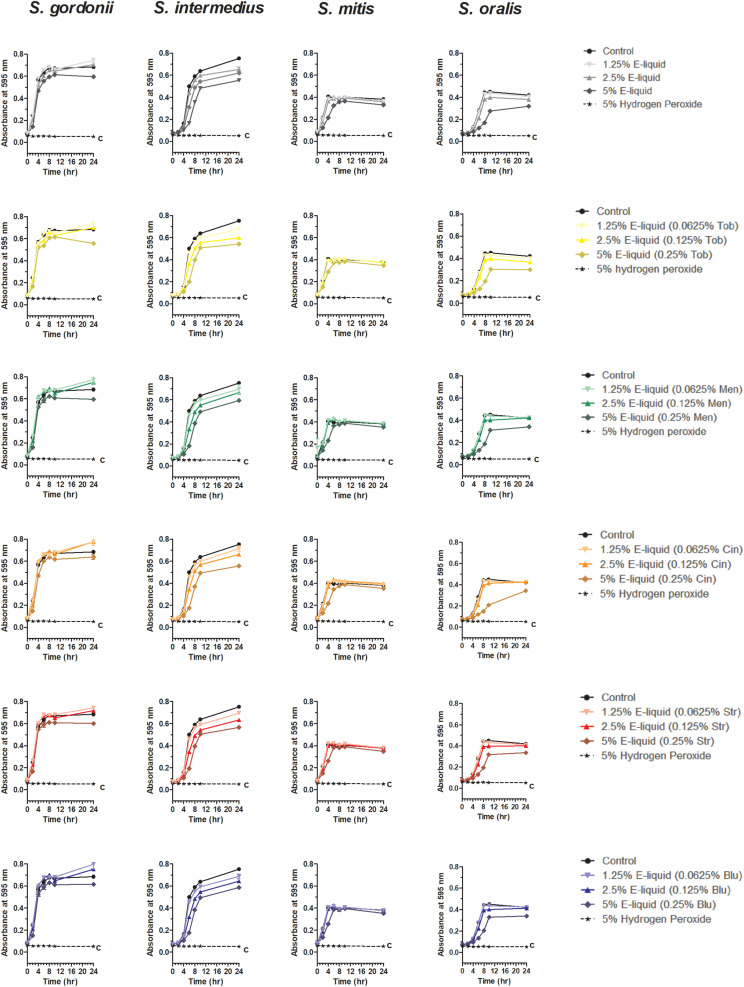
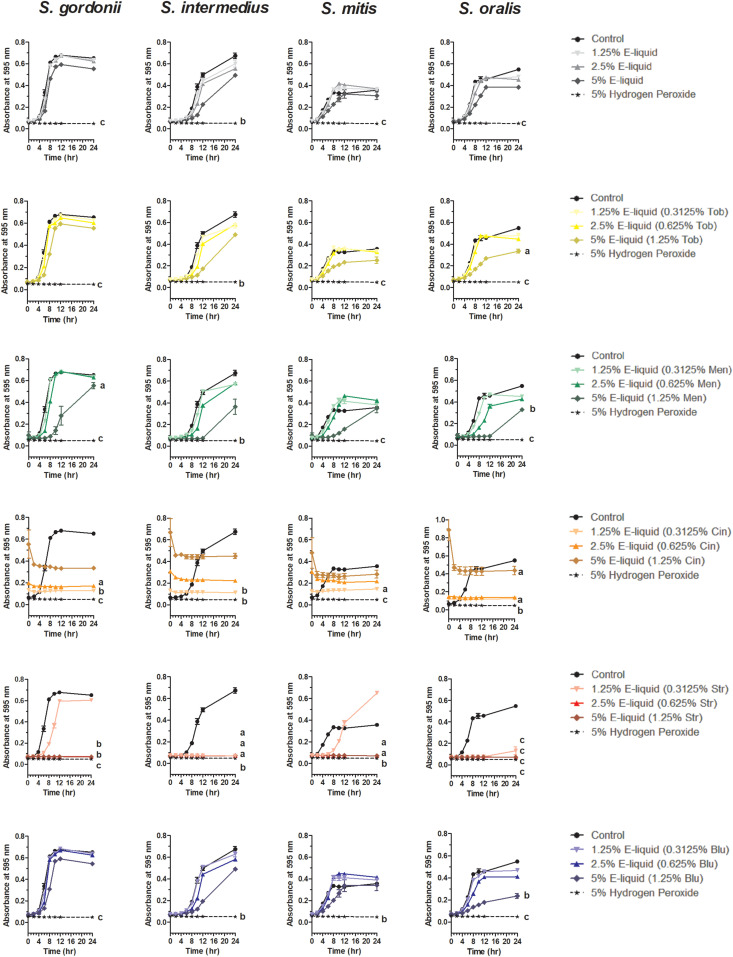
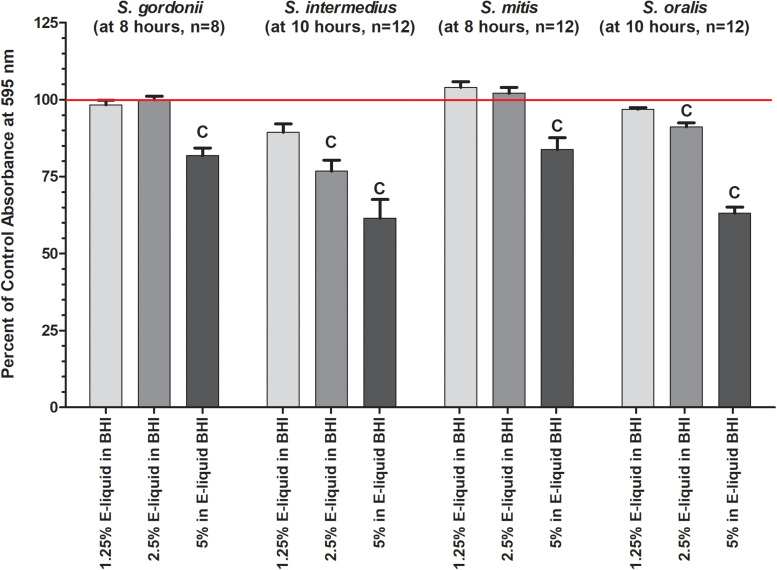
Kirby Bauer assays revealed inhibition of growth for all bacteria tested when exposed to 100% menthol, cinnamon or strawberry flavors. In contrast, 5% flavor in E-liquid had no effect. When exposed to 100 puffs of ECIG-generated aerosol ± flavors (≈ 0.05% flavor in brain heart infusion media) or an equivalent amount of E-liquid ± flavors, twenty-four hour planktonic growth curves indicated no effect on growth for all streptococci tested. Subsequent twenty-four hour planktonic growth curves testing the effects of E-liquid ± flavors (0.0625, 0.125, 0.25, 0.3125, 0.625, and 1.25% flavor in brain heart infusion media) revealed dose-dependent inhibition of growth, particularly for menthol, cinnamon and strawberry), for all bacteria tested.
These results support the hypothesis that flavored E-liquids are more detrimental to the growth of oral commensal bacteria than unflavored E-liquids. The streptococci tested in this study are early colonizers and part of the foundation of oral biofilms and dental plaque. Disturbances in the composition and growth of these primary colonizers is crucial to the development of a healthy dental plaque and host-bacteria interactions. E-liquids and their aerosols containing flavoring agents alter the growth of these bacteria. Such perturbations of pioneering oral communities pose a potential risk to the health of the oral cavity and, ultimately, health in general.
电子烟的使用在全球范围内变得越来越普遍。虽然“吸电子烟比吸烟更安全吗?”这个问题仍在讨论中,但越来越清楚的是,电子烟液中最危险的成分之一是调味剂。由于口腔是电子烟气溶胶首先侵袭的解剖部位,本研究的目的是检验以下假设:与无味气溶胶或电子烟液相比,调味电子烟气溶胶或电子烟液对口腔共生链球菌的生长具有更大的有害影响。
采用 Kirby Bauer 试验和 24 小时浮游生长曲线,比较无味与调味(烟草、薄荷醇、肉桂、草莓和蓝莓味)的电子烟产生的气溶胶和电子烟液对四种常见口腔共生细菌菌株(、、和)生长的影响。
Kirby Bauer 试验显示,当暴露于 100%薄荷醇、肉桂或草莓味时,所有测试细菌的生长均受到抑制。相比之下,电子烟液中 5%的调味剂没有影响。当暴露于 100 口电子烟产生的气溶胶±调味剂(在脑心浸液培养基中约含 0.05%的调味剂)或等量的电子烟液±调味剂时,24 小时浮游生长曲线表明,对所有测试的链球菌的生长没有影响。随后的 24 小时浮游生长曲线测试了电子烟液±调味剂(在脑心浸液培养基中含 0.0625%、0.125%、0.25%、0.3125%、0.625%和 1.25%的调味剂)的影响,结果显示对所有测试细菌均有剂量依赖性的生长抑制,尤其是对薄荷醇、肉桂和草莓味的情况。
这些结果支持了以下假设:调味电子烟液比无味电子烟液对口腔共生细菌的生长更有害。本研究中测试的链球菌是早期定植菌,是口腔生物膜和牙菌斑形成基础的一部分。这些主要定植菌的组成和生长的干扰对健康牙菌斑的形成和宿主 - 细菌相互作用至关重要。含有调味剂的电子烟液及其气溶胶会改变这些细菌的生长。这种对口腔早期群落的干扰对口腔健康乃至整体健康构成潜在风险。