Guo Tingting, Li Weimin, Cai Xuyu
Institute of Respiratory Health, Frontiers Science Center for Disease-related Molecular Network, West China Hospital, Sichuan University, Chengdu, China.
Precision Medicine Research Center, West China Hospital, Sichuan University, Chengdu, China.
Front Genet. 2020 Nov 27;11:548719. doi: 10.3389/fgene.2020.548719. eCollection 2020.
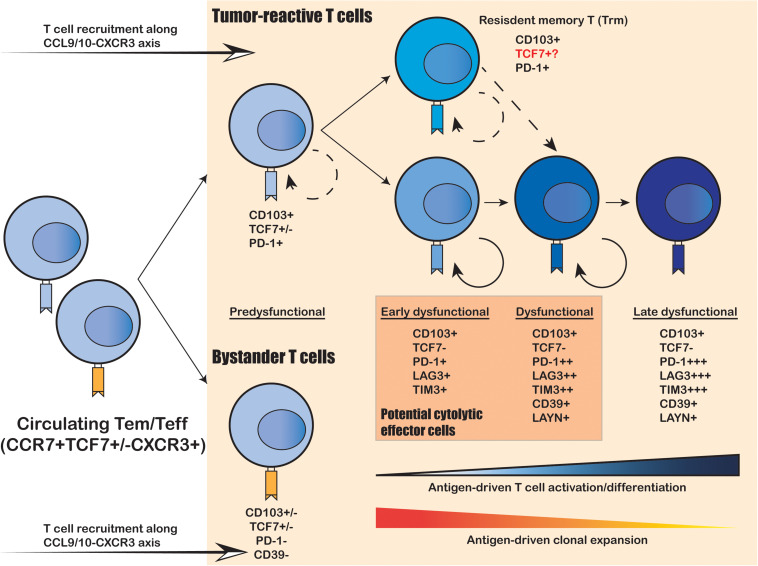
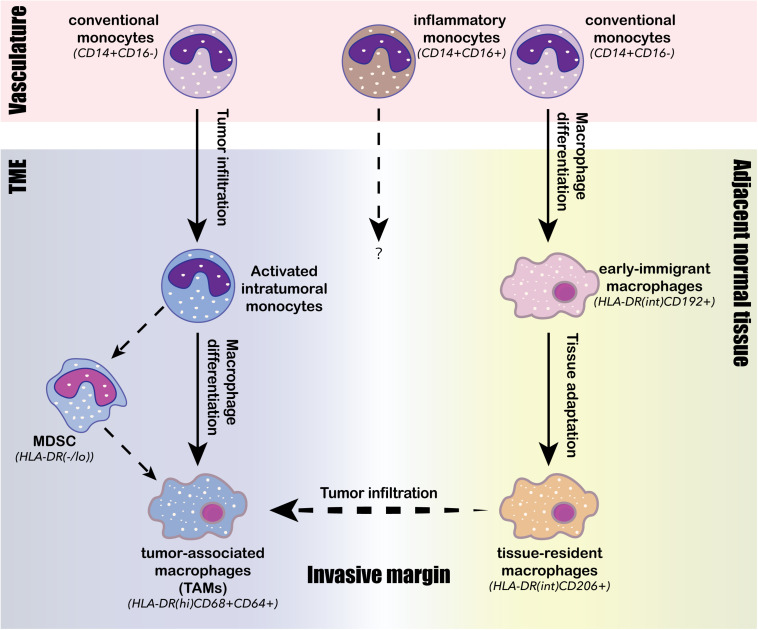
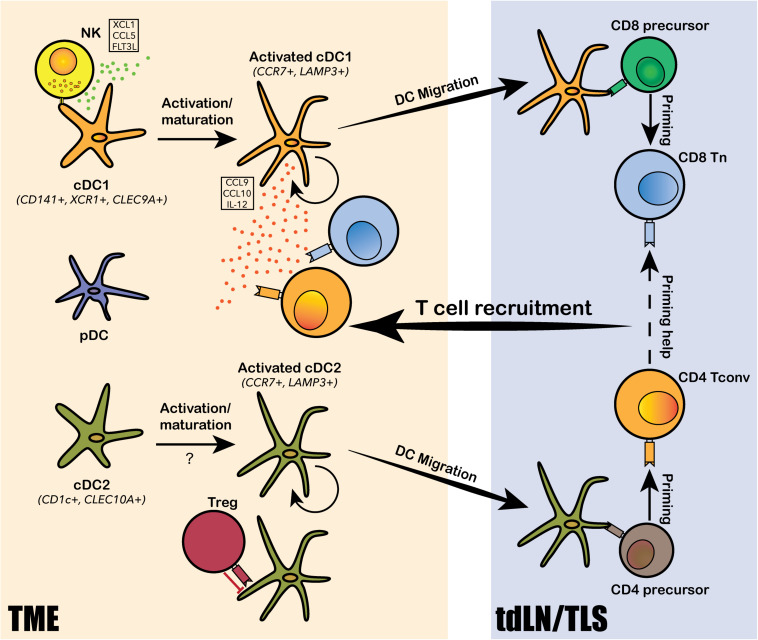
The recent technical and computational advances in single-cell sequencing technologies have significantly broaden our toolkit to study tumor microenvironment (TME) directly from human specimens. The TME is the complex and dynamic ecosystem composed of multiple cell types, including tumor cells, immune cells, stromal cells, endothelial cells, and other non-cellular components such as the extracellular matrix and secreted signaling molecules. The great success on immune checkpoint blockade therapy has highlighted the importance of TME on anti-tumor immunity and has made it a prime target for further immunotherapy strategies. Applications of single-cell transcriptomics on studying TME has yielded unprecedented resolution of the cellular and molecular complexity of the TME, accelerating our understanding of the heterogeneity, plasticity, and complex cross-interaction between different cell types within the TME. In this review, we discuss the recent advances by single-cell sequencing on understanding the diversity of TME and its functional impact on tumor progression and immunotherapy response driven by single-cell sequencing. We primarily focus on the major immune cell types infiltrated in the human TME, including T cells, dendritic cells, and macrophages. We further discuss the limitations of the existing methodologies and the prospects on future studies utilizing single-cell multi-omics technologies. Since immune cells undergo continuous activation and differentiation within the TME in response to various environmental cues, we highlight the importance of integrating multimodal datasets to enable retrospective lineage tracing and epigenetic profiling of the tumor infiltrating immune cells. These novel technologies enable better characterization of the developmental lineages and differentiation states that are critical for the understanding of the underlying mechanisms driving the functional diversity of immune cells within the TME. We envision that with the continued accumulation of single-cell omics datasets, single-cell sequencing will become an indispensable aspect of the immune-oncology experimental toolkit. It will continue to drive the scientific innovations in precision immunotherapy and will be ultimately adopted by routine clinical practice in the foreseeable future.
单细胞测序技术最近在技术和计算方面取得的进展,极大地扩展了我们直接从人体标本研究肿瘤微环境(TME)的工具集。肿瘤微环境是一个复杂且动态的生态系统,由多种细胞类型组成,包括肿瘤细胞、免疫细胞、基质细胞、内皮细胞以及其他非细胞成分,如细胞外基质和分泌的信号分子。免疫检查点阻断疗法的巨大成功凸显了肿瘤微环境在抗肿瘤免疫中的重要性,并使其成为进一步免疫治疗策略的主要靶点。单细胞转录组学在研究肿瘤微环境方面的应用,以前所未有的分辨率揭示了肿瘤微环境的细胞和分子复杂性,加速了我们对肿瘤微环境中不同细胞类型之间的异质性、可塑性和复杂相互作用的理解。在这篇综述中,我们讨论了单细胞测序在理解肿瘤微环境多样性及其对肿瘤进展和免疫治疗反应的功能影响方面的最新进展。我们主要关注浸润在人体肿瘤微环境中的主要免疫细胞类型,包括T细胞、树突状细胞和巨噬细胞。我们进一步讨论了现有方法的局限性以及利用单细胞多组学技术进行未来研究的前景。由于免疫细胞在肿瘤微环境中会根据各种环境线索持续激活和分化,我们强调整合多模态数据集以实现对肿瘤浸润免疫细胞进行回顾性谱系追踪和表观遗传分析的重要性。这些新技术能够更好地表征发育谱系和分化状态,这对于理解驱动肿瘤微环境中免疫细胞功能多样性的潜在机制至关重要。我们设想,随着单细胞组学数据集的不断积累,单细胞测序将成为免疫肿瘤学实验工具集不可或缺的一部分。它将继续推动精准免疫治疗的科学创新,并在可预见的未来最终被常规临床实践所采用。