Granata Vincenza, Grassi Roberta, Fusco Roberta, Setola Sergio Venanzio, Palaia Raffaele, Belli Andrea, Miele Vittorio, Brunese Luca, Grassi Roberto, Petrillo Antonella, Izzo Francesco
Radiology Division, Istituto Nazionale Tumori, IRCCS, Fondazione G. Pascale, Naples, Italy.
Radiology Division, Universita' Degli Studi Della Campania Luigi Vanvitelli, Naples, Italy.
Front Oncol. 2020 Nov 27;10:560952. doi: 10.3389/fonc.2020.560952. eCollection 2020.
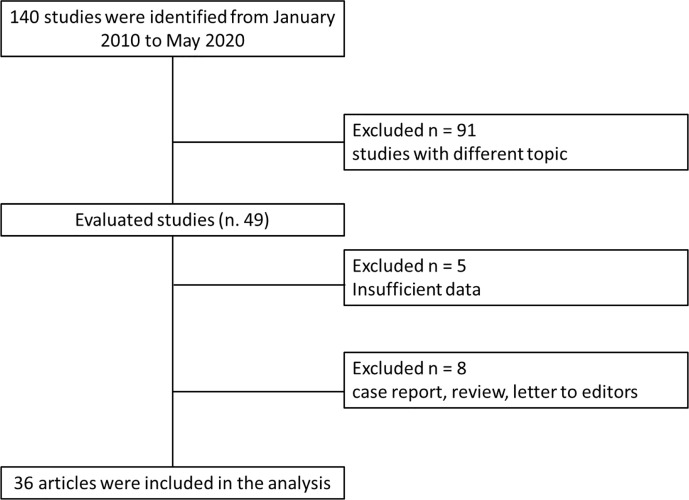
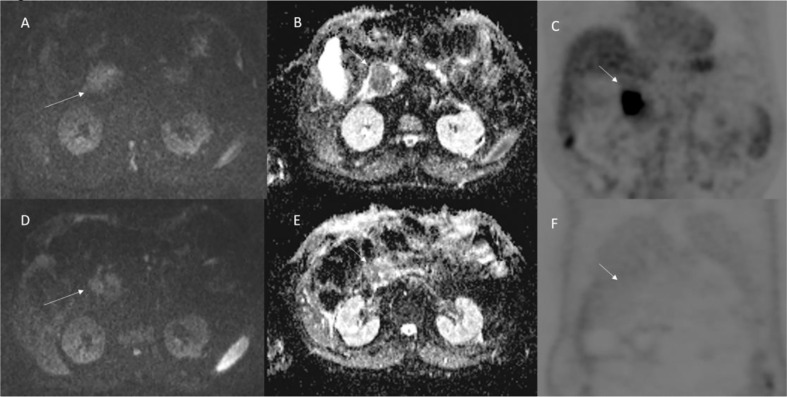
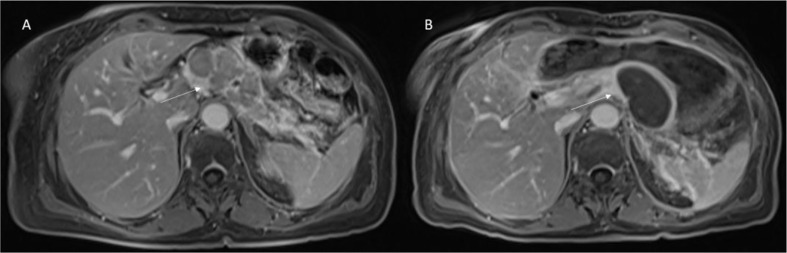
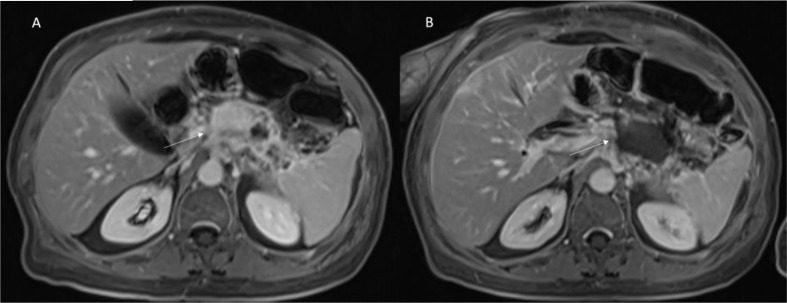
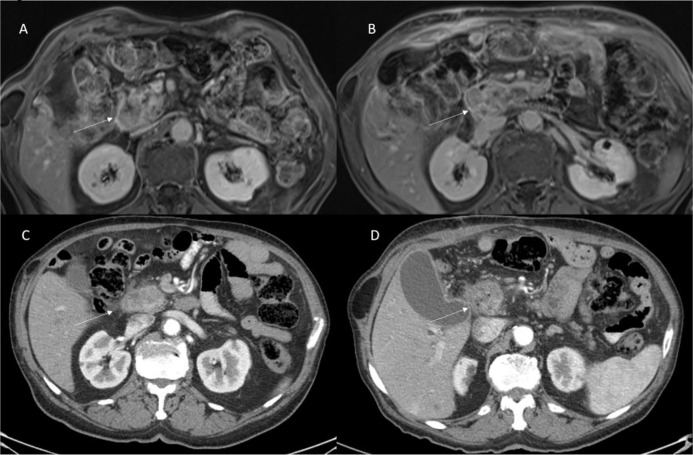
This article provides an overview of imaging assessment of ablated pancreatic cancer. Only studies reporting radiological assessment on pancreatic ablated cancer were retained. We found 16 clinical studies that satisfied the inclusion criteria. Radiofrequency ablation and irreversible electroporation have become established treatment modalities because of their efficacy, low complication rates, and availability. Microwave Ablation (MWA) has several advantages over radiofrequency ablation (RFA), which may make it more attractive to treat pancreatic cancer. Electrochemotherapy (ECT) is a very interesting emerging technique, characterized by low complication rate and safety profile. According to the literature, the assessment of the effectiveness of ablative therapies is difficult by means of the Response Evaluation Criteria in Solid Tumors (RECIST) criteria that are not suitable to evaluate the treatment response considering that are related to technique used, the timing of reassessment, and the imaging procedure being used to evaluate the efficacy. RFA causes various appearances on imaging in the ablated zone, correlating to the different effects, such as interstitial edema, hemorrhage, carbonization, necrosis, and fibrosis. Irreversible electroporation (IRE) causes the creation of pores within the cell membrane causing cell death. Experimental studies showed that Diffusion Weigthed Imaging (DWI) extracted parameters could be used to detect therapy effects. No data about functional assessment post MWA is available in literature. Morphologic data extracted by Computed Tomography (CT) or Magnetic Resonance Imaging (MRI) do not allow to differentiate partial, complete, or incomplete response after ECT conversely to functional parameters, obtained with Position Emission Tomography (PET), MRI, and CT.
本文概述了胰腺癌消融后的影像学评估。仅纳入了报告胰腺消融癌放射学评估的研究。我们找到了16项符合纳入标准的临床研究。射频消融和不可逆电穿孔因其疗效、低并发症发生率和可及性,已成为既定的治疗方式。微波消融(MWA)相对于射频消融(RFA)具有若干优势,这可能使其在治疗胰腺癌方面更具吸引力。电化学疗法(ECT)是一种非常有趣的新兴技术,其特点是并发症发生率低且安全性良好。根据文献,采用实体瘤疗效评价标准(RECIST)来评估消融治疗的有效性存在困难,因为该标准不适用于评估治疗反应,这与所使用的技术、重新评估的时间以及用于评估疗效的成像程序有关。RFA在消融区域的影像学上会呈现出各种表现,这与不同的效应相关,如间质水肿、出血、碳化、坏死和纤维化。不可逆电穿孔(IRE)会导致细胞膜内形成孔隙,从而引起细胞死亡。实验研究表明,扩散加权成像(DWI)提取的参数可用于检测治疗效果。文献中没有关于MWA后功能评估的数据。与通过正电子发射断层扫描(PET)、MRI和CT获得的功能参数相反,计算机断层扫描(CT)或磁共振成像(MRI)提取的形态学数据无法区分ECT后的部分、完全或不完全反应。