Department of Plant and Environmental Sciences, Clemson University, Clemson, SC, USA.
Division of Biology, Kansas State University, Manhattan, KS, USA.
Sci Rep. 2020 Dec 17;10(1):22163. doi: 10.1038/s41598-020-78695-3.
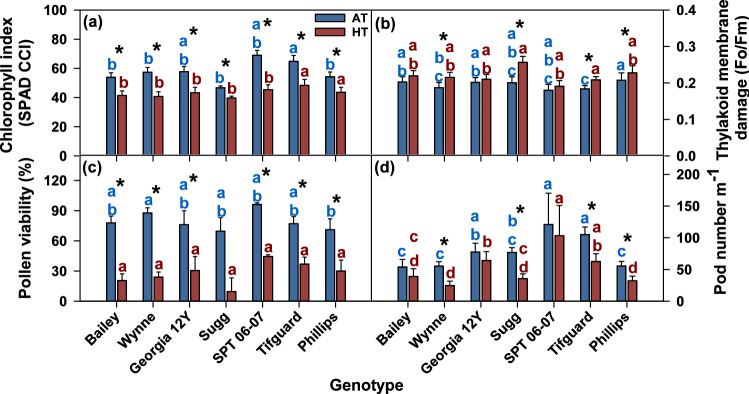
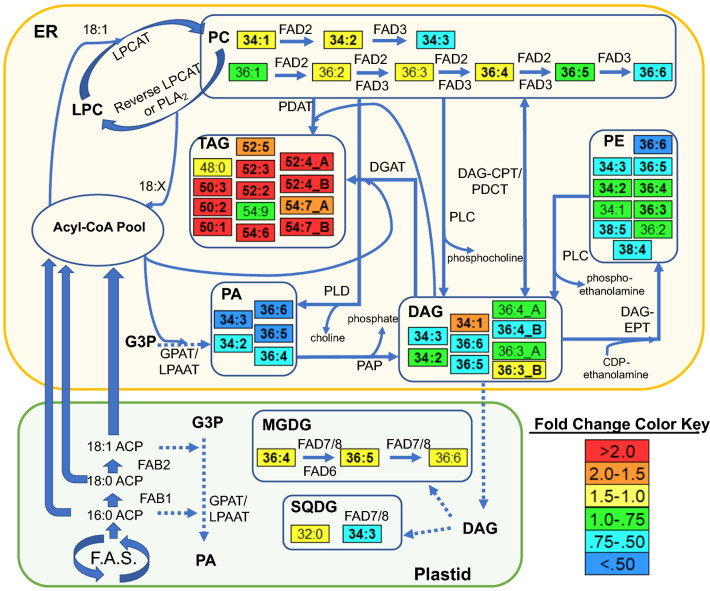
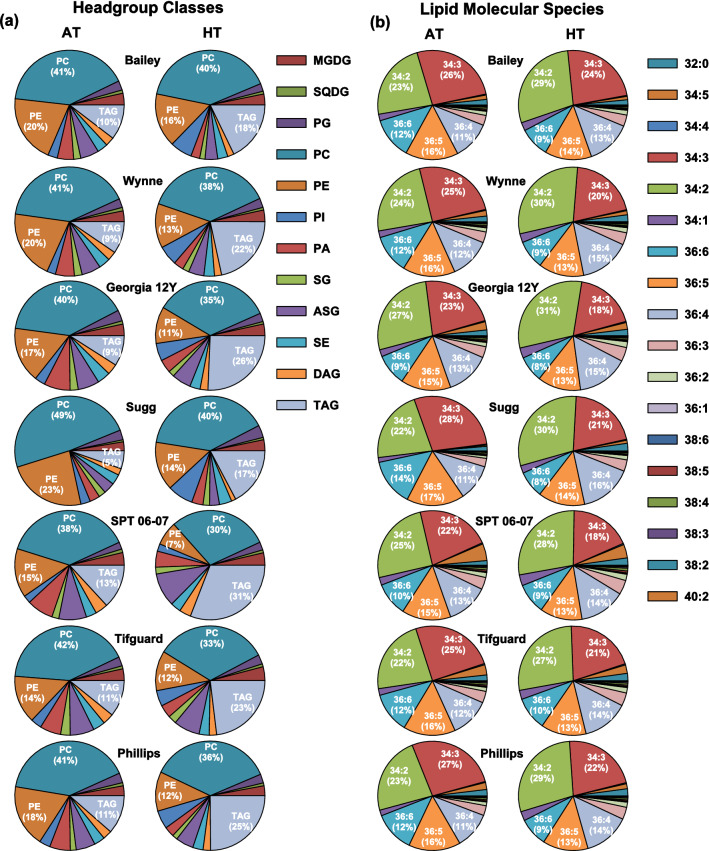
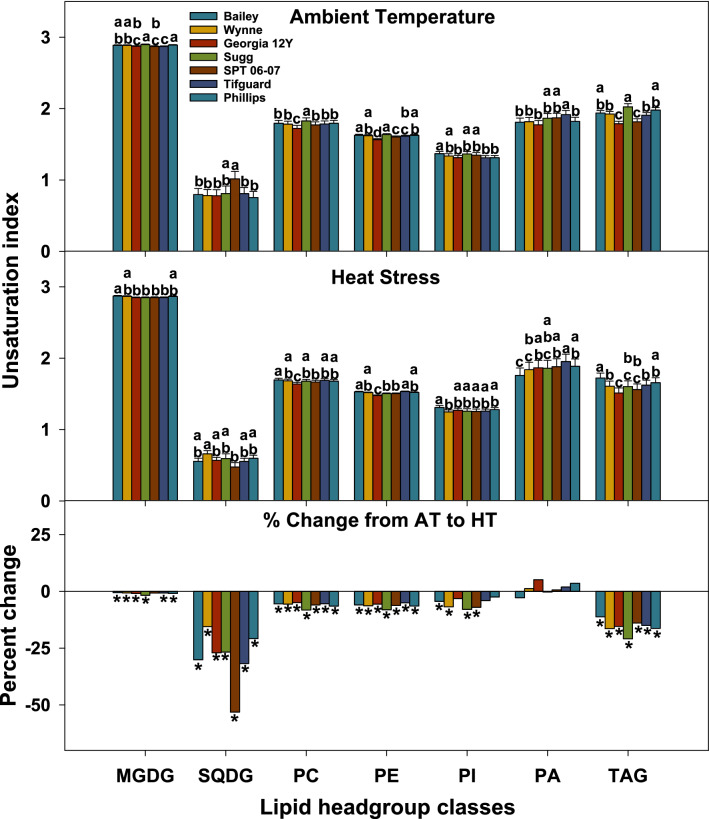
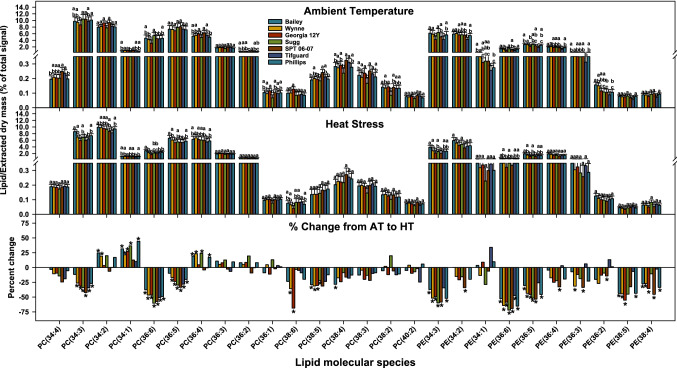
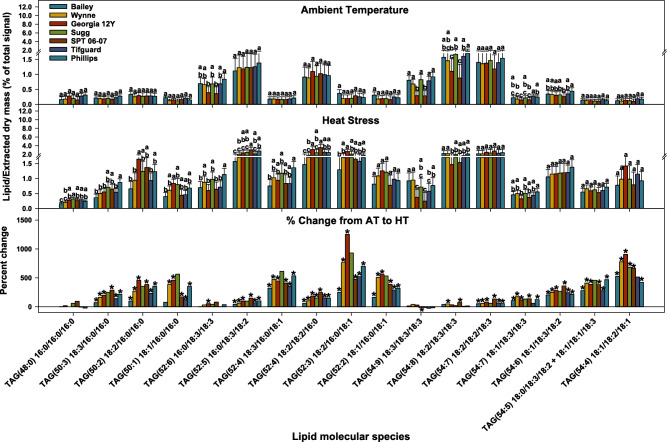
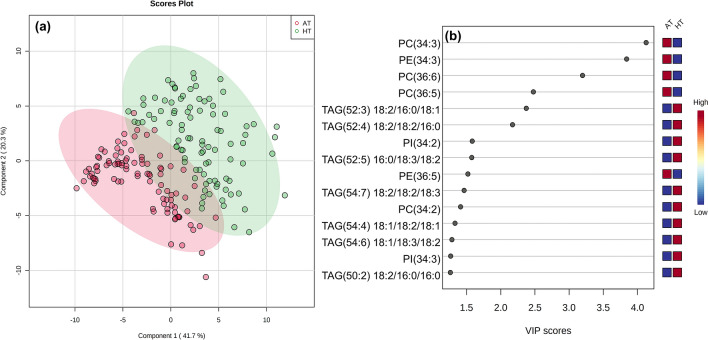
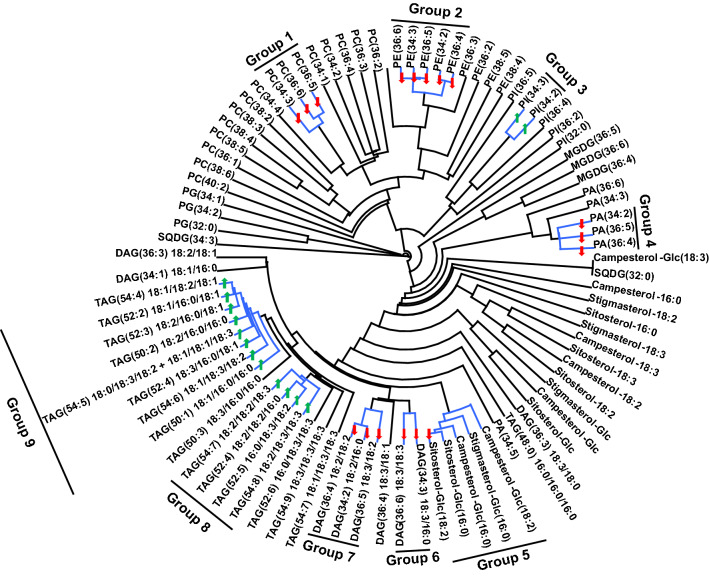
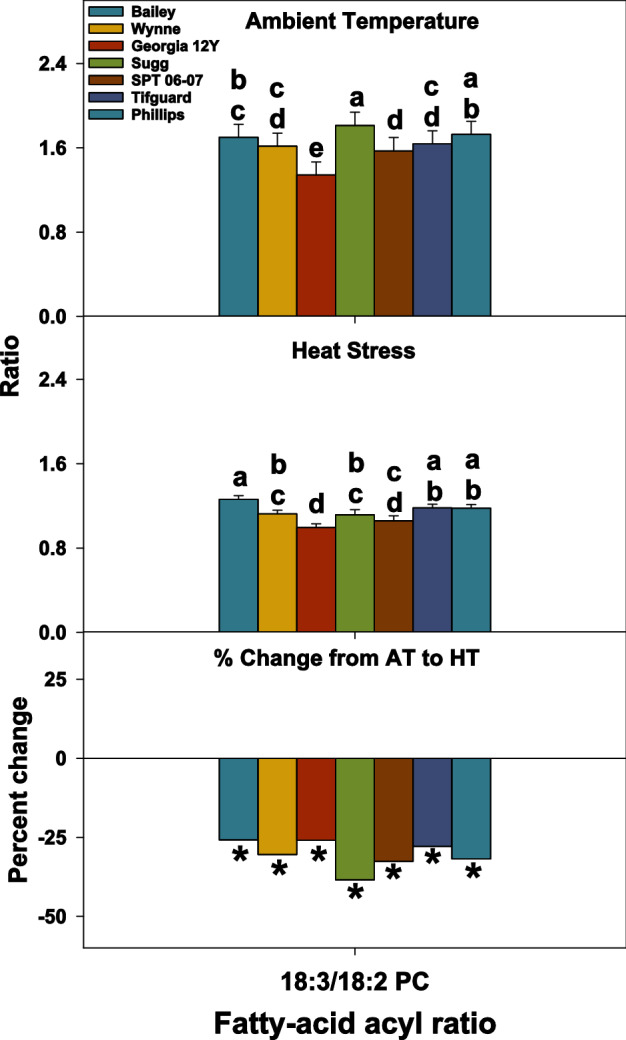
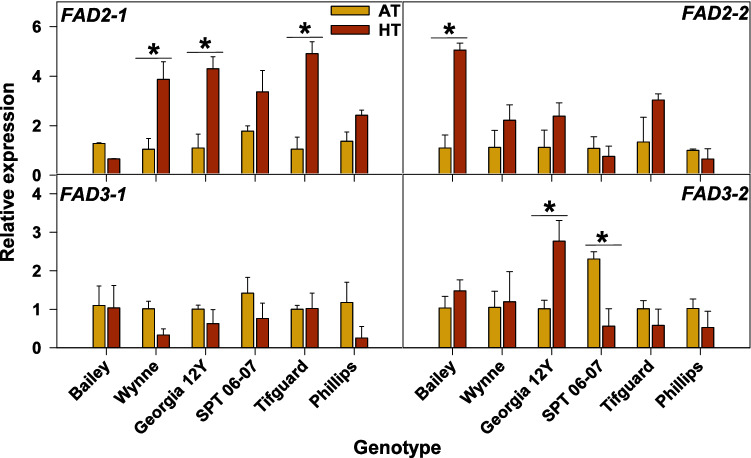
Understanding the changes in peanut (Arachis hypogaea L.) anther lipidome under heat stress (HT) will aid in understanding the mechanisms of heat tolerance. We profiled the anther lipidome of seven genotypes exposed to ambient temperature (AT) or HT during flowering. Under AT and HT, the lipidome was dominated by phosphatidylcholine (PC), phosphatidylethanolamine (PE), and triacylglycerol (TAG) species (> 50% of total lipids). Of 89 lipid analytes specified by total acyl carbons:total carbon-carbon double bonds, 36:6, 36:5, and 34:3 PC and 34:3 PE (all contain 18:3 fatty acid and decreased under HT) were the most important lipids that differentiated HT from AT. Heat stress caused decreases in unsaturation indices of membrane lipids, primarily due to decreases in highly-unsaturated lipid species that contained 18:3 fatty acids. In parallel, the expression of Fatty Acid Desaturase 3-2 (FAD3-2; converts 18:2 fatty acids to 18:3) decreased under HT for the heat-tolerant genotype SPT 06-07 but not for the susceptible genotype Bailey. Our results suggested that decreasing lipid unsaturation levels by lowering 18:3 fatty-acid amount through reducing FAD3 expression is likely an acclimation mechanism to heat stress in peanut. Thus, genotypes that are more efficient in doing so will be relatively more tolerant to HT.
了解花生(Arachis hypogaea L.)花药脂类组在热胁迫(HT)下的变化将有助于理解耐热机制。我们对七个在开花期处于环境温度(AT)或 HT 下的基因型的花药脂类组进行了分析。在 AT 和 HT 下,脂类组主要由磷脂酰胆碱(PC)、磷脂酰乙醇胺(PE)和三酰基甘油(TAG)组成(>总脂质的 50%)。在 89 种按总酰基碳:总碳-碳双键指定的脂质分析物中:6,36:5 和 34:3 PC 和 34:3 PE(均含有 18:3 脂肪酸,在 HT 下减少)是将 HT 与 AT 区分开来的最重要的脂质。热胁迫导致膜脂的不饱和度指数降低,主要是由于含有 18:3 脂肪酸的高度不饱和脂质种类减少。与此平行的是,耐热基因型 SPT 06-07 下 FAD3-2(将 18:2 脂肪酸转化为 18:3)的表达在 HT 下降低,但敏感基因型 Bailey 下则不然。我们的结果表明,通过降低 FAD3 表达来减少 18:3 脂肪酸的数量来降低脂质的不饱和度水平可能是花生适应热胁迫的一种机制。因此,在这方面效率更高的基因型将相对更能耐受 HT。