Centre for Disease Modeling, York University, Toronto, ON M3J 1P3, Canada; Department of Biomedical Sciences, York University, Toronto, ON M3J 1P3, Canada.
Department of Mathematics and Statistics, York University, Toronto, ON M3J 1P3, Canada; Laboratory for Industrial and Applied Mathematics, York University, Toronto, ON M3J 1P3, Canada.
Sci Total Environ. 2021 Mar 15;760:144325. doi: 10.1016/j.scitotenv.2020.144325. Epub 2020 Dec 10.
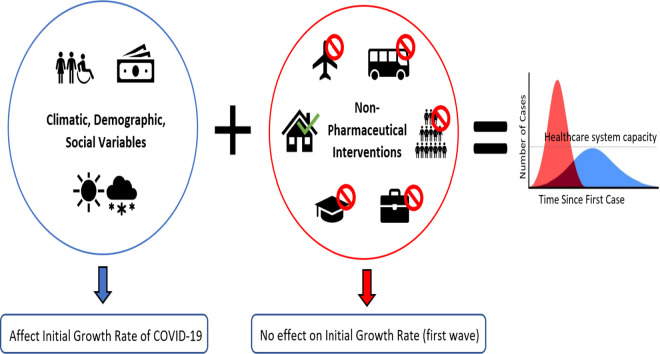
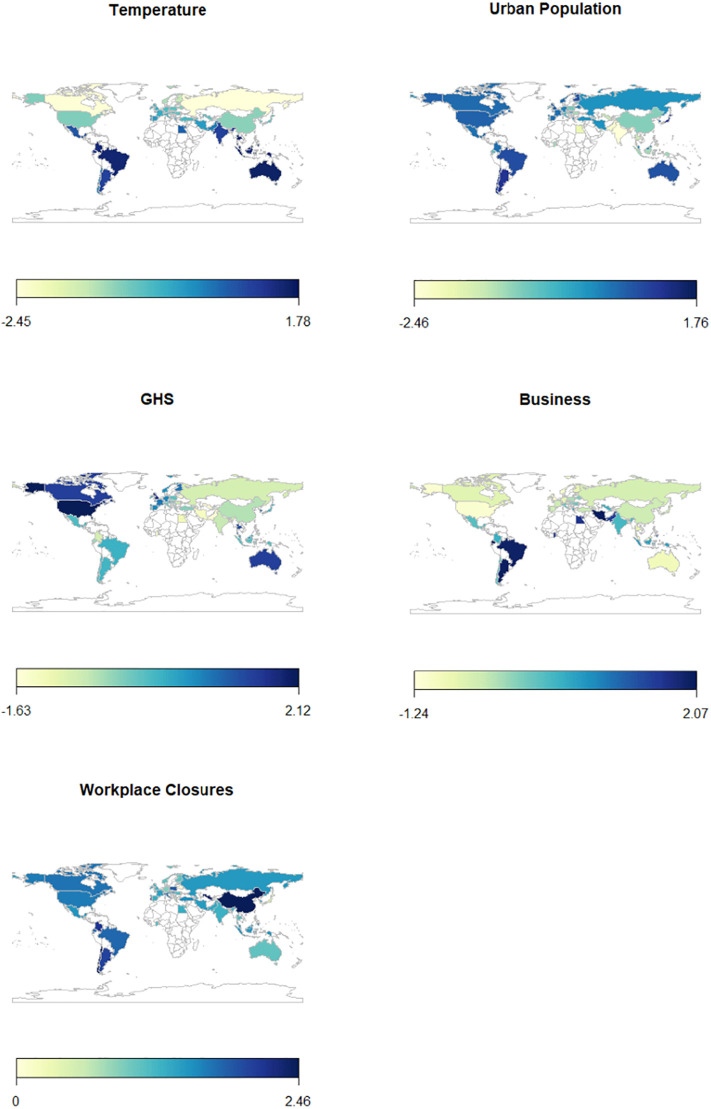
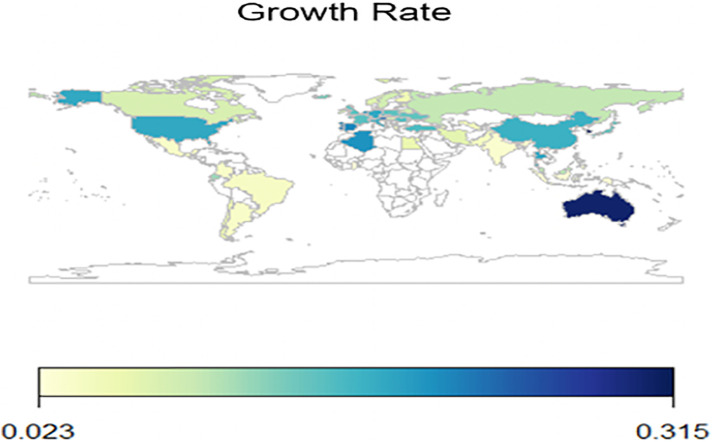
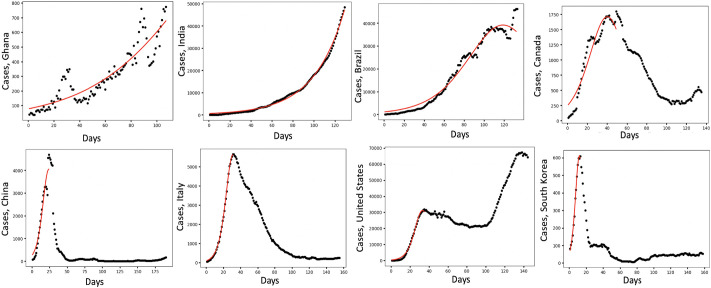
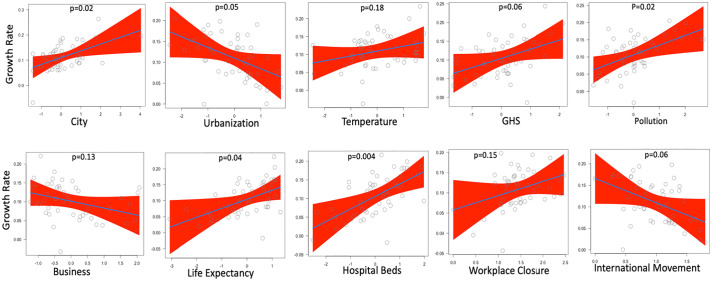
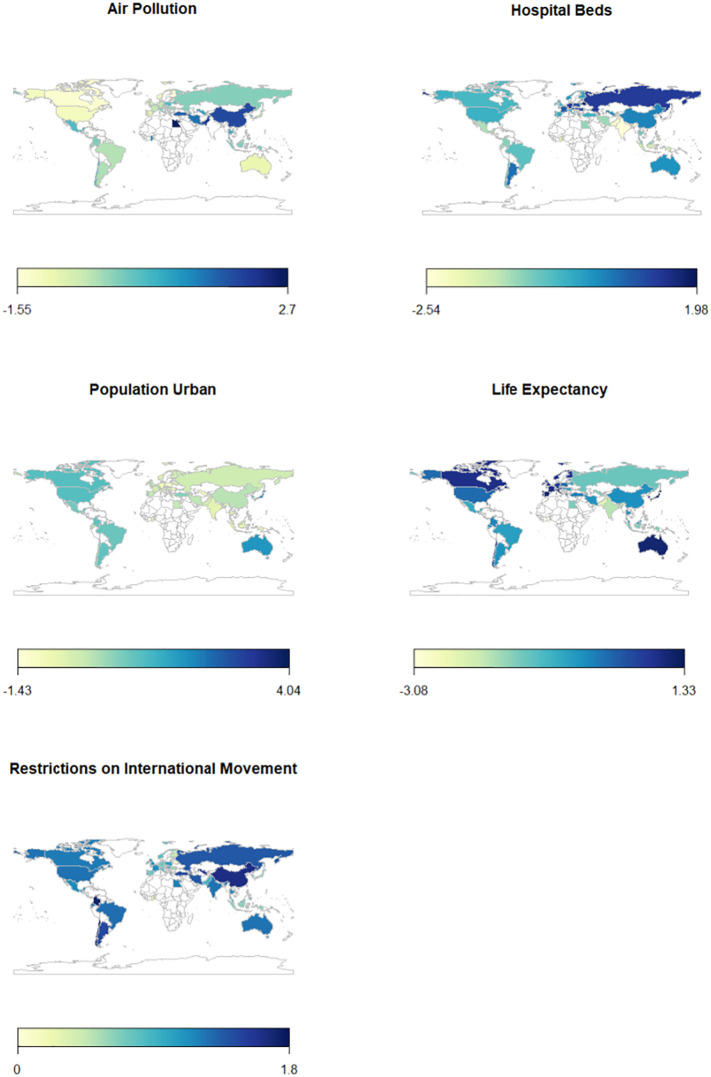
On March 11, 2020 the World Health Organization announced that the COVID-19 disease developed into a global pandemic. In the present paper, we aimed at analysing how the implementation of Non-Pharmaceutical Interventions (NPI) as well as climatic, social, and demographic variables affected the initial growth rate of COVID-19. In more detail, we aimed at identifying and assessing all the predictors in a whole picture of the COVID-19 outbreak and the effectiveness of the response of the countries to the pandemic. It can be expected, indeed, that there is a subtle and complex interplay among the various parameters. As such, we estimated the initial growth rate of COVID-19 for countries across the globe, and used a multiple linear regression model to study the association between the initial growth rate and NPI as well as pre-existing country characteristics (climatic, social and demographic variables measured before the current epidemic began). We obtained a mean initial growth rate of 0.120 (SD 0.076), in the range 0.023-0.315. Ten (8 pre-existing country characteristics and 2 NPI) out of 29 factors considered (21 pre-existing country characteristics and 8 NPI) were associated with the initial growth of COVID-19. Population in urban agglomerations of more than 1 million, PM2.5 air pollution mean annual exposure, life expectancy, hospital beds available, urban population, Global Health Security detection index and restrictions on international movement had the most significant effects on the initial growth of COVID-19. Based on available data and the results we obtained, NPI put in place by governments around the world alone may not have had a significant impact on the initial growth of COVID-19. Only restrictions on international movements had a relative significance with respect to the initial growth rate, whereas demographic, climatic, and social variables seemed to play a greater role in the initial growth rate of COVID-19.
2020 年 3 月 11 日,世界卫生组织宣布 COVID-19 疾病已发展为全球性大流行。在本研究中,我们旨在分析非药物干预(NPI)以及气候、社会和人口统计学变量如何影响 COVID-19 的初始增长率。更详细地说,我们旨在确定和评估 COVID-19 爆发的整体情况以及各国对大流行的反应的所有预测因子及其有效性。实际上,可以预期,各种参数之间存在微妙而复杂的相互作用。因此,我们估计了全球各国 COVID-19 的初始增长率,并使用多元线性回归模型研究了初始增长率与 NPI 以及现有国家特征(在当前疫情爆发之前测量的气候、社会和人口统计学变量)之间的关联。我们得到的平均初始增长率为 0.120(SD 0.076),范围为 0.023-0.315。在考虑的 29 个因素中有 10 个(8 个现有国家特征和 2 个 NPI)与 COVID-19 的初始增长相关。拥有 100 万以上人口的城市人口密集区、PM2.5 年平均空气污染暴露、预期寿命、可用病床、城市人口、全球卫生安全检测指数和限制国际流动对 COVID-19 的初始增长影响最大。基于现有数据和我们获得的结果,各国政府实施的 NPI 可能对 COVID-19 的初始增长没有显著影响。只有限制国际流动与初始增长率具有相对重要性,而人口统计学、气候和社会变量似乎对 COVID-19 的初始增长率起着更大的作用。