Program in Molecular Oncology, H. Lee Moffitt Cancer Center and Research Institute, Tampa, Florida, USA.
Program in Molecular Oncology, H. Lee Moffitt Cancer Center and Research Institute, Tampa, Florida, USA.
Cancer Treat Res Commun. 2021;26:100286. doi: 10.1016/j.ctarc.2020.100286. Epub 2020 Dec 13.
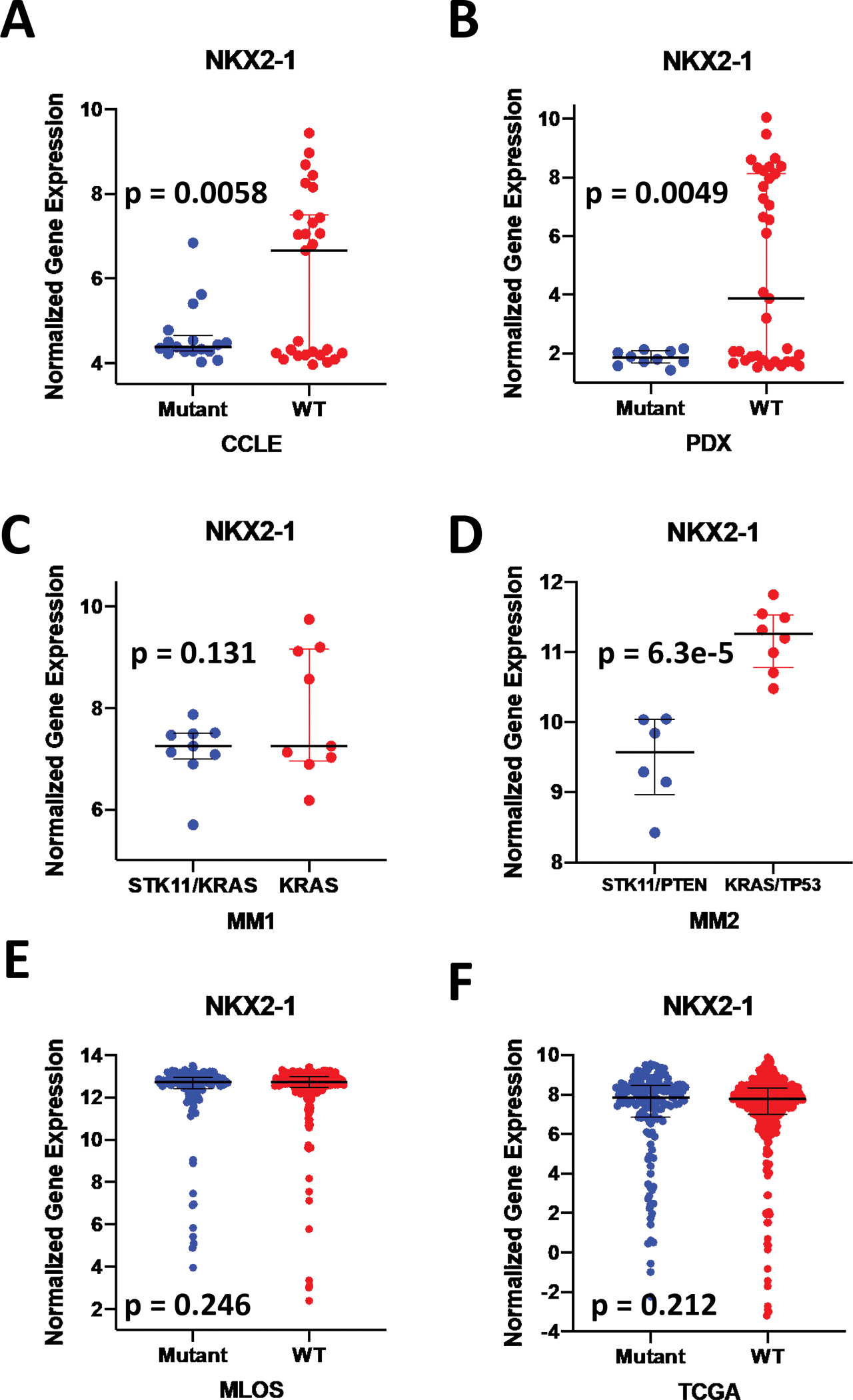
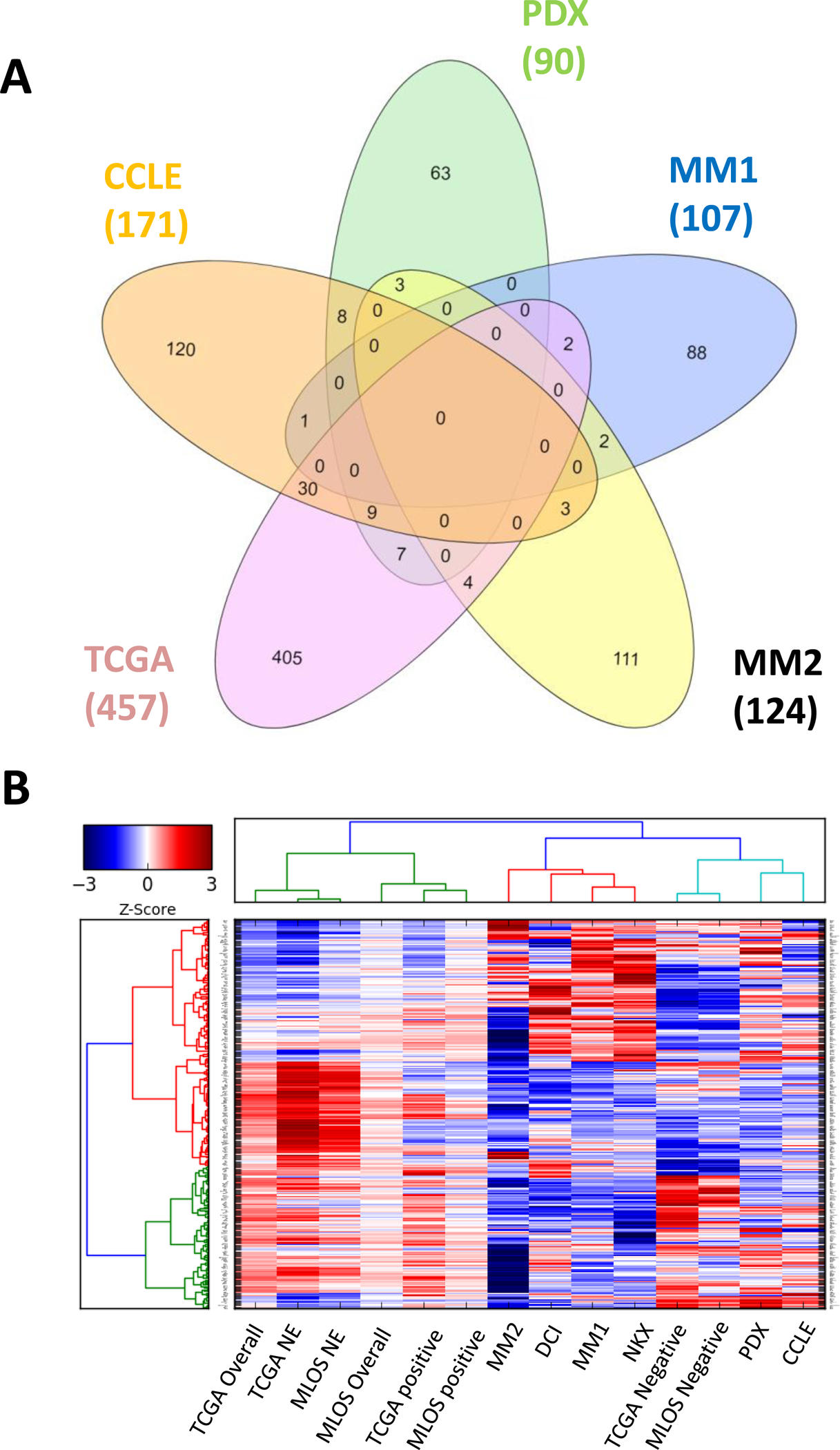
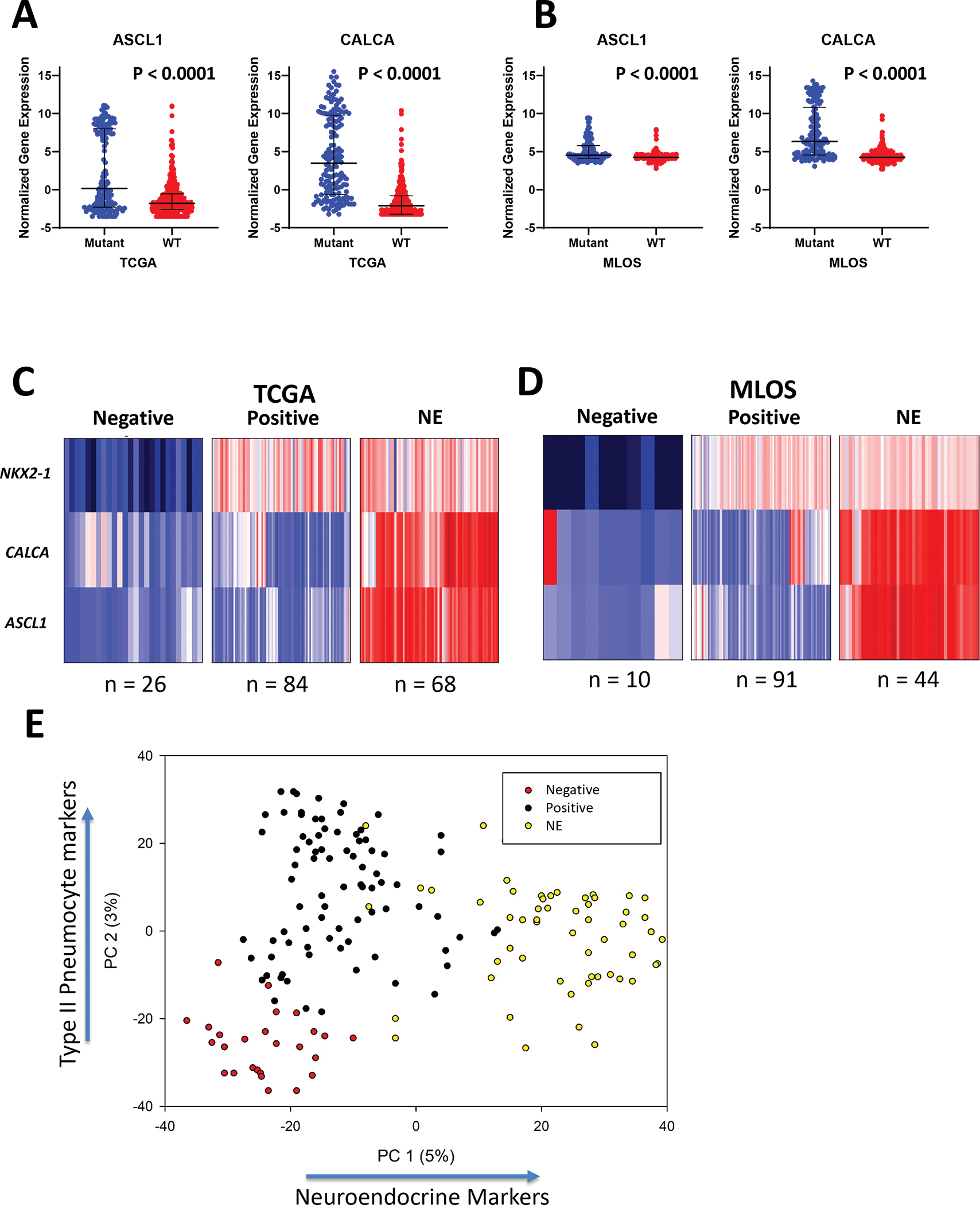
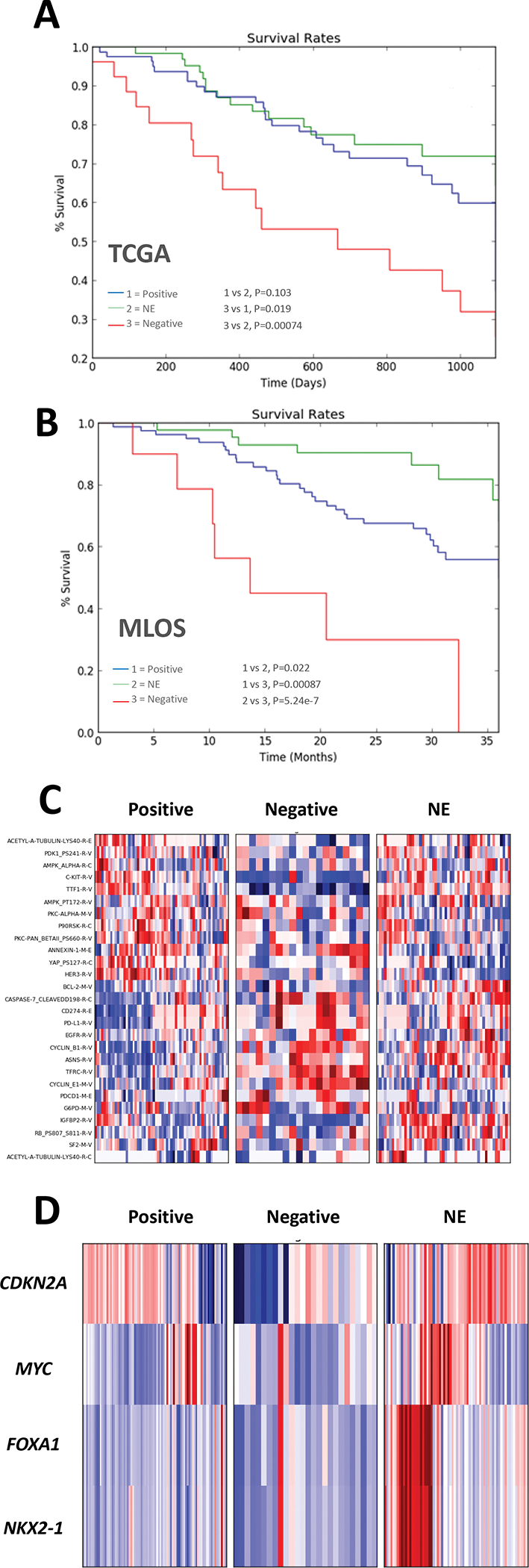
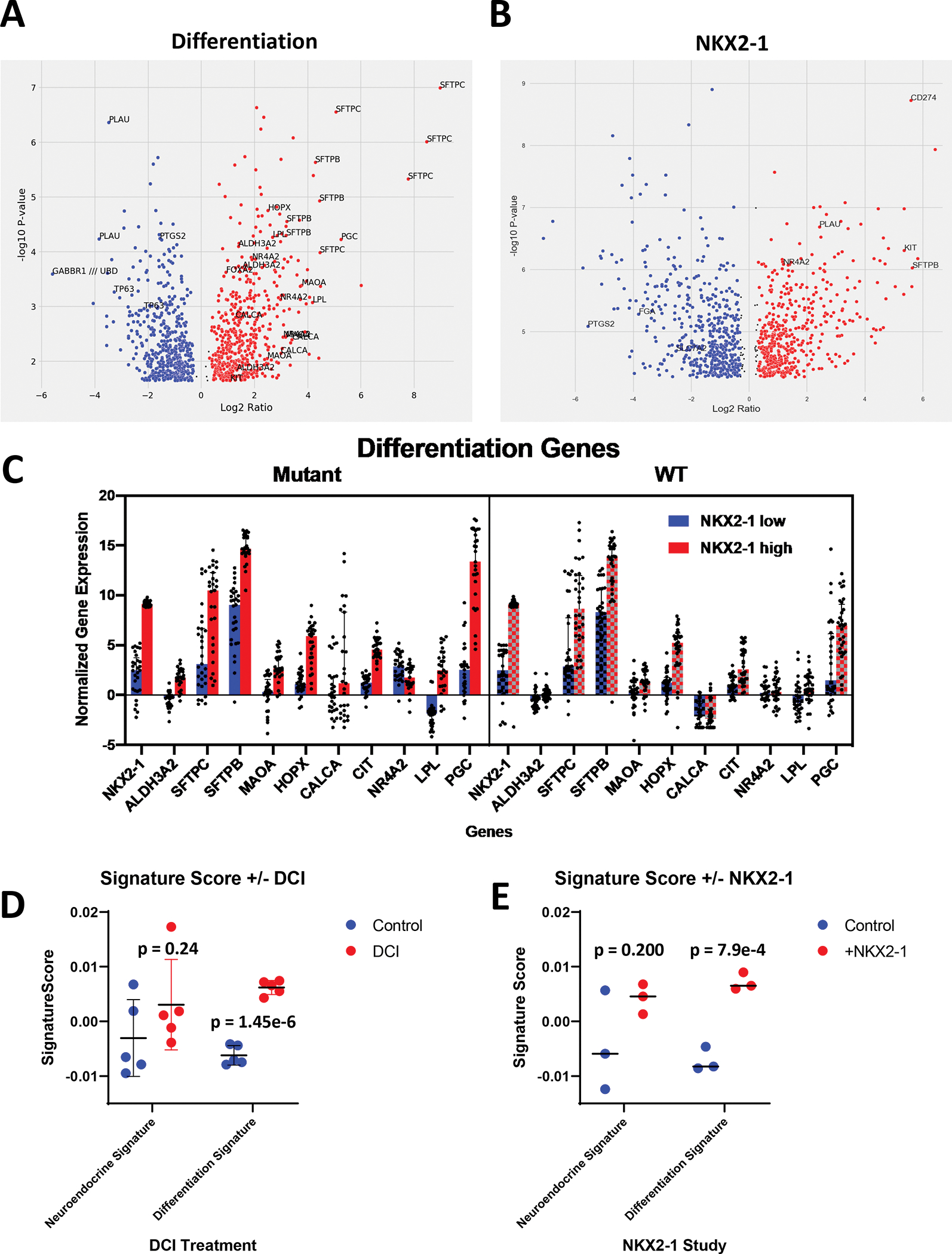
Nearly 1/3 of lung adenocarcinomas have loss of STK11 (LKB1) function. Herein, a bioinformatics approach was used to determine how accurately preclinical model systems reflect the in vivo biology of STK11 loss in human patients. Hierarchical and K-mean clustering, principle component, and gene set enrichment analyses were employed to model gene expression due to STK11 loss in patient cohorts representing nearly 1000 lung adenocarcinoma patients. K-means clustering classified STK11 loss patient tumors into three distinct sub-groups; positive (54%), neuroendocrine (NE) (35%) and negative (11%). The positive and NE groups are both defined by the expression of NKX2-1. In addition to NKX2-1, NE patients express neuroendocrine markers such as ASCL1 and CALCA. In contrast, the negative group does not express NKX2-1 (or neuroendocrine markers) and is characterized by significantly reduced survival relative to the two other groups. Two gene expression signatures were derived to explain both neuroendocrine features and differentiation (NKX2-1 loss) and were validated through two public datasets involving chemical differentiation (DCI) and NKX2-1 reconstitution. Patients results were then compared with established cell lines, transgenic mice, and patient-derived xenograft models of STK11 loss. Interestingly, all cell line and PDX models cluster and show expression patterns similar with the NKX2-1 negative subset of STK11-loss human tumors. Surprisingly, even mouse models of STK11 loss do not resemble patient tumors based on gene expression patterns. Results suggest pre-clinical models of STK11 loss are pronounced by marked elimination of type II pneumocyte identity, opposite of most in vivo human tumors.
近三分之一的肺腺癌存在 STK11(LKB1)功能丧失。在此,采用生物信息学方法来确定临床前模型系统在多大程度上反映了人类患者中 STK11 缺失的体内生物学。采用层次聚类和 K-均值聚类、主成分分析和基因集富集分析来模拟患者队列中由于 STK11 缺失而导致的基因表达,这些患者队列代表了近 1000 例肺腺癌患者。K-均值聚类将 STK11 缺失患者的肿瘤分为三个不同的亚组:阳性(54%)、神经内分泌(NE)(35%)和阴性(11%)。阳性和 NE 组均由 NKX2-1 的表达定义。除了 NKX2-1,NE 患者还表达神经内分泌标志物,如 ASCL1 和 CALCA。相比之下,阴性组不表达 NKX2-1(或神经内分泌标志物),与其他两组相比,其生存率显著降低。得出了两个基因表达特征,用于解释神经内分泌特征和分化(NKX2-1 缺失),并通过涉及化学分化(DCI)和 NKX2-1 重建的两个公共数据集进行了验证。然后将患者的结果与已建立的细胞系、转基因小鼠和 STK11 缺失的患者来源异种移植模型进行比较。有趣的是,所有细胞系和 PDX 模型都聚类,并显示出与 STK11 缺失人类肿瘤中 NKX2-1 阴性亚组相似的表达模式。令人惊讶的是,即使是 STK11 缺失的小鼠模型也不能根据基因表达模式来模拟患者肿瘤。结果表明,STK11 缺失的临床前模型的特征是明显消除 II 型肺泡细胞的特征,与大多数体内人类肿瘤相反。