Department of Pharmacy, DDT College of Medicine, P.O. Box 70587, Gaborone 00000, Botswana.
Division of Pharmaceutics, Faculty of Pharmacy, Rhodes University, Makhanda 6140, South Africa.
Molecules. 2020 Dec 16;25(24):5952. doi: 10.3390/molecules25245952.
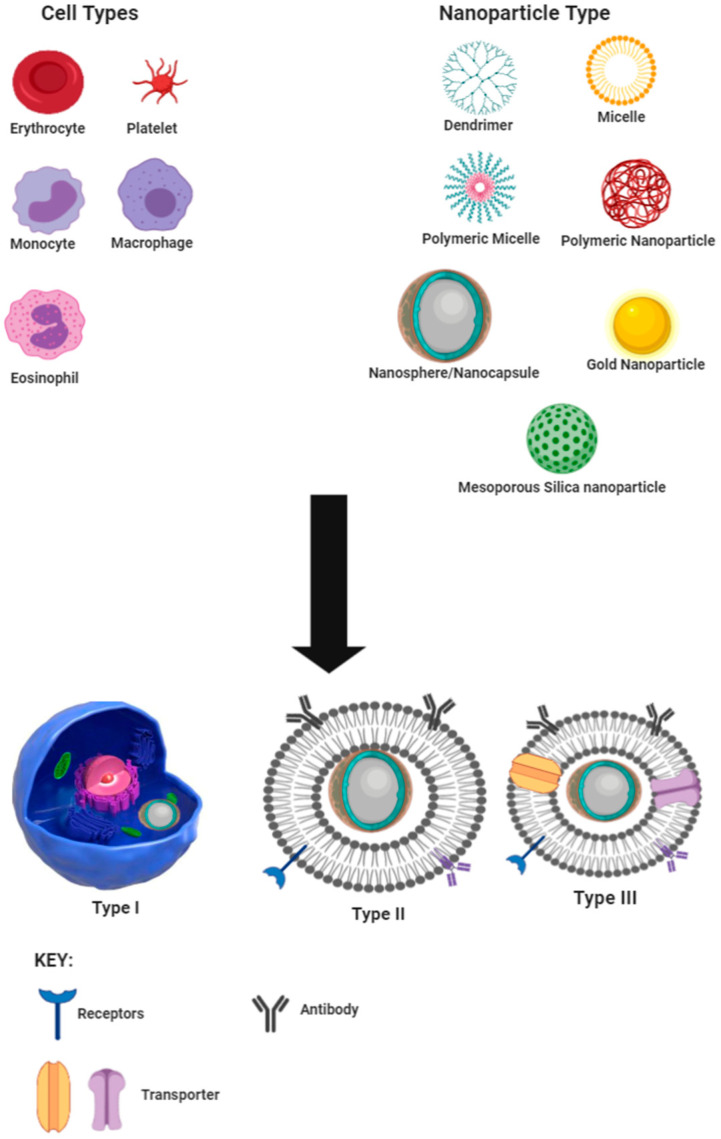
The current COVID-19 pandemic has tested the resolve of the global community with more than 35 million infections worldwide and numbers increasing with no cure or vaccine available to date. Nanomedicines have an advantage of providing enhanced permeability and retention and have been extensively studied as targeted drug delivery strategies for the treatment of different disease. The role of monocytes, erythrocytes, thrombocytes, and macrophages in diseases, including infectious and inflammatory diseases, cancer, and atherosclerosis, are better understood and have resulted in improved strategies for targeting and in some instances mimicking these cell types to improve therapeutic outcomes. Consequently, these primary cell types can be exploited for the purposes of serving as a "Trojan horse" for targeted delivery to identified organs and sites of inflammation. State of the art and potential utilization of nanocarriers such as nanospheres/nanocapsules, nanocrystals, liposomes, solid lipid nanoparticles/nano-structured lipid carriers, dendrimers, and nanosponges for biomimicry and/or targeted delivery of bioactives to cells are reported herein and their potential use in the treatment of COVID-19 infections discussed. Physicochemical properties, viz., hydrophilicity, particle shape, surface charge, composition, concentration, the use of different target-specific ligands on the surface of carriers, and the impact on carrier efficacy and specificity are also discussed.
当前的 COVID-19 大流行对全球社会的决心进行了考验,目前全球已有超过 3500 万人感染,且感染人数还在不断增加,而目前尚无治愈方法或疫苗。纳米药物具有增强通透性和保留性的优势,已被广泛研究作为治疗不同疾病的靶向药物传递策略。单核细胞、红细胞、血小板和巨噬细胞在包括传染病和炎症性疾病、癌症和动脉粥样硬化等疾病中的作用得到了更好的理解,并导致了针对这些细胞类型的靶向策略的改进,在某些情况下还模仿这些细胞类型以改善治疗效果。因此,这些原代细胞类型可被利用作为靶向递送到特定器官和炎症部位的“特洛伊木马”。本文报告了纳米载体(如纳米球/纳米胶囊、纳米晶体、脂质体、固体脂质纳米粒/纳米结构脂质载体、树枝状大分子和纳米海绵)用于仿生学和/或生物活性物质靶向递送到细胞的最新技术和潜在应用,并讨论了它们在治疗 COVID-19 感染方面的潜在用途。还讨论了物理化学性质,如亲水性、颗粒形状、表面电荷、组成、浓度、在载体表面使用不同的靶向特异性配体,以及对载体功效和特异性的影响。