Chair and Department of Cell Biology, Poznan University of Medical Sciences, Rokietnicka Street 5D, Poznan, Poland.
Department of Spine Disorders and Pediatric Orthopedics, Poznan University of Medical Sciences, 28 Czerwca 1956 r. Street 135/147, Poznan, Poland.
Sci Rep. 2020 Dec 18;10(1):22331. doi: 10.1038/s41598-020-78454-4.
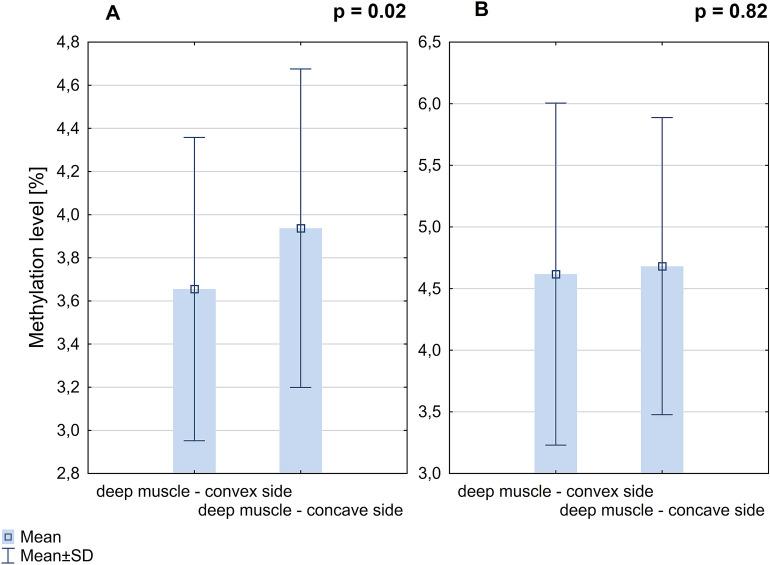
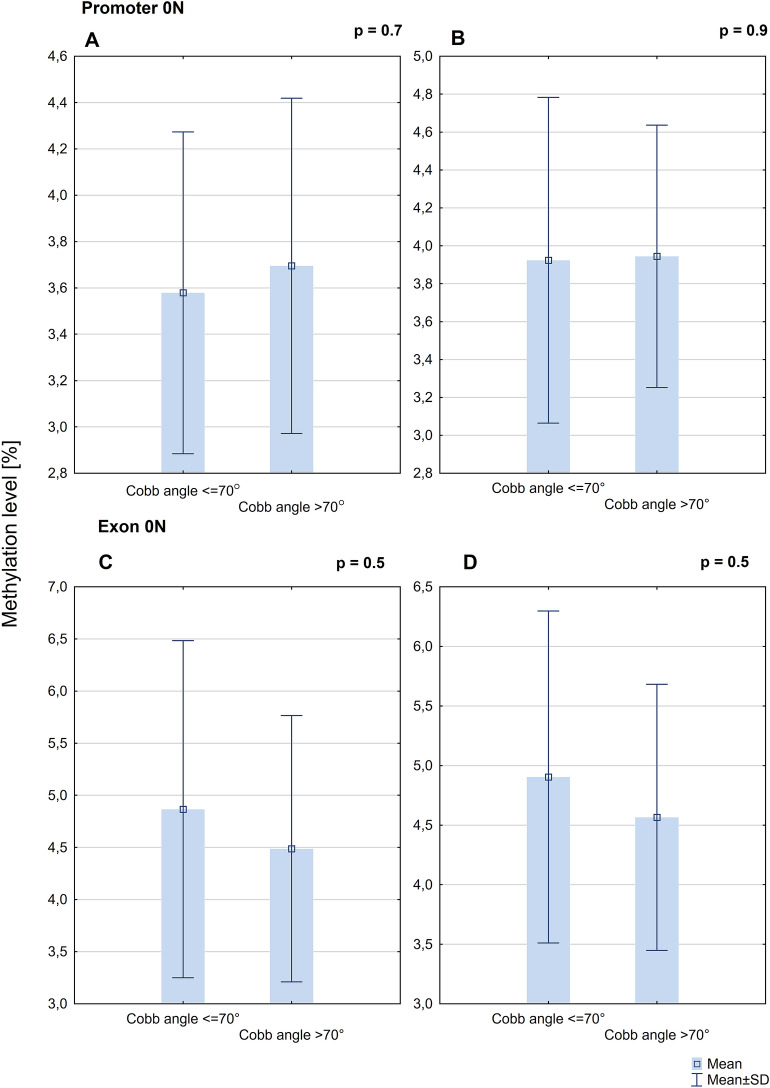
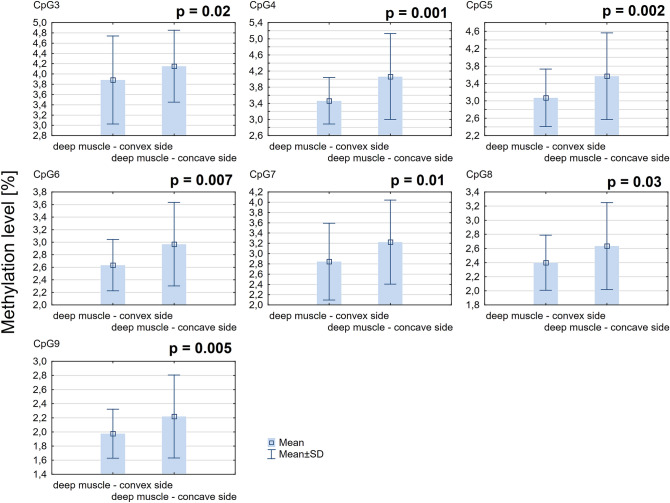
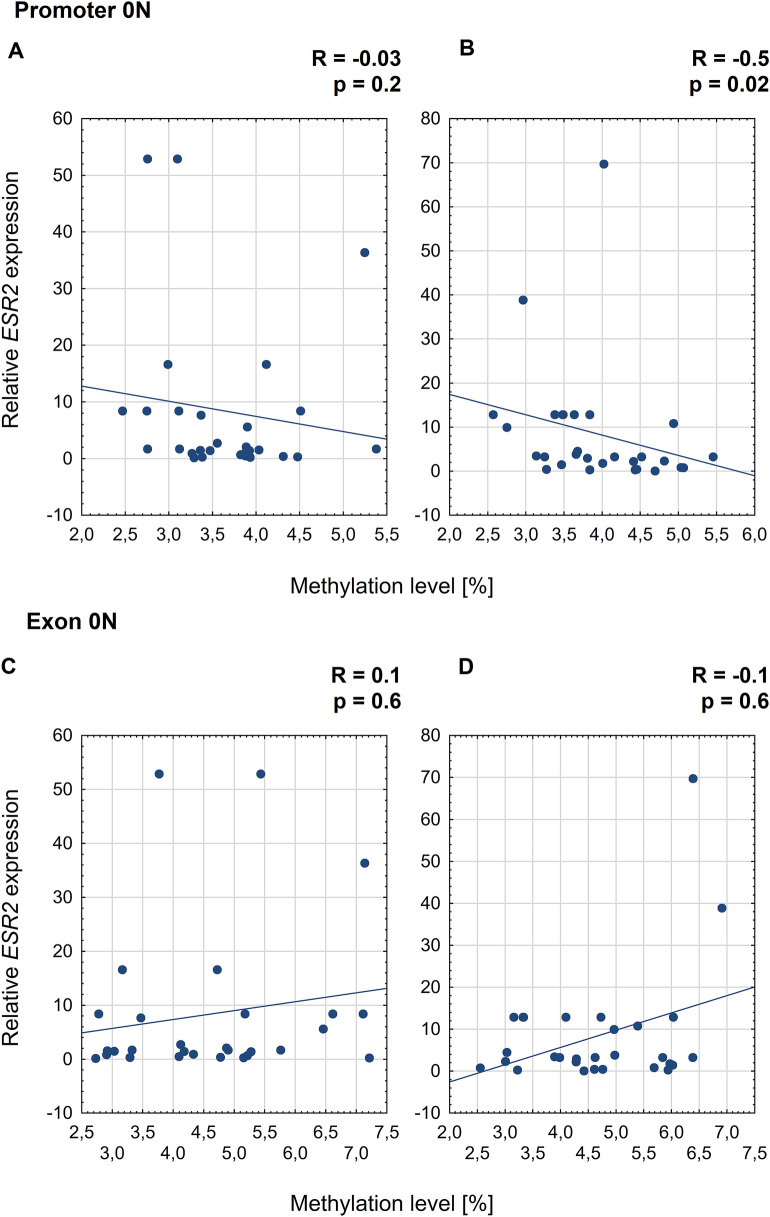
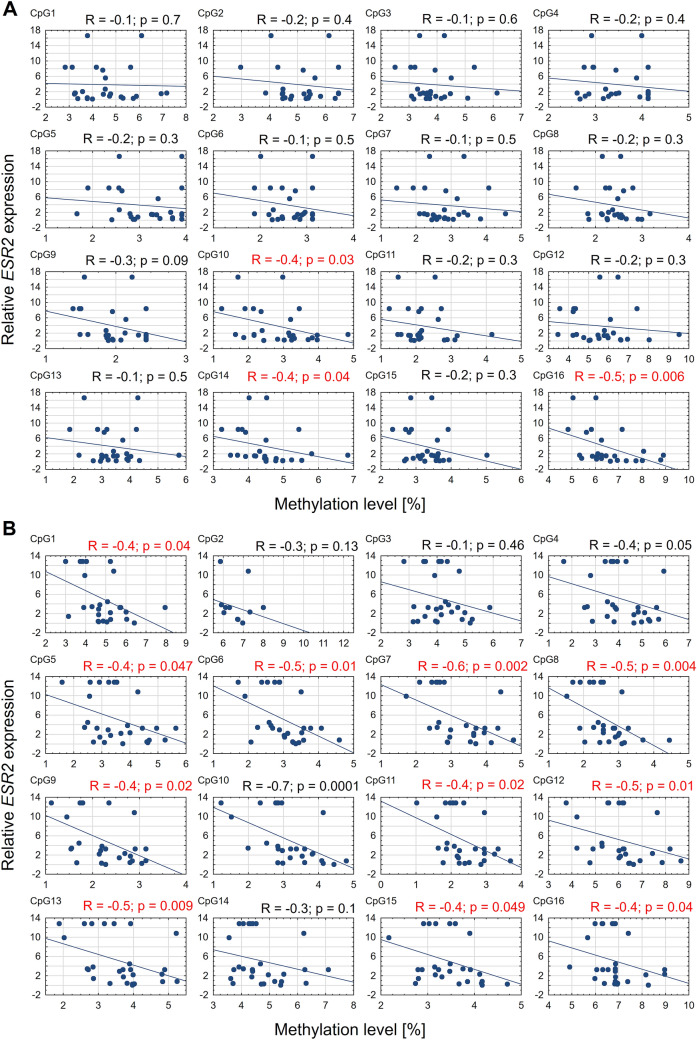
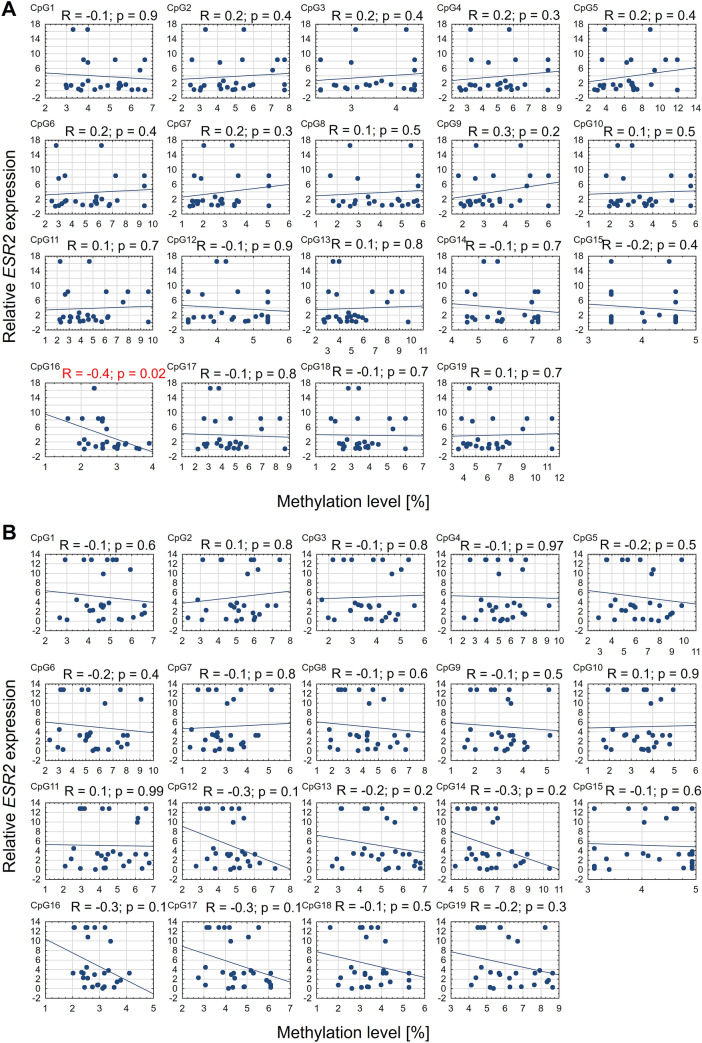
Idiopathic scoliosis (IS) is one of the most common spinal disorders in adolescents. Despite many studies, the etiopathogenesis of IS is still poorly understood. In recent years, the role of epigenetic factors in the etiopathogenesis of IS has been increasingly investigated. It has also been postulated that the development and progression of the disease is related to gender and puberty, and could be associated with estrogen action. Estrogen hormones act via estrogen receptor 1 (ESR1) and estrogen receptor 2 (ESR2). It has been suggested that ESR2 expression is dependent on methylation within its gene promoter. So far, no studies have evaluated local, tissue-specific DNA methylation in patients with IS. Thus, our study aimed to analyze the methylation and expression level of ESR2 in the paraspinal muscles of the convex and concave side of the IS curvature. The methylation level within ESR2 promoter 0N, but not exon 0N, was significantly higher on the concave side of the curvature compared to the convex side. There was no significant correlation between ESR2 expression and methylation level in the promoter 0N on the convexity of thoracic scoliosis, whereas, on the concave side of the curvature, we observed a moderate negative correlation. There was no difference in the methylation levels of the ESR2 promoter and exon 0N between groups of patients with Cobb angle ≤ 70° and > 70° on the concave and convex side of the curvature. We also found no statistically significant correlation between the Cobb angle value and the mean methylation level in either the ESR2 promoter or exon 0N on the convex or concave side of the curvature. Our findings demonstrate that DNA methylation at the ESR2 promoter in deep paravertebral muscle tissue is associated with the occurrence but not with the severity of idiopathic scoliosis.
特发性脊柱侧凸(IS)是青少年最常见的脊柱疾病之一。尽管进行了许多研究,但 IS 的病因仍然知之甚少。近年来,越来越多的研究探讨了表观遗传因素在 IS 发病机制中的作用。也有人提出,疾病的发展和进展与性别和青春期有关,并且可能与雌激素作用有关。雌激素通过雌激素受体 1(ESR1)和雌激素受体 2(ESR2)起作用。据推测,ESR2 的表达取决于其基因启动子内的甲基化。到目前为止,还没有研究评估 IS 患者的局部、组织特异性 DNA 甲基化。因此,我们的研究旨在分析 IS 曲度凸侧和凹侧的椎旁肌肉中 ESR2 的甲基化和表达水平。与凸侧相比,ESR2 启动子 0N 内的甲基化水平在曲率的凹侧显著升高,但 ESR2 外显子 0N 内的甲基化水平没有差异。在胸弯凸侧,ESR2 启动子 0N 上的 ESR2 表达与甲基化水平之间没有显著相关性,而在曲率的凹侧,我们观察到中等程度的负相关。在曲率的凹侧和凸侧,ESR2 启动子和外显子 0N 的甲基化水平在 Cobb 角≤70°和>70°的患者组之间没有差异。我们还发现,Cobb 角值与凸侧或凹侧 ESR2 启动子或外显子 0N 的平均甲基化水平之间没有统计学上的显著相关性。我们的研究结果表明,深椎旁肌肉组织中 ESR2 启动子的 DNA 甲基化与特发性脊柱侧凸的发生有关,但与严重程度无关。