LeMoult Joelle
Department of Psychology, University of British Columbia.
Curr Dir Psychol Sci. 2020 Dec;29(6):592-598. doi: 10.1177/0963721420964039. Epub 2020 Nov 9.
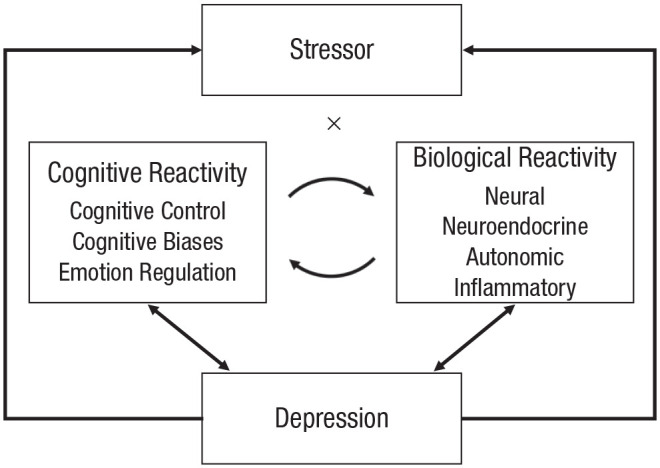
One of the most consistent findings in the depression literature is that stressful life events predict the onset and course of depressive episodes. Cognitive and biological responses to life stressors have both been identified, albeit largely independently, as central to understanding the association between stress and depression. I maintain that the largest advances in the understanding of depression will come from examining the ways that cognitive and biological responses to stressors reciprocally influence one another and, in doing so, contribute to the onset and maintenance of depression. I summarize the cognitive and biological stress responses implicated in depression and then describe the reciprocal ways that they are associated with each other. Finally, I discuss the broader implications of taking this integrated approach and suggest directions and considerations for future research.
抑郁症文献中最一致的发现之一是,生活应激事件可预测抑郁发作的起始和病程。对生活应激源的认知和生物学反应均已被确定为理解应激与抑郁之间关联的核心因素,尽管二者在很大程度上是独立的。我认为,在抑郁症理解方面取得的最大进展将来自于研究对应激源的认知和生物学反应相互影响的方式,以及这样做如何导致抑郁症的发作和维持。我总结了与抑郁症相关的认知和生物学应激反应,然后描述它们相互关联的方式。最后,我讨论了采用这种综合方法的更广泛意义,并提出了未来研究的方向和需要考虑的因素。