Ao Di, Shourijeh Mohammad S, Patten Carolynn, Fregly Benjamin J
Rice Computational Neuromechanics Lab, Department of Mechanical Engineering, Rice University, Houston, TX, United States.
Biomechanics, Rehabilitation, and Integrative Neuroscience (BRaIN) Lab, VA Northern California Health Care System, Martinez, CA, United States.
Front Comput Neurosci. 2020 Dec 4;14:588943. doi: 10.3389/fncom.2020.588943. eCollection 2020.
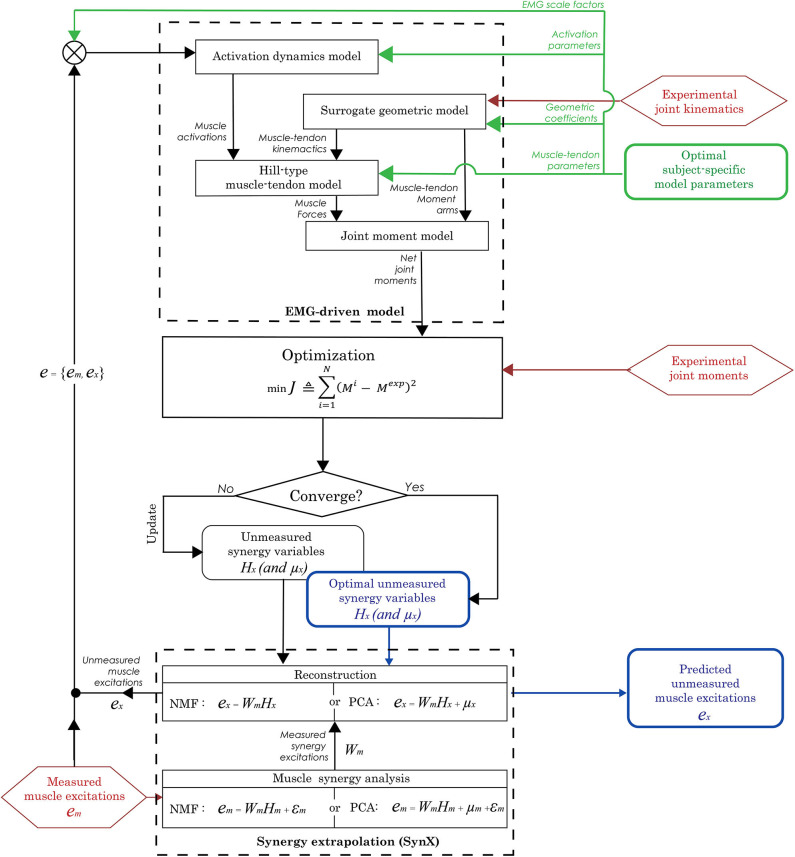
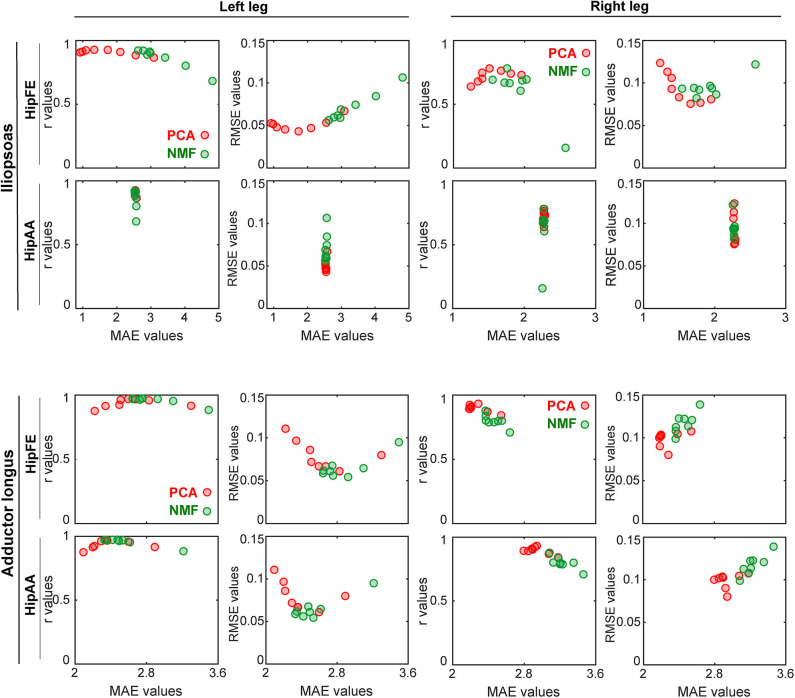
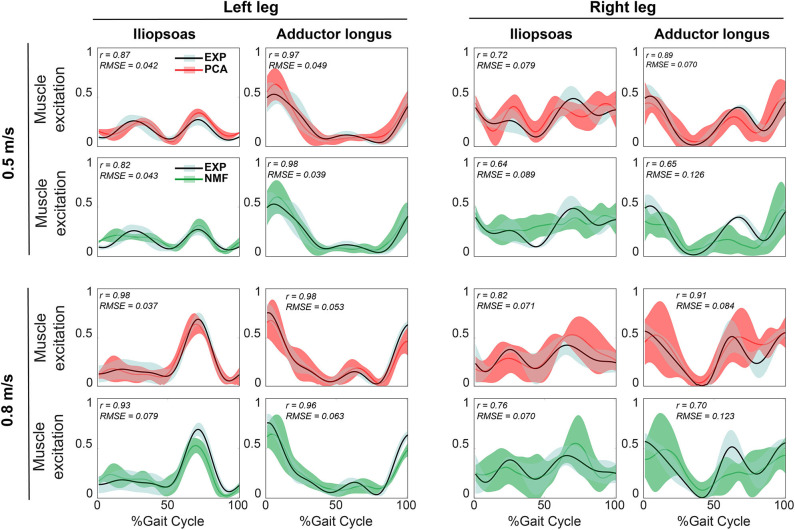
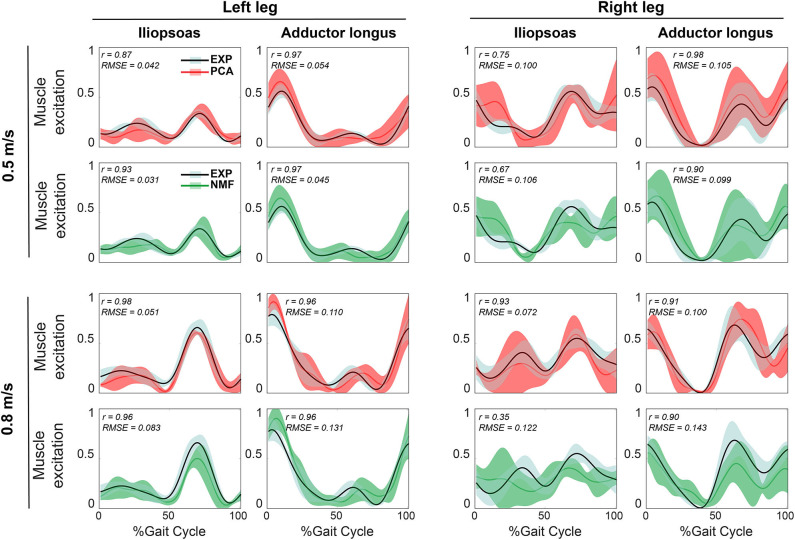
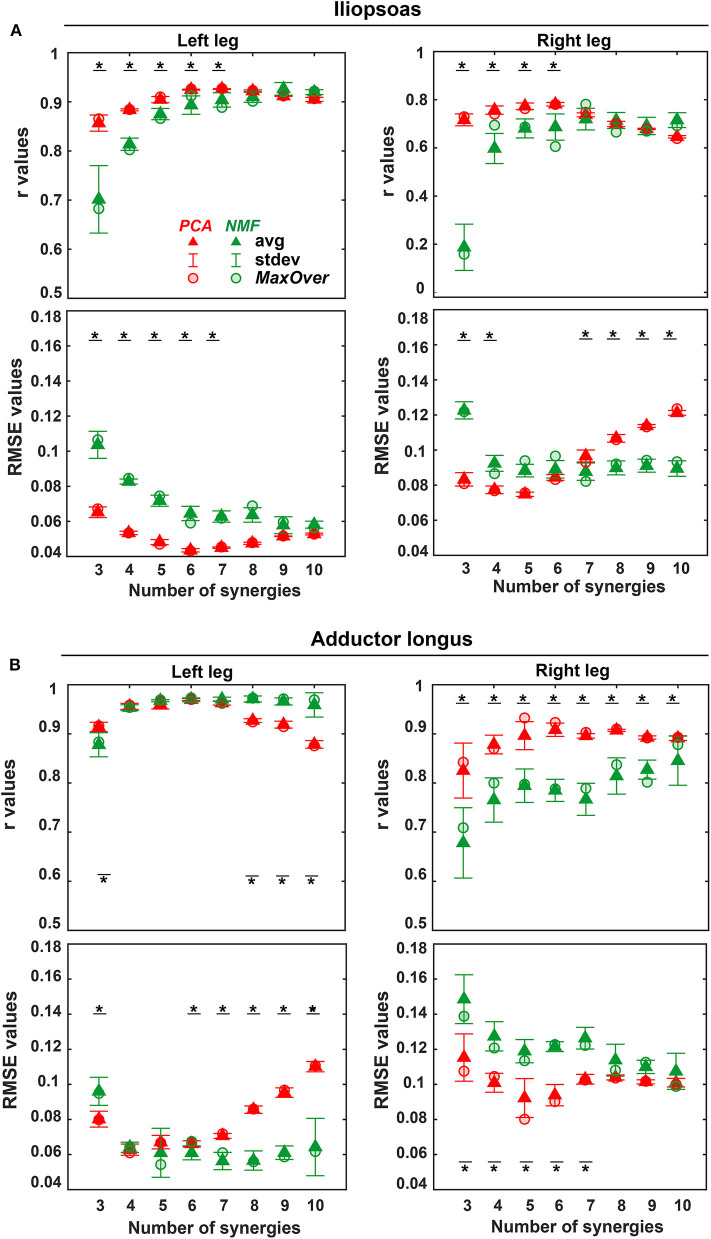
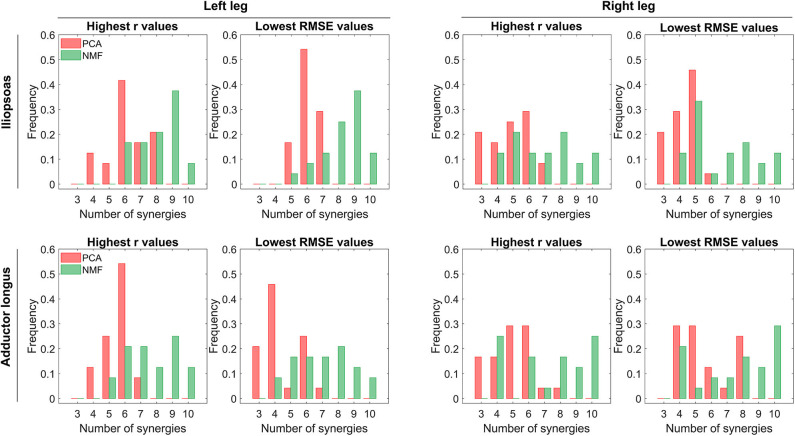
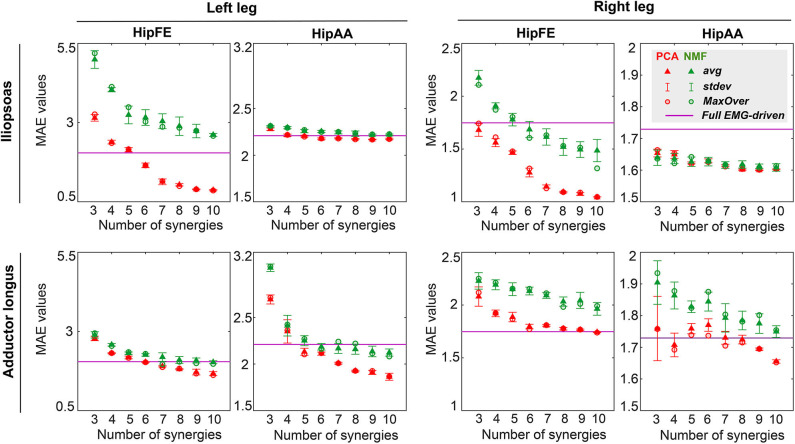
Electromyography (EMG)-driven musculoskeletal modeling relies on high-quality measurements of muscle electrical activity to estimate muscle forces. However, a critical challenge for practical deployment of this approach is missing EMG data from muscles that contribute substantially to joint moments. This situation may arise due to either the inability to measure deep muscles with surface electrodes or the lack of a sufficient number of EMG channels. Muscle synergy analysis (MSA) is a dimensionality reduction approach that decomposes a large number of muscle excitations into a small number of time-varying synergy excitations along with time-invariant synergy weights that define the contribution of each synergy excitation to all muscle excitations. This study evaluates how well missing muscle excitations can be predicted using synergy excitations extracted from muscles with available EMG data (henceforth called "synergy extrapolation" or SynX). The method was evaluated using a gait data set collected from a stroke survivor walking on an instrumented treadmill at self-selected and fastest-comfortable speeds. The evaluation process started with full calibration of a lower-body EMG-driven model using 16 measured EMG channels (collected using surface and fine wire electrodes) per leg. One fine wire EMG channel (either iliopsoas or adductor longus) was then treated as unmeasured. The synergy weights associated with the unmeasured muscle excitation were predicted by solving a nonlinear optimization problem where the errors between inverse dynamics and EMG-driven joint moments were minimized. The prediction process was performed for different synergy analysis algorithms (principal component analysis and non-negative matrix factorization), EMG normalization methods, and numbers of synergies. SynX performance was most influenced by the choice of synergy analysis algorithm and number of synergies. Principal component analysis with five or six synergies consistently predicted unmeasured muscle excitations the most accurately and with the greatest robustness to EMG normalization method. Furthermore, the associated joint moment matching accuracy was comparable to that produced by initial EMG-driven model calibration using all 16 EMG channels per leg. SynX may facilitate the assessment of human neuromuscular control and biomechanics when important EMG signals are missing.
肌电图(EMG)驱动的肌肉骨骼建模依赖于高质量的肌肉电活动测量来估计肌肉力量。然而,这种方法实际应用中的一个关键挑战是,对关节力矩有重大贡献的肌肉缺少EMG数据。这种情况可能是由于无法用表面电极测量深层肌肉,或者是EMG通道数量不足。肌肉协同分析(MSA)是一种降维方法,它将大量的肌肉兴奋分解为少量随时间变化的协同兴奋以及随时间不变的协同权重,这些权重定义了每个协同兴奋对所有肌肉兴奋的贡献。本研究评估了使用从有可用EMG数据的肌肉中提取的协同兴奋(以下称为“协同外推”或SynX)预测缺失肌肉兴奋的效果如何。该方法使用从一名中风幸存者在装有仪器的跑步机上以自选和最快舒适速度行走时收集的步态数据集进行评估。评估过程首先使用每条腿16个测量的EMG通道(使用表面电极和细线电极收集)对下半身EMG驱动模型进行全面校准。然后将一个细线EMG通道(髂腰肌或长收肌)视为未测量。通过求解一个非线性优化问题来预测与未测量肌肉兴奋相关的协同权重,该问题将逆动力学和EMG驱动的关节力矩之间的误差最小化。针对不同的协同分析算法(主成分分析和非负矩阵分解)、EMG归一化方法以及协同数量进行了预测过程。SynX性能受协同分析算法选择和协同数量的影响最大。具有五个或六个协同的主成分分析始终能最准确地预测未测量的肌肉兴奋,并且对EMG归一化方法具有最大的鲁棒性。此外,相关的关节力矩匹配精度与每条腿使用所有16个EMG通道进行初始EMG驱动模型校准所产生的精度相当。当重要的EMG信号缺失时,SynX可能有助于评估人体神经肌肉控制和生物力学。