Department of Ophthalmology, College of Medicine, University of Florida, Gainesville, Florida, USA.
Physiology & Functional Genomics, College of Medicine, University of Florida, Gainesville, Florida, USA.
Transl Vis Sci Technol. 2020 Dec 14;9(13):20. doi: 10.1167/tvst.9.13.20. eCollection 2020 Dec.
A multitude of animal studies substantiates the beneficial effects of Ang-(1-7), a peptide hormone in the protective axis of the renin angiotensin system, in diabetes and its associated complications including diabetic retinopathy (DR). However, the clinical application of Ang-(1-7) is limited due to unfavorable pharmacological properties. As emerging evidence implicates gut dysbiosis in pathogenesis of diabetes and supports beneficial effects of probiotics, we sought to develop probiotics-based expression and delivery system to enhance Ang-(1-7) and evaluate the efficacy of engineered probiotics expressing Ang-(1-7) in attenuation of DR in animal models.
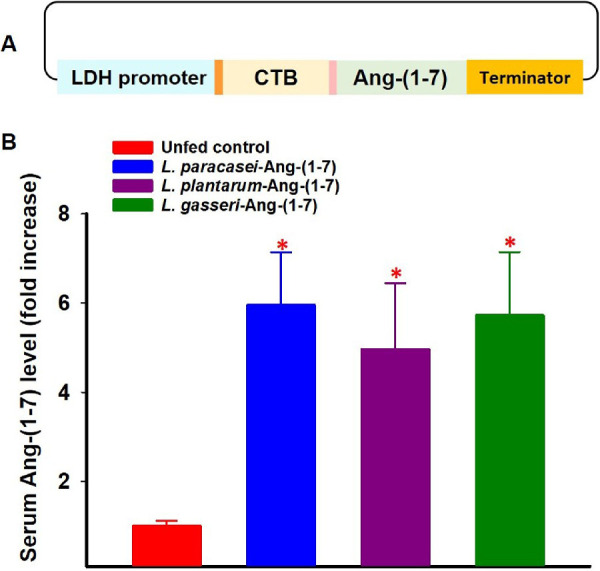
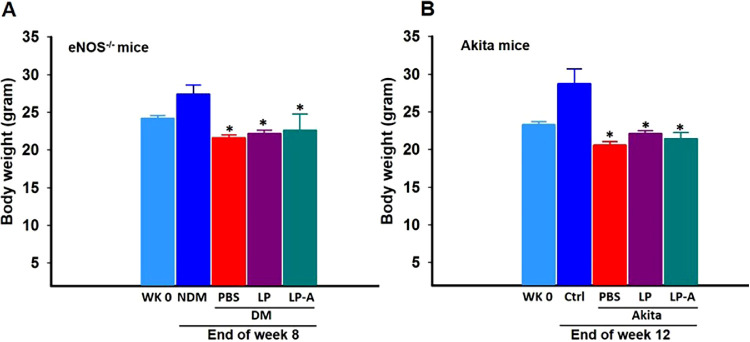
Ang-(1-7) was expressed in the Lactobacillus species as a secreted fusion protein with a trans-epithelial carrier to allow uptake into circulation. To evaluate the effects of Ang-(1-7) expressed from (LP), adult diabetic eNOS and Akita mice were orally gavaged with either 1 × 10 CFU of LP secreting Ang-(1-7) (LP-A), LP alone or vehicle, 3 times/week, for 8 and 12 weeks, respectively.
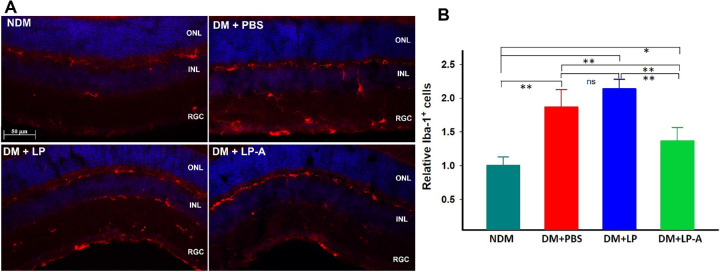
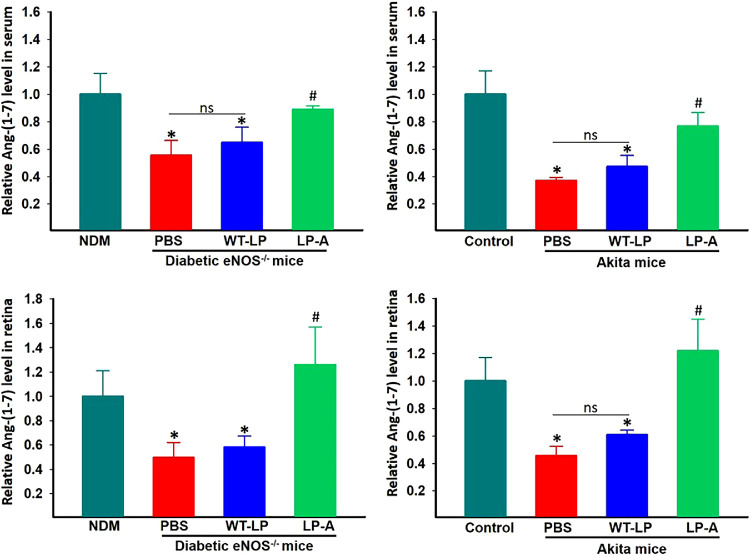
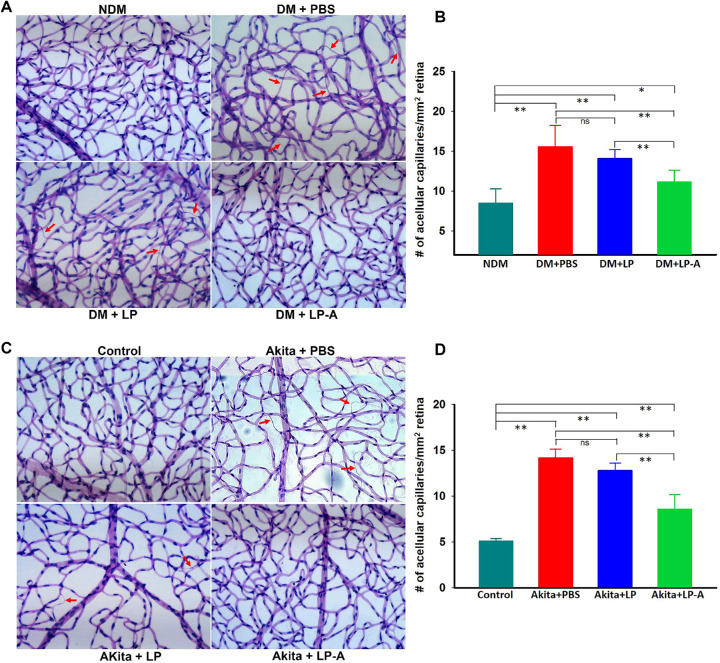
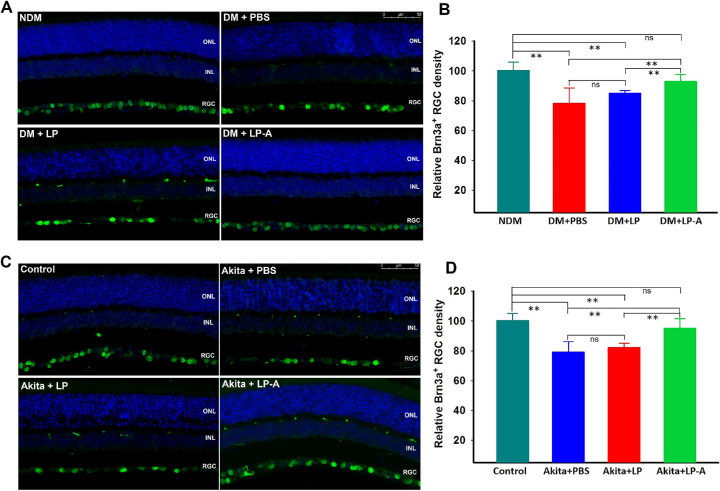
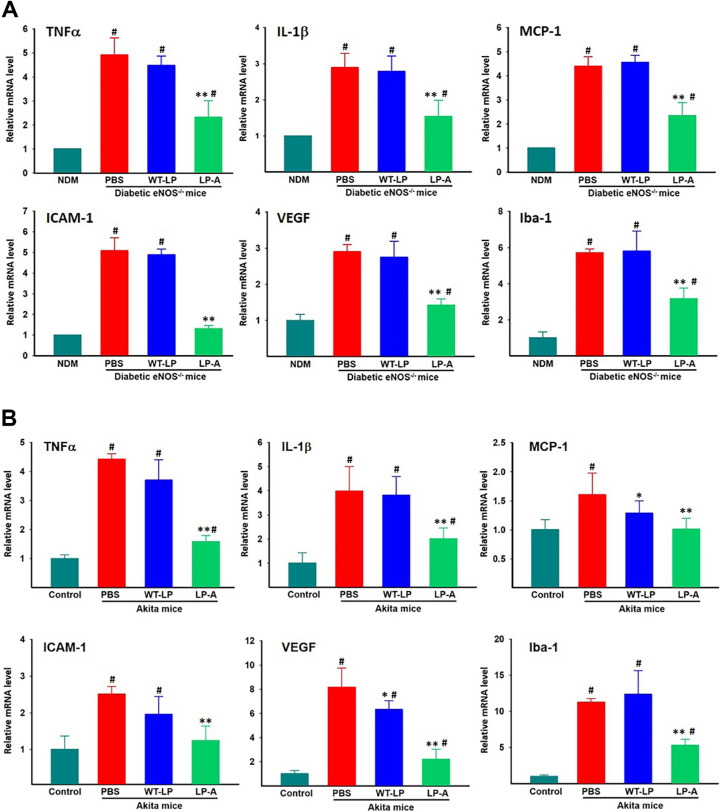
Ang-(1-7) is efficiently expressed from different Lactobacillus species and secreted into circulation in mice fed with LP-A. Oral administration of LP-A significantly reduced diabetes-induced loss of retinal vascular capillaries. LP-A treatment also prevented loss of retinal ganglion cells, and significantly decreased retinal inflammatory cytokine expression in both diabetic eNOS and Akita mice.
These results provide proof-of-concept for feasibility and efficacy of using engineered probiotic species as live vector for delivery of Ang-(1-7) with enhanced bioavailability.
Probiotics-based delivery of Ang-(1-7) may hold important therapeutic potential for the treatment of DR and other diabetic complications.
大量的动物研究证实了血管紧张素-(1-7)(一种肾素-血管紧张素系统保护轴中的肽激素)在糖尿病及其相关并发症(包括糖尿病性视网膜病变[DR])中的有益作用。然而,由于药理性质不理想,血管紧张素-(1-7)的临床应用受到限制。由于新出现的证据表明肠道菌群失调与糖尿病的发病机制有关,并支持益生菌的有益作用,我们试图开发基于益生菌的表达和传递系统来增强血管紧张素-(1-7)的表达,并评估表达血管紧张素-(1-7)的工程益生菌在减轻动物模型中 DR 中的功效。
将血管紧张素-(1-7)作为跨上皮载体的分泌融合蛋白在乳杆菌属中表达,以允许摄取到循环中。为了评估从(LP)表达的血管紧张素-(1-7)的效果,成年糖尿病 eNOS 和 Akita 小鼠分别用 1×10 CFU 的 LP 分泌血管紧张素-(1-7)(LP-A)、LP 单独或载体口服灌胃,每周 3 次,分别持续 8 周和 12 周。
血管紧张素-(1-7)从不同的乳杆菌属高效表达,并在喂食 LP-A 的小鼠中分泌到循环中。LP-A 的口服给药显著减少了糖尿病引起的视网膜血管毛细血管的丧失。LP-A 治疗还防止了视网膜神经节细胞的丧失,并显著降低了两种糖尿病 eNOS 和 Akita 小鼠的视网膜炎症细胞因子表达。
这些结果为使用工程益生菌作为具有增强生物利用度的 Ang-(1-7)传递的活载体的可行性和功效提供了概念验证。
曹艺译