Zhengzhou Key Laboratory of Children's Infection and Immunity, Children's Hospital Affiliated to Zhengzhou University, Henan Children's Hospital, Zhengzhou Children's Hospital, Zhengzhou, China.
The Engineering Research Center for New Drug Screening, Inner Mongolia Medical University, Hohhot, China.
J Immunol Res. 2020 Dec 2;2020:7650713. doi: 10.1155/2020/7650713. eCollection 2020.
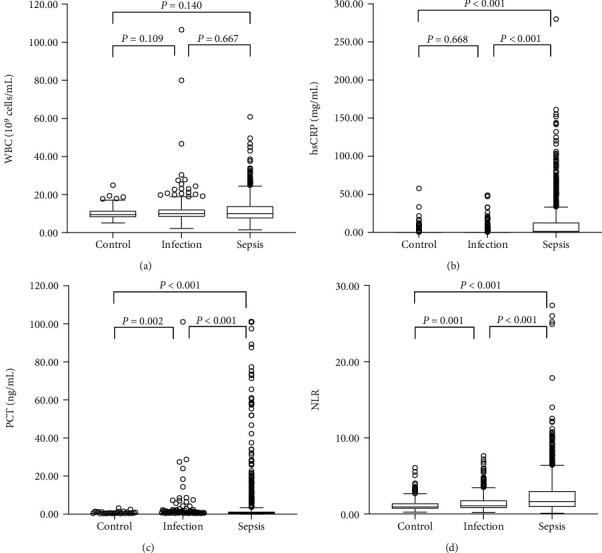
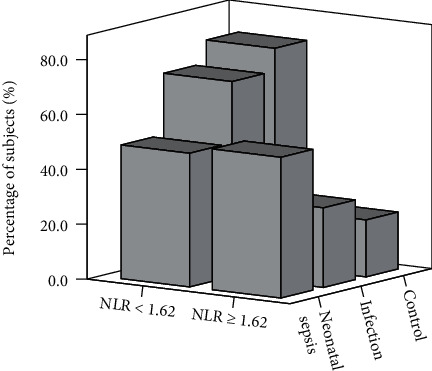
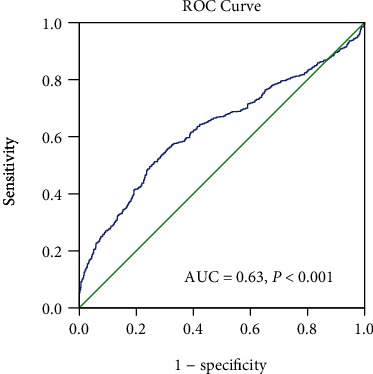
The neutrophil-lymphocyte ratio (NLR) is an emerging risk factor of sepsis that is receiving increasing attention. However, the relationship between NLR and the presence of sepsis in neonates is poorly studied. Here, we retrospectively recruited 1480 neonates and collected and analyzed relevant clinical and laboratory data. According to the International Pediatric Sepsis Consensus, 737 neonates were diagnosed with sepsis, and 555 neonates were suspected for having infection. Neonates with hyperbilirubinemia ( = 188) served as controls. Neonates with sepsis had significantly elevated neutrophil counts and NLR ( < 0.001). The proportion of neonates with sepsis increased significantly from 41.6% when NLR < 0.91 to 66.2% when NLR > 1.88 group ( < 0.001). Multiple logistic regression analysis showed that NLR was an independent risk factor for the presence of neonatal sepsis. Receiver operating characteristic (ROC) curve analysis showed that the optimal cut-off value NLR for predicting the presence of neonatal sepsis was 1.62 (area under curve (AUC) = 0.63, 95% CI 0.60-0.66, < 0.001). In conclusion, our data suggest that elevated NLR levels are associated with a higher neonatal sepsis risk.
中性粒细胞与淋巴细胞比值(NLR)是一种新兴的脓毒症危险因素,越来越受到关注。然而,NLR 与新生儿脓毒症之间的关系尚未得到充分研究。在此,我们回顾性招募了 1480 名新生儿,并收集和分析了相关的临床和实验室数据。根据国际儿科脓毒症共识,737 名新生儿被诊断为脓毒症,555 名新生儿疑似感染。188 名高胆红素血症新生儿作为对照。脓毒症新生儿的中性粒细胞计数和 NLR 显著升高(<0.001)。当 NLR<0.91 时,脓毒症患儿的比例从 41.6%显著增加到 NLR>1.88 时的 66.2%(<0.001)。多因素逻辑回归分析表明,NLR 是新生儿脓毒症发生的独立危险因素。受试者工作特征(ROC)曲线分析显示,预测新生儿脓毒症的 NLR 最佳截断值为 1.62(AUC=0.63,95%CI 0.60-0.66,<0.001)。综上所述,本研究数据表明,NLR 水平升高与新生儿脓毒症风险增加相关。