Sandford Gareth N, Stellingwerff Trent
School of Kinesiology, University of British Columbia, Vancouver, BC, Canada.
Physiology, Canadian Sport Institute-Pacific, Victoria, BC, Canada.
Front Sports Act Living. 2019 Sep 26;1:28. doi: 10.3389/fspor.2019.00028. eCollection 2019.
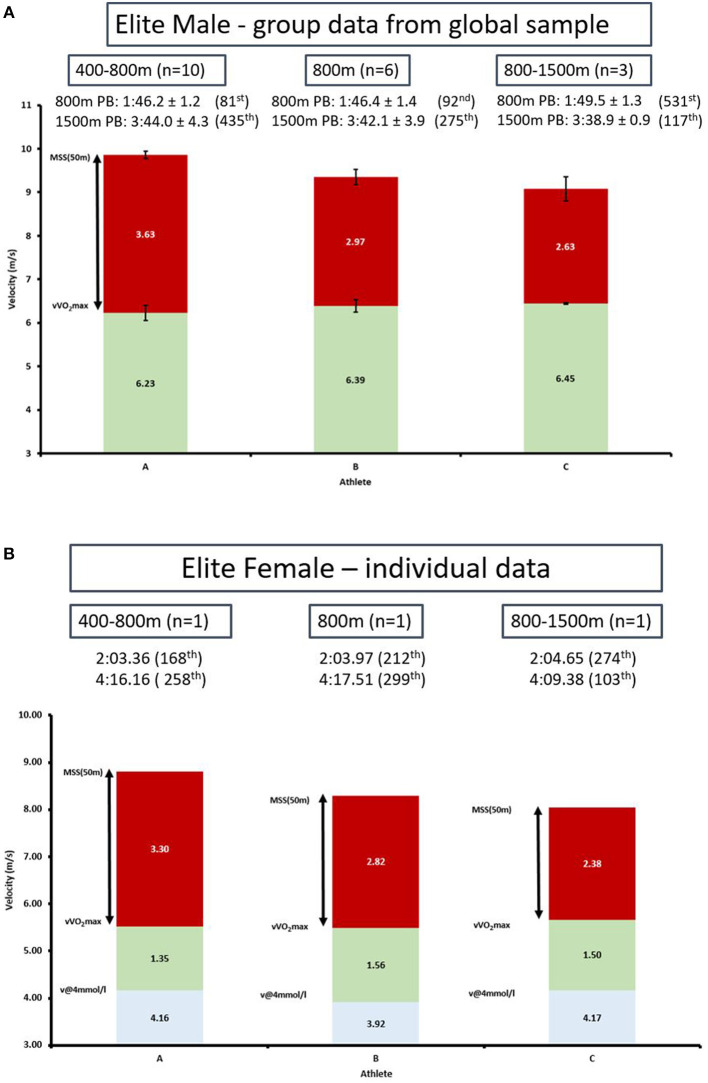
Middle-distance running provides unique complexity where very different physiological and structural/mechanical profiles may achieve similar elite performances. Training and improving the key determinants of performance and applying interventions to athletes within the middle-distance event group are probably much more divergent than many practitioners and researchers appreciate. The addition of maximal sprint speed and other anaerobic and biomechanical based parameters, alongside more commonly captured aerobic characteristics, shows promise to enhance our understanding and analysis within the complexities of middle-distance sport science. For coaches, athlete diversity presents daily training programming challenges in order to best individualize a given stimulus according to the athletes profile and avoid "non-responder" outcomes. It is from this decision making part of the coaching process, that we target this mini-review. First we ask researchers to "question their categories" concerning middle-distance event groupings. Historically broad classifications have been used [from 800 m (1.5 min) all the way to 5,000 m (13-15 min)]. Here within we show compelling rationale from physiological and event demand perspectives for narrowing middle-distance to 800 and 1,500 m alone (1.5-5 min duration), considering the diversity of bioenergetics and mechanical constraints within these events. Additionally, we provide elite athlete data showing the large diversity of 800 and 1,500 m athlete profiles, a critical element that is often overlooked in middle-distance research design. Finally, we offer practical recommendations on how researchers, practitioners, and coaches can advance training study designs, scientific interventions, and analysis on middle-distance athletes/participants to provide information for individualized decision making trackside and more favorable and informative study outcomes.
中距离跑具有独特的复杂性,在这种情况下,截然不同的生理和结构/力学特征可能会取得相似的优异成绩。训练和改善成绩的关键决定因素,并对中距离项目组内的运动员实施干预措施,可能比许多从业者和研究人员所意识到的更加多样化。除了更常见的有氧特征外,增加最大冲刺速度以及其他基于无氧和生物力学的参数,有望增强我们对中距离运动科学复杂性的理解和分析。对于教练而言,运动员的多样性给日常训练计划带来了挑战,以便根据运动员的特点将给定的刺激效果最大化,并避免出现“无反应者”的情况。正是从教练过程中的这个决策部分,我们确定了本次小型综述的主题。首先,我们要求研究人员对中距离项目分组“质疑他们的分类方式”。从历史上看,一直采用宽泛的分类(从800米(约1.5分钟)一直到5000米(约13 - 15分钟))。在此我们从生理和项目需求的角度展示了令人信服的理由,仅将中距离缩小到800米和1500米(1.5 - 5分钟时长),考虑到这些项目中生物能量学和力学限制的多样性。此外,我们提供了精英运动员的数据,显示了800米和1500米运动员特征的巨大差异,这是中距离研究设计中经常被忽视的关键因素。最后,我们就研究人员、从业者和教练如何推进对中距离运动员/参与者的训练研究设计、科学干预和分析提供实用建议,以便为赛场边的个性化决策提供信息,并获得更有利和更具参考价值的研究结果。