Otte Fabian W, Millar Sarah-Kate, Klatt Stefanie
Department of Cognitive and Team/Racket Sport Research, Institute of Exercise Training and Sport Informatics, German Sport University Cologne, Cologne, Germany.
Department of Coaching, Health and Physical Education, School of Sport and Recreation, Auckland University of Technology, Auckland, New Zealand.
Front Sports Act Living. 2019 Nov 15;1:61. doi: 10.3389/fspor.2019.00061. eCollection 2019.
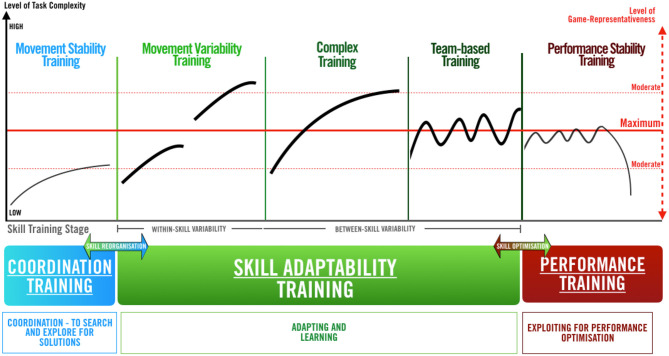
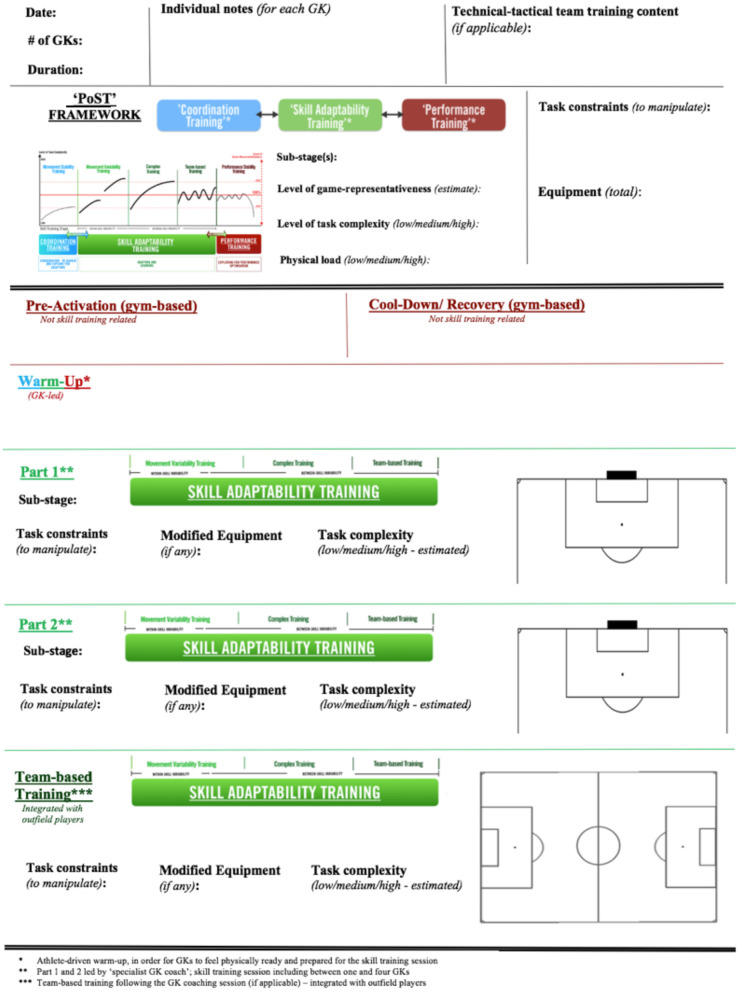
Across sports and movement science, training periodization has been recognized as key for athlete development and performance. While periodization with regard to physiology has a proven history, the structuring and periodization of motor learning and skill development is seemingly less researched and practiced. Despite the existence of numerous theoretical accounts underpinning skill acquisition training and more recently emerging periodization models, a cohesive framework to practically support coaches in the context of "specialist coaching" appears to be needed. The use of "specialist coaches" for individualized, one-on-one or small group trainings displays a growing trend in team ball sports. Despite limiting the replication of game-representative environments (i.e., by constraining the number of involved athletes in training), "specialist coaches" in performance sport constantly aim to achieve marginal gains and refinements in athlete development. In order to support these "specialist coaches" and fill a research gap on skill training periodization, the current paper seeks to review and transfer contemporary skill acquisition training theory (driven by the constraints-led approach) into a practically-applicable "Periodization of Skill Training" framework ("PoST" framework). This framework provides valuable conceptual and practical support for "specialist coaches" in performance sport; which will in turn, enhance, and refine adaptive movement variability for sport skills and manipulate skill training environments (i.e., over the course of macro- and micro-cycles, and for the planning of single training sessions). Practical examples from soccer goalkeeping (i.e., a "specialist coaching" context, often constrained to a small number of players in the training environment) will underline the proposed framework.
在体育和运动科学领域,训练周期化已被公认为是运动员发展和表现的关键。虽然生理方面的周期化有着经过验证的历史,但运动学习和技能发展的结构化与周期化似乎研究和实践得较少。尽管存在众多支撑技能习得训练的理论阐述以及最近出现的周期化模型,但在“专项教练”背景下为教练提供实际支持的连贯框架似乎是必要的。在团队球类运动中,使用“专项教练”进行个性化的一对一或小组训练呈增长趋势。尽管限制了具有比赛代表性环境的复制(即通过限制训练中参与运动员的数量),但竞技体育中的“专项教练”始终致力于在运动员发展方面实现边际收益和改进。为了支持这些“专项教练”并填补技能训练周期化方面的研究空白,本文旨在回顾当代技能习得训练理论(由以约束为导向的方法驱动)并将其转化为一个实际适用的“技能训练周期化”框架(“PoST”框架)。该框架为竞技体育中的“专项教练”提供了有价值的概念和实践支持;这反过来又将增强和完善运动技能的适应性运动变异性,并操纵技能训练环境(即在宏观和微观周期过程中,以及用于单次训练课程的规划)。足球守门员的实际例子(即“专项教练”背景,在训练环境中通常限于少数球员)将突出所提出的框架。