University of Cincinnati, College of Nursing, Cincinnati, OH, USA; Cincinnati Children's Hospital Medical Center, Division of General and Community Pediatrics, Cincinnati, OH, USA.
University of Cincinnati, College of Nursing, Cincinnati, OH, USA.
Environ Res. 2021 Mar;194:110628. doi: 10.1016/j.envres.2020.110628. Epub 2020 Dec 17.
Evidence on the relationship between exposure to greenness and adolescent mental health is limited. The purpose of this study was to examine the association between greenness throughout childhood and mental health at age 12 years.
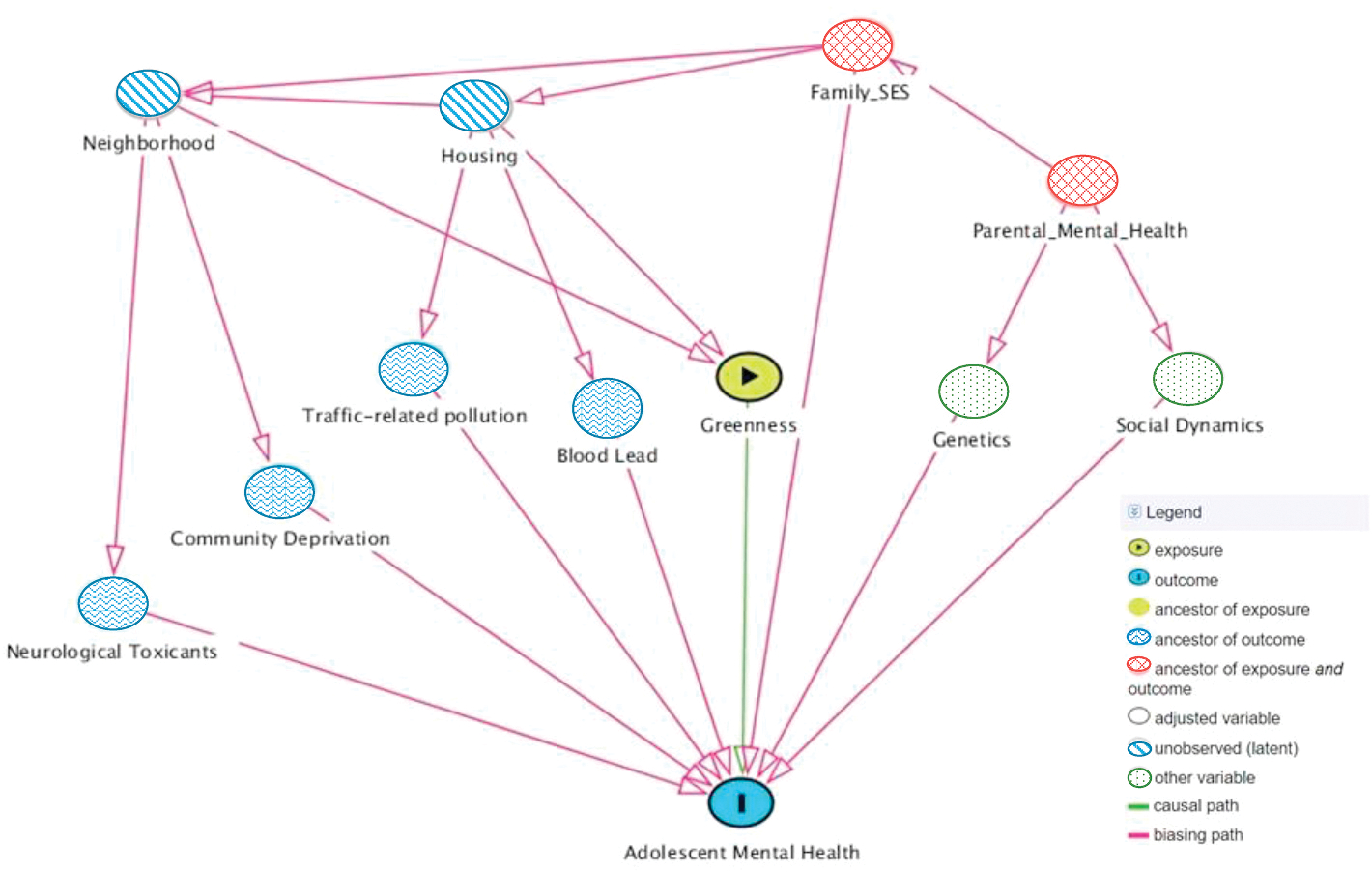
We assessed greenness using the satellite-based measure of Normalized Difference Vegetation Index (NDVI) within 200m, 400m, and 800m of home address at birth, age 12 years, and across childhood (averaged for each year from birth to age 12) among the Cincinnati Childhood Allergy and Air Pollution Study (CCAAPS) cohort. Self-reported symptoms of anxiety and depression were assessed at age 12 years using the Spence Children's Anxiety Scale (SCAS) and Children's Depression Inventory 2 (CDI 2), respectively. Associations were estimated using linear regression, adjusting for covariates including traffic-related air pollution, neurological hazard exposure, blood lead level, household income, and community deprivation.
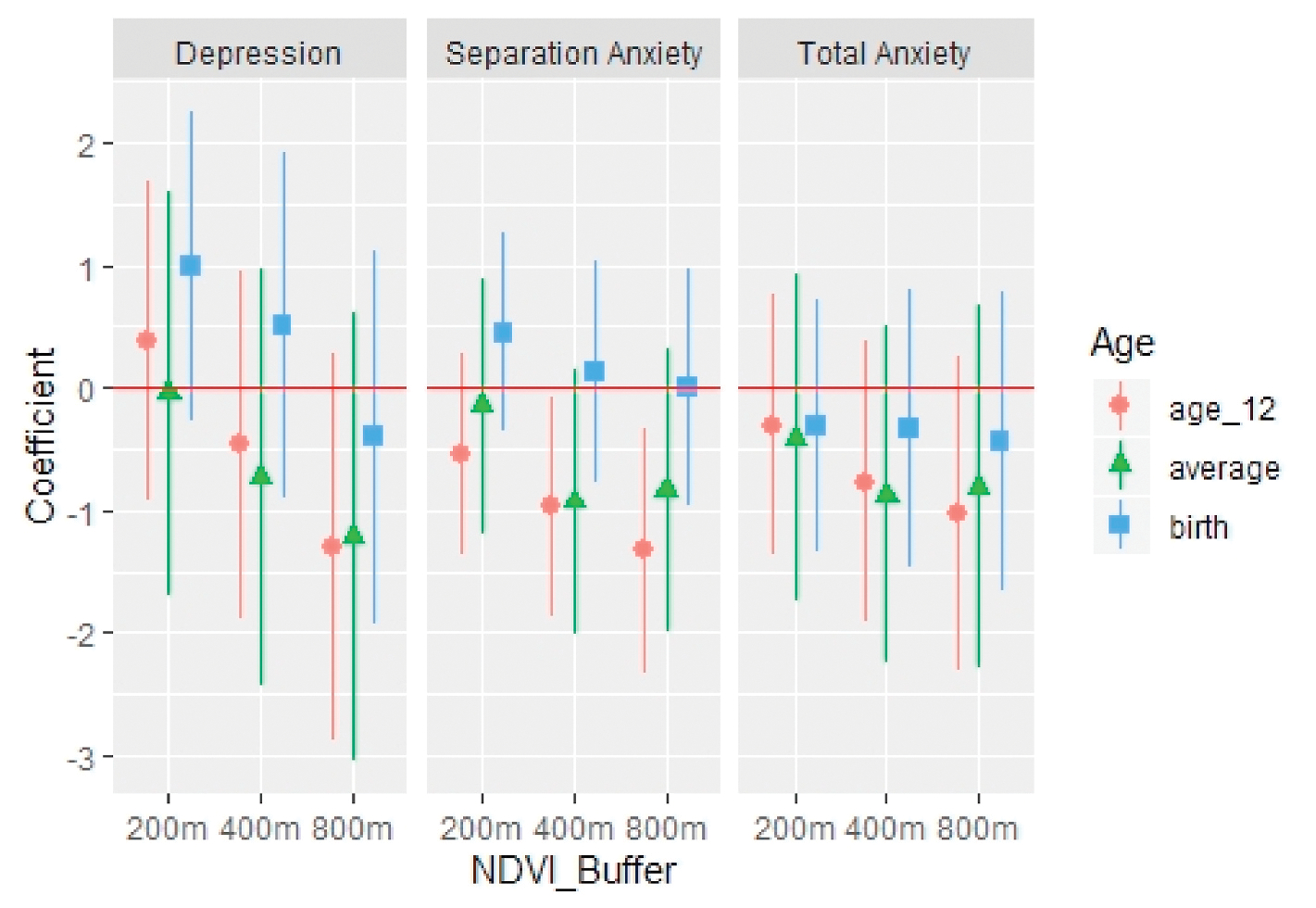
In adjusted models, NDVI was largely not associated with self-reported anxiety and depression symptoms, except for the SCAS separation anxiety subscale at 400m and 800m (0.1 unit increase mean NDVI 400m: β = -0.97, 95% CI: -1.86, -0.07; 800m: β = -1.33, 95% CI: -2.32, -0.34).
While we found no direct relationship between greenness and overall symptoms of anxiety and depression in adolescents upon adjustment for relevant covariates at the 200m distance, greenness may lesson symptoms of separation anxiety within 400m and 800m distance from the home address at age 12 years. Future research should examine mechanisms for these relationships at the community- and individual-level.
暴露于绿色环境与青少年心理健康之间的关系证据有限。本研究旨在探讨儿童期绿色环境与 12 岁时心理健康之间的关系。
我们使用基于卫星的归一化差异植被指数(NDVI)评估了辛辛那提儿童过敏和空气污染研究(CCAAPS)队列中出生时、12 岁时以及整个儿童期(从出生到 12 岁每年平均)家庭住址周围 200m、400m 和 800m 范围内的绿色环境。使用 Spence 儿童焦虑量表(SCAS)和儿童抑郁量表 2(CDI 2)分别在 12 岁时评估焦虑和抑郁症状。使用线性回归估计关联,调整了交通相关空气污染、神经危害暴露、血铅水平、家庭收入和社区贫困等协变量。
在调整后的模型中,NDVI 与自我报告的焦虑和抑郁症状之间的关联不大,除了 400m 和 800m 处的 SCAS 分离焦虑子量表(400m 处平均 NDVI 增加 0.1 单位:β=-0.97,95%CI:-1.86,-0.07;800m 处:β=-1.33,95%CI:-2.32,-0.34)。
在调整了相关协变量后,我们在 200m 距离处未发现绿色环境与青少年整体焦虑和抑郁症状之间存在直接关系,但绿色环境可能会减轻 12 岁时家庭住址 400m 和 800m 范围内的分离焦虑症状。未来的研究应该在社区和个体层面上研究这些关系的机制。