University of Manchester, Manchester, United Kingdom.
University of Aberdeen, Aberdeen, United Kingdom.
JMIR Public Health Surveill. 2020 Dec 21;6(4):e15524. doi: 10.2196/15524.
Traditional research approaches, especially questionnaires and paper-based assessments, limit in-depth understanding of the fluid dynamic processes associated with child well-being and development. This includes bedtime routine activities such as toothbrushing and reading a book before bed. The increase in innovative digital technologies alongside greater use and familiarity among the public creates unique opportunities to use these technical developments in research.
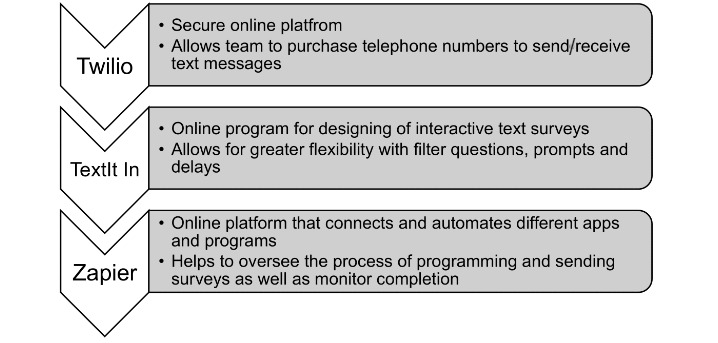
This study aimed to (1) examine the best way of assessing bedtime routines in families and develop an automated, interactive, text message survey assessment delivered directly to participants' mobile phones and (2) test the assessment within a predominately deprived sociodemographic sample to explore retention, uptake, feedback, and effectiveness.
A public and patient involvement project showed clear preference for interactive text surveys regarding bedtime routines. The developed interactive text survey included questions on bedtime routine activities and was delivered for seven consecutive nights to participating parents' mobile phones. A total of 200 parents participated. Apart from the completion of the text survey, feedback was provided by participants, and data on response, completion, and retention rates were captured.
There was a high retention rate (185/200, 92.5%), and the response rate was high (160/185, 86.5%). In total, 114 participants provided anonymized feedback. Only a small percentage (5/114, 4.4%) of participants reported problems associated with completing the assessment. The majority (99/114, 86.8%) of participants enjoyed their participation in the study, with an average satisfaction score of 4.6 out of 5.
This study demonstrated the potential of deploying SMS text message-based surveys to capture and quantify real-time information on recurrent dynamic processes in public health research. Changes and adaptations based on recommendations are crucial next steps in further exploring the diagnostic and potential intervention properties of text survey and text messaging approaches.
传统的研究方法,特别是问卷和基于纸质的评估,限制了对与儿童福祉和发展相关的流动动态过程的深入理解。这包括睡前常规活动,如睡前刷牙和看书。创新数字技术的增加以及公众对这些技术的使用和熟悉程度的提高,为在研究中使用这些技术发展创造了独特的机会。
本研究旨在(1)研究评估家庭中睡前常规的最佳方法,并开发一种自动化、互动式的短信调查评估,直接发送到参与者的手机;(2)在一个以社会经济地位低下为主的样本中测试该评估方法,以探索保留率、参与率、反馈和效果。
一项公众和患者参与项目明确表示倾向于使用互动短信调查来评估睡前常规。开发的互动短信调查包括睡前常规活动的问题,并连续七天发送到参与家长的手机上。共有 200 名家长参与。除了完成短信调查外,还由参与者提供反馈,并记录响应、完成和保留率的数据。
保留率很高(185/200,92.5%),响应率也很高(160/185,86.5%)。总共有 114 名参与者提供了匿名反馈。只有一小部分(5/114,4.4%)的参与者报告与完成评估相关的问题。大多数(99/114,86.8%)参与者喜欢参与研究,平均满意度评分为 4.6 分(满分 5 分)。
本研究表明,使用短信调查来获取和量化公共卫生研究中重复动态过程的实时信息具有潜力。根据建议进行的更改和调整是进一步探索短信调查和短信方法的诊断和潜在干预特性的关键下一步。