Institute of Physics Technology and Information (CSIC), 28006 Madrid, Spain.
Up Devices and Technologies, 28021 Madrid, Spain.
Sensors (Basel). 2020 Dec 17;20(24):7223. doi: 10.3390/s20247223.
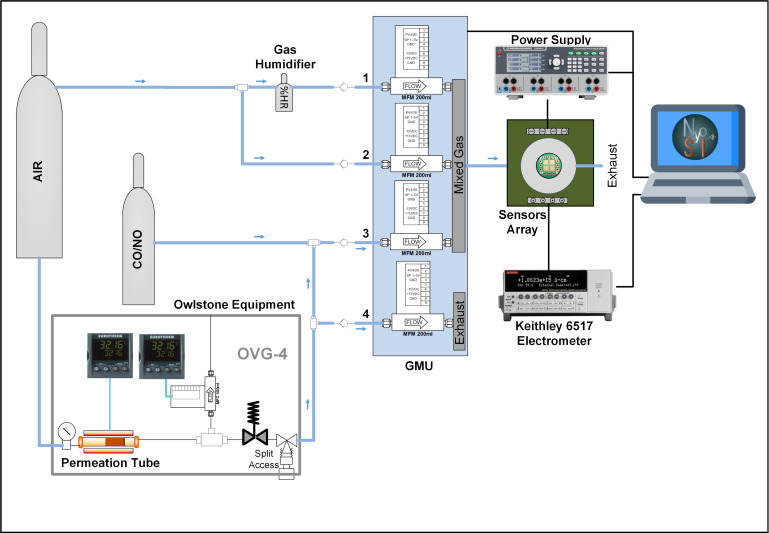
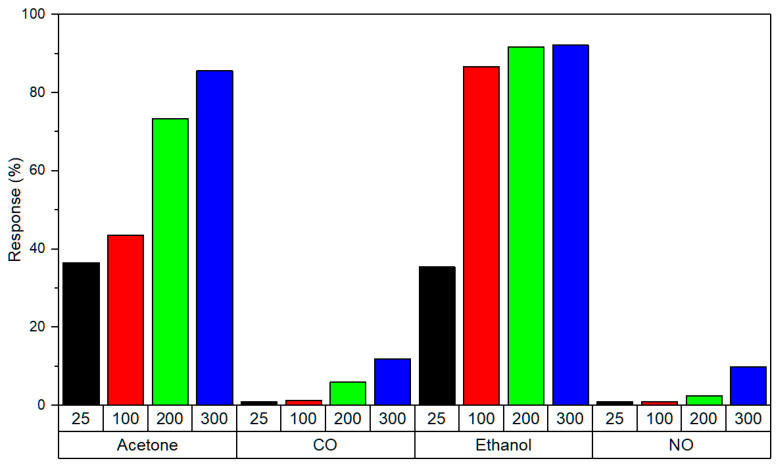
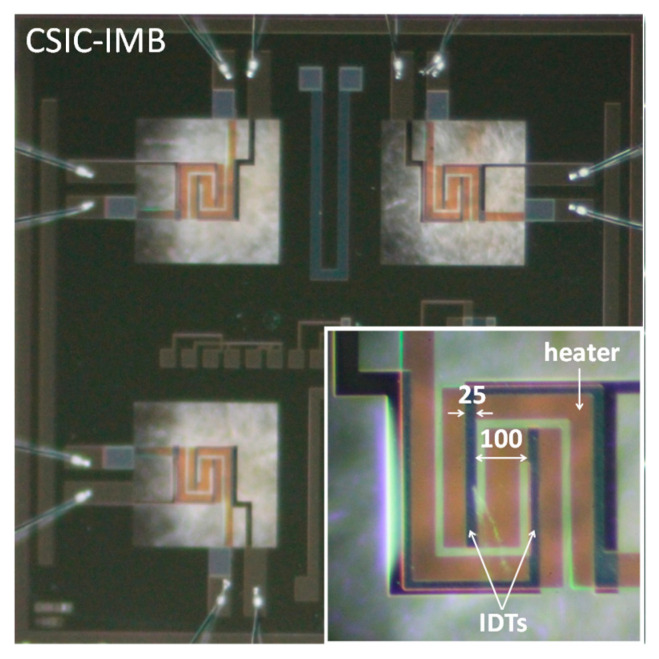
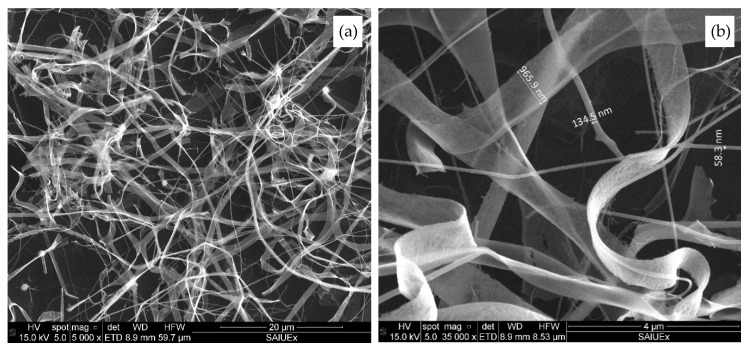
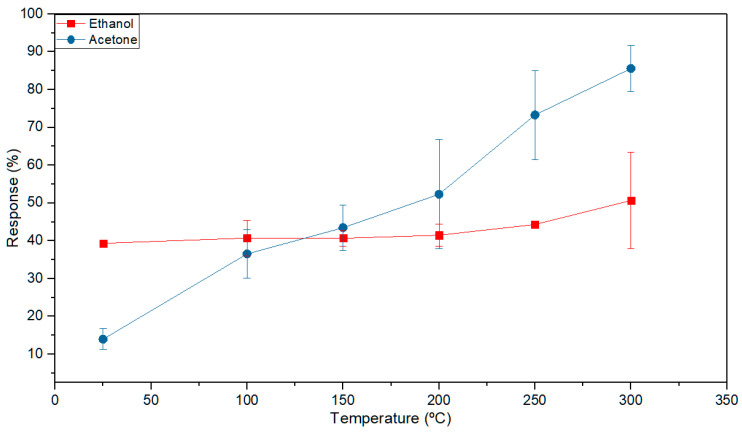
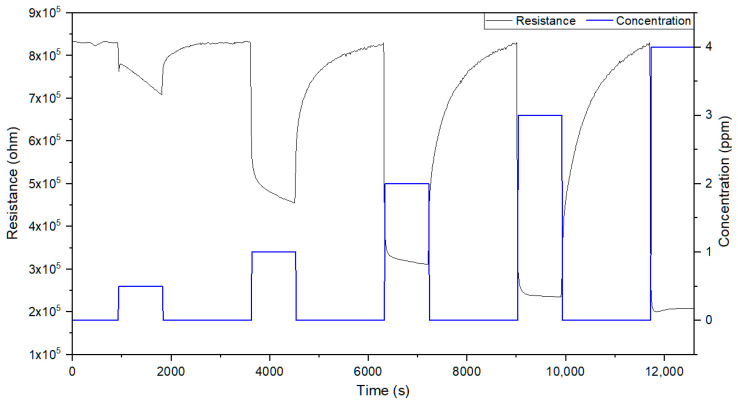
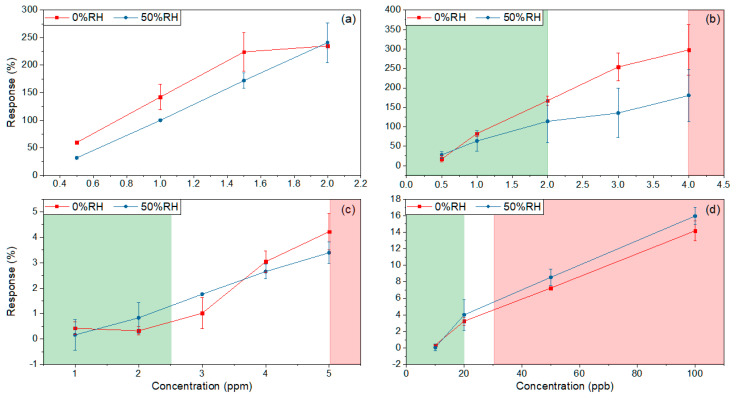
This work presents the development of tin oxide nanofibers (NFs) and nanoribbons (NRs) sensors with graphene as a dopant for the detection of volatile organic compounds (VOCs) corresponding to different chronic diseases (asthma, chronic obstructive pulmonary disease, cystic fibrosis or diabetes). This research aims to determine the ability of these sensors to differentiate between gas samples corresponding to healthy people and patients with a disease. The nanostructures were grown by electrospinning and deposited on silicon substrates with micro-heaters integrated. The morphology of NFs and NRs was characterized by Scanning Electron Microscopy (SEM). A gas line was assembled and programmed to measure a wide range of gases (ethanol, acetone, NO and CO) at different concentrations simulating human breath conditions. Measurements were made in the presence and absence of humidity to evaluate its effect. The sensors were able to differentiate between the concentrations corresponding to a healthy person and a patient with one of the selected diseases. These were sensitive to biomarkers such as acetone and ethanol at low operating temperatures (with responses above 35%). Furthermore, CO and NO response was at high temperatures (above 5%). The sensors had a rapid response, with times of 50 s and recovery periods of about 10 min.
这项工作开发了氧化锡纳米纤维 (NFs) 和纳米带 (NRs) 传感器,其掺杂剂为石墨烯,用于检测对应于不同慢性疾病(哮喘、慢性阻塞性肺疾病、囊性纤维化或糖尿病)的挥发性有机化合物 (VOCs)。本研究旨在确定这些传感器区分对应于健康人和疾病患者的气体样本的能力。通过静电纺丝生长了纳米结构,并沉积在带有集成微加热器的硅衬底上。通过扫描电子显微镜 (SEM) 对 NFs 和 NRs 的形态进行了表征。组装了一条气路并进行了编程,以在模拟人体呼吸条件的不同浓度下测量广泛的气体(乙醇、丙酮、NO 和 CO)。进行了在存在和不存在湿度的情况下的测量,以评估其影响。传感器能够区分对应于健康人和所选疾病之一的患者的浓度。这些传感器对生物标志物(如丙酮和乙醇)具有敏感性,在较低的工作温度下(响应超过 35%)。此外,CO 和 NO 的响应在高温下(高于 5%)。传感器具有快速的响应时间,响应时间为 50 秒,恢复时间约为 10 分钟。