Department of Pathology, Microbiology & Immunology, University of South Carolina School of Medicine, Columbia, SC 29209, USA.
Int J Mol Sci. 2020 Dec 17;21(24):9613. doi: 10.3390/ijms21249613.
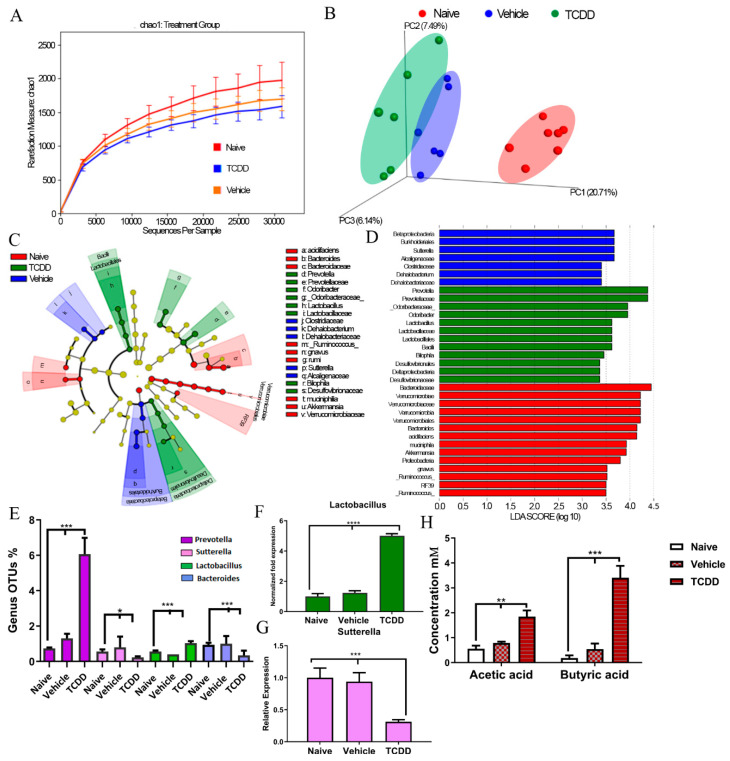
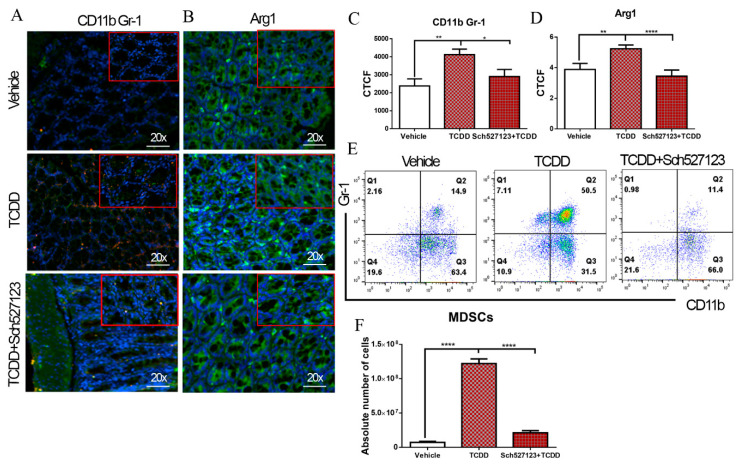
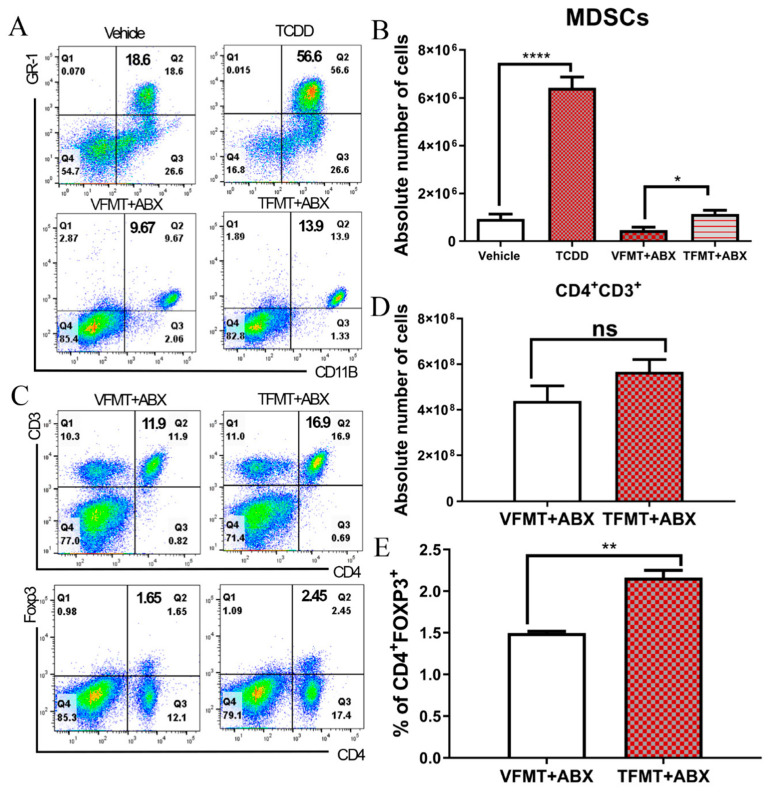
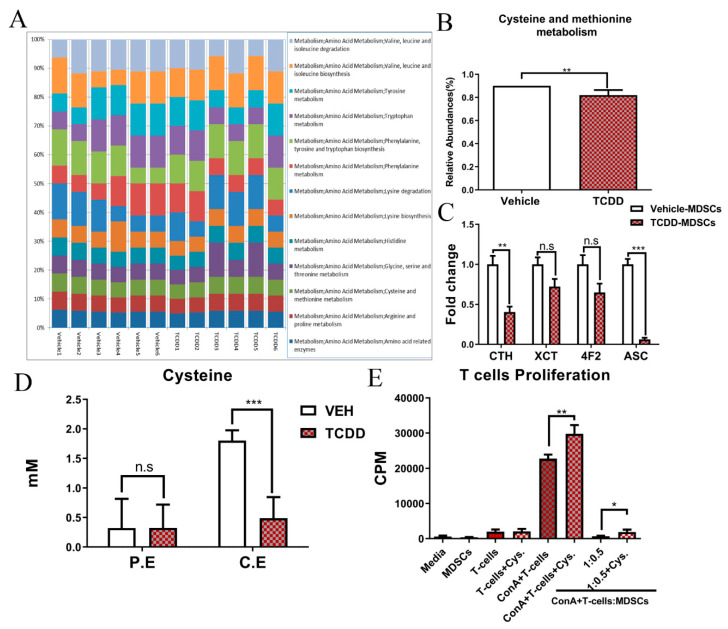
Aryl hydrocarbon receptor (AhR) is a ligand-activated transcription factor and 2,3,7,8-tetrachlorodibenzo-p-dioxin (TCDD) is a potent ligand for AhR and a known carcinogen. While AhR activation by TCDD leads to significant immunosuppression, how this translates into carcinogenic signal is unclear. Recently, we demonstrated that activation of AhR by TCDD in naïve C57BL6 mice leads to massive induction of myeloid derived-suppressor cells (MDSCs). In the current study, we investigated the role of the gut microbiota in TCDD-mediated MDSC induction. TCDD caused significant alterations in the gut microbiome, such as increases in and , while decreasing and . Fecal transplants from TCDD-treated donor mice into antibiotic-treated mice induced MDSCs and increased regulatory T-cells (Tregs). Injecting TCDD directly into antibiotic-treated mice also induced MDSCs, although to a lesser extent. These data suggested that TCDD-induced dysbiosis plays a critical role in MDSC induction. Interestingly, treatment with TCDD led to induction of MDSCs in the colon and undetectable levels of cysteine. MDSCs suppressed T cell proliferation while reconstitution with cysteine restored this response. Lastly, blocking CXC chemokine receptor 2 (CXCR2) impeded TCDD-mediated MDSC induction. Our data demonstrate that AhR activation by TCDD triggers dysbiosis which, in turn, regulates, at least in part, induction of MDSCs.
芳香烃受体 (AhR) 是一种配体激活的转录因子,2,3,7,8-四氯二苯并对二恶英 (TCDD) 是 AhR 的有效配体,也是一种已知的致癌物质。虽然 TCDD 激活 AhR 会导致显著的免疫抑制,但这种转化为致癌信号的机制尚不清楚。最近,我们证明 TCDD 在 naive C57BL6 小鼠中激活 AhR 会导致大量髓系来源的抑制细胞 (MDSCs) 的诱导。在本研究中,我们研究了肠道微生物群在 TCDD 介导的 MDSC 诱导中的作用。TCDD 导致肠道微生物群发生显著变化,如 和 的增加, 和 的减少。来自 TCDD 处理供体小鼠的粪便移植到抗生素处理的小鼠中会诱导 MDSCs 并增加调节性 T 细胞 (Tregs)。将 TCDD 直接注射到抗生素处理的小鼠中也会诱导 MDSCs,但程度较轻。这些数据表明,TCDD 诱导的生态失调在 MDSC 诱导中起关键作用。有趣的是,TCDD 处理会诱导结肠中的 MDSCs,并导致半胱氨酸水平无法检测到。MDSCs 抑制 T 细胞增殖,而用半胱氨酸重建则恢复了这种反应。最后,阻断 CXC 趋化因子受体 2 (CXCR2) 会阻碍 TCDD 介导的 MDSC 诱导。我们的数据表明,TCDD 激活 AhR 引发的生态失调反过来至少部分调节 MDSCs 的诱导。