Fioriti Simona, Morroni Gianluca, Coccitto Sonia Nina, Brenciani Andrea, Antonelli Alberto, Di Pilato Vincenzo, Baccani Ilaria, Pollini Simona, Cucco Lucilla, Morelli Alessandra, Paniccià Marta, Magistrali Chiara Francesca, Rossolini Gian Maria, Giovanetti Eleonora
Department of Biomedical Sciences and Public Health, Polytechnic University of Marche, 60121 Ancona, Italy.
Department of Experimental and Clinical Medicine, University of Florence, 50121 Florence, Italy.
Microorganisms. 2020 Dec 17;8(12):2021. doi: 10.3390/microorganisms8122021.
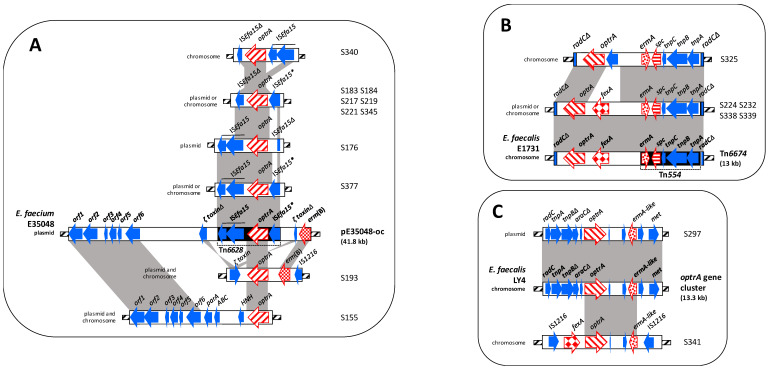
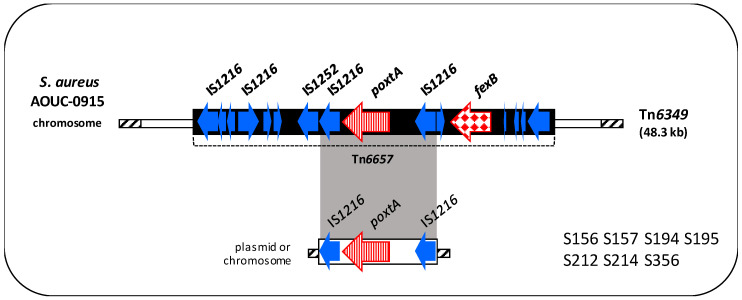
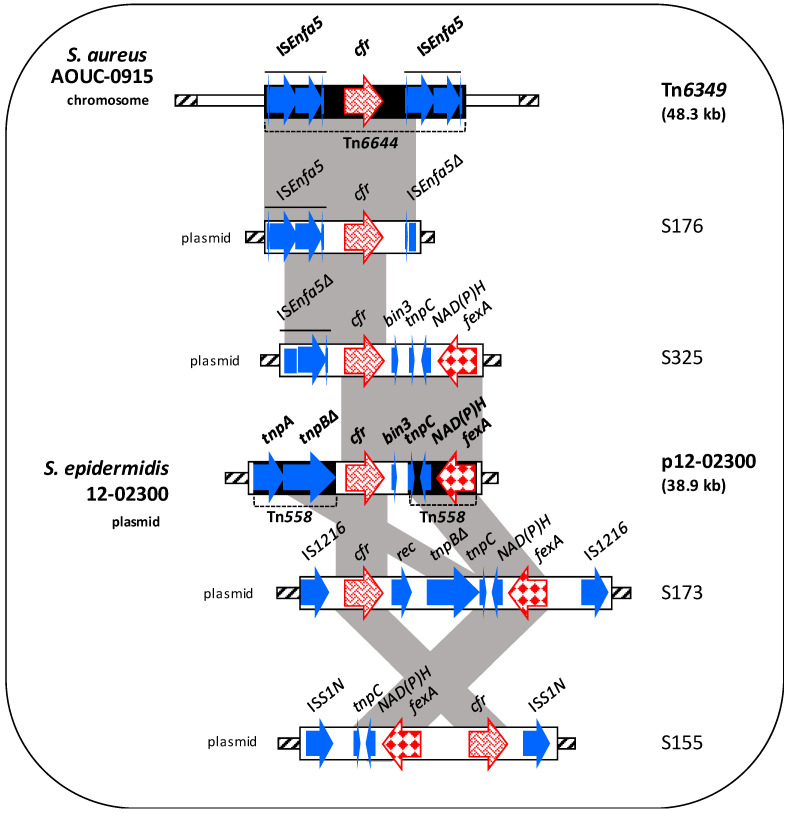
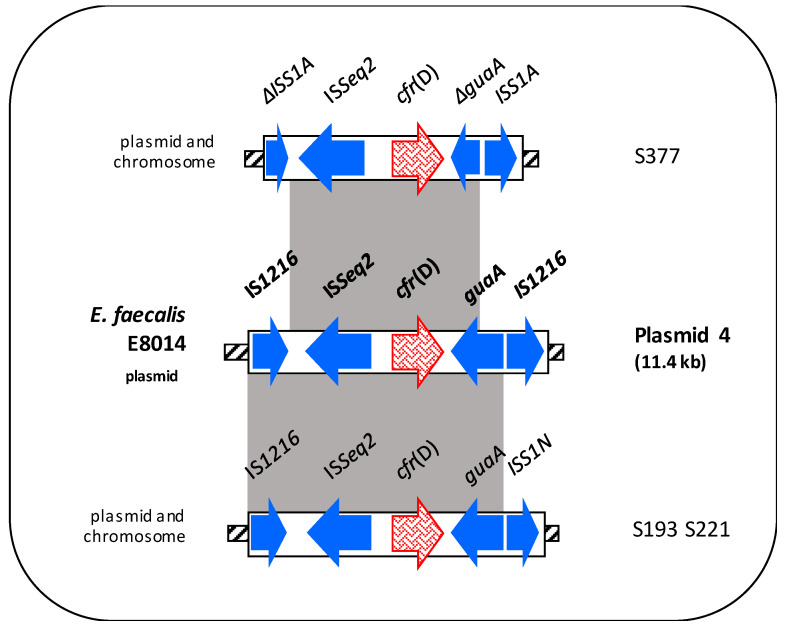
One hundred forty-five florfenicol-resistant enterococci, isolated from swine fecal samples collected from 76 pig farms, were investigated for the presence of , , and genes by PCR. Thirty florfenicol-resistant isolates had at least one linezolid resistance gene. was found to be the most widespread linezolid resistance gene (23/30), while and were detected in 6/30 and 7/30 enterococcal isolates, respectively. WGS analysis also showed the presence of the (D) gene in ( = 2 isolates) and in ( = 1 isolate). The linezolid resistance genes hybridized both on chromosome and plasmids ranging from ~25 to ~240 kb. Twelve isolates were able to transfer linezolid resistance genes to enterococci recipient. WGS analysis displayed a great variability of genetic contexts identical or related to transposons (Tn and Tn), plasmids (pE035 and pWo27-9), and chromosomal regions. environments showed identities with Tn-like transposon and a region from p12-2300 plasmid; (D) genetic contexts were related to the corresponding region of the plasmid 4 of E8014; was always found on Tn. Circular forms were obtained only for - and -carrying genetic contexts. Clonality analysis revealed the presence of (ST16, ST27, ST476, and ST585) and (ST21) clones previously isolated from humans. These results demonstrate a dissemination of linezolid resistance genes in enterococci of swine origin in Central Italy and confirm the spread of linezolid resistance in animal settings.
从76个猪场采集的猪粪便样本中分离出145株耐氟苯尼考肠球菌,通过聚合酶链反应(PCR)检测其是否存在、和基因。30株耐氟苯尼考分离株至少含有一个耐利奈唑胺基因。被发现是最广泛存在的耐利奈唑胺基因(23/30),而和分别在6/30和7/30的肠球菌分离株中被检测到。全基因组测序(WGS)分析还显示在(=2株分离株)和(=1株分离株)中存在(D)基因。耐利奈唑胺基因在大小约为25至240 kb的染色体和质粒上均有杂交。12株分离株能够将耐利奈唑胺基因转移至肠球菌受体菌。WGS分析显示与转座子(Tn和Tn)、质粒(pE035和pWo27 - 9)以及染色体区域相同或相关的遗传背景具有很大变异性。环境显示与Tn样转座子和p12 - 2300质粒的一个区域具有同一性;(D)遗传背景与E8014的质粒4的相应区域相关;总是在Tn上被发现。仅针对携带和的遗传背景获得了环状形式。克隆性分析揭示了先前从人类分离出的(ST16、ST27、ST476和ST585)和(ST21)克隆的存在。这些结果表明耐利奈唑胺基因在意大利中部猪源肠球菌中传播,并证实了耐利奈唑胺在动物环境中的扩散。