• 文献检索
  • 文档翻译
  • 深度研究
  • 学术资讯
  • Suppr Zotero 插件Zotero 插件
  • 邀请有礼
  • 套餐&价格
  • 历史记录
应用&插件
Suppr Zotero 插件Zotero 插件浏览器插件Mac 客户端Windows 客户端微信小程序
定价
高级版会员购买积分包购买API积分包
服务
文献检索文档翻译深度研究API 文档MCP 服务
关于我们
关于 Suppr公司介绍联系我们用户协议隐私条款
关注我们

Suppr 超能文献

核心技术专利:CN118964589B侵权必究
粤ICP备2023148730 号-1Suppr @ 2026

文献检索

告别复杂PubMed语法,用中文像聊天一样搜索,搜遍4000万医学文献。AI智能推荐,让科研检索更轻松。

立即免费搜索

文件翻译

保留排版,准确专业,支持PDF/Word/PPT等文件格式,支持 12+语言互译。

免费翻译文档

深度研究

AI帮你快速写综述,25分钟生成高质量综述,智能提取关键信息,辅助科研写作。

立即免费体验

2017年至2030年食用动物抗菌药物使用的全球趋势

Global Trends in Antimicrobial Use in Food Animals from 2017 to 2030.

作者信息

Tiseo Katie, Huber Laura, Gilbert Marius, Robinson Timothy P, Van Boeckel Thomas P

机构信息

Department of Environmental Systems Science, Institute for Environmental Decisions, ETH Zürich, 8006 Zürich, Switzerland.

Spatial Epidemiology Lab, Université Libre de Bruxelles, 1050 Brussels, Belgium.

出版信息

Antibiotics (Basel). 2020 Dec 17;9(12):918. doi: 10.3390/antibiotics9120918.

DOI:10.3390/antibiotics9120918
PMID:33348801
原文链接:https://pmc.ncbi.nlm.nih.gov/articles/PMC7766021/
Abstract

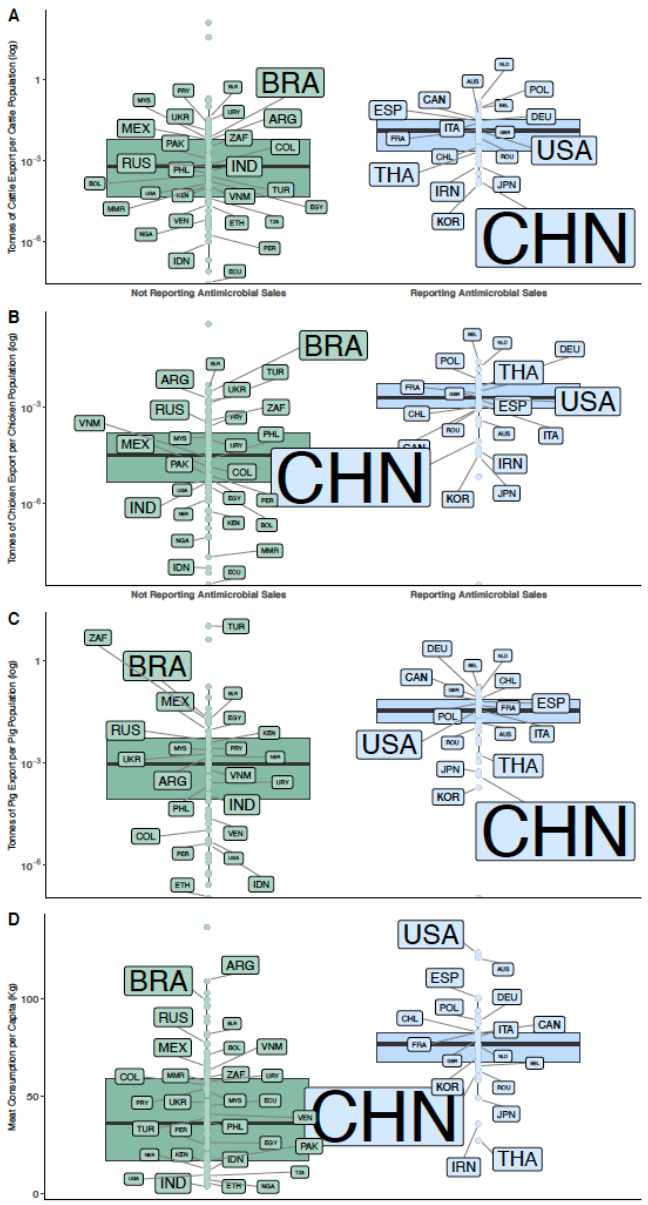
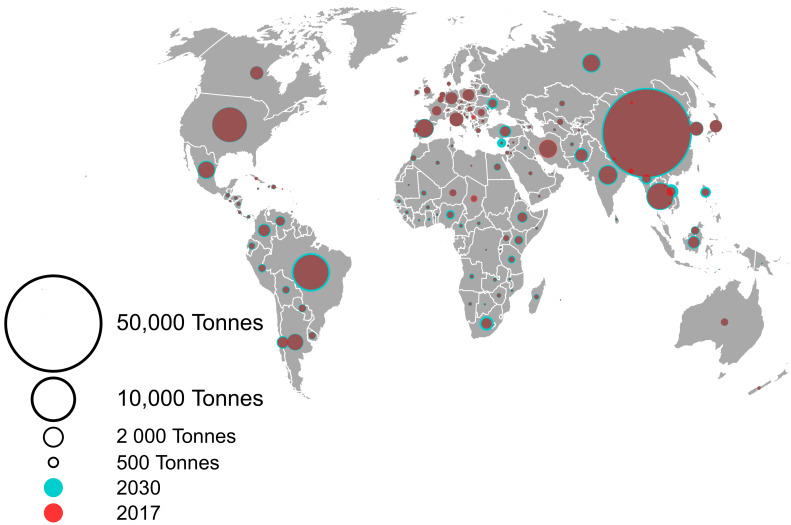
Demand for animal protein is rising globally and has been facilitated by the expansion of intensive farming. However, intensive animal production relies on the regular use of antimicrobials to maintain health and productivity on farms. The routine use of antimicrobials fuels the development of antimicrobial resistance, a growing threat for the health of humans and animals. Monitoring global trends in antimicrobial use is essential to track progress associated with antimicrobial stewardship efforts across regions. We collected antimicrobial sales data for chicken, cattle, and pig systems in 41 countries in 2017 and projected global antimicrobial consumption from 2017 to 2030. We used multivariate regression models and estimated global antimicrobial sales in 2017 at 93,309 tonnes (95% CI: 64,443, 149,886). Globally, sales are expected to rise by 11.5% in 2030 to 104,079 tonnes (95% CI: 69,062, 172,711). All continents are expected to increase their antimicrobial use. Our results show lower global antimicrobial sales in 2030 compared to previous estimates, owing to recent reports of decrease in antimicrobial use, in particular in China, the world's largest consumer. Countries exporting a large proportion of their production are more likely to report their antimicrobial sales data than countries with small export markets.

摘要

全球对动物蛋白的需求正在上升,集约化养殖的扩张推动了这一需求。然而,集约化动物生产依赖于定期使用抗菌药物来维持农场的健康和生产力。抗菌药物的常规使用助长了抗菌药物耐药性的发展,这对人类和动物的健康构成了日益严重的威胁。监测全球抗菌药物使用趋势对于跟踪各地区抗菌药物管理工作的进展至关重要。我们收集了2017年41个国家鸡、牛和猪养殖系统的抗菌药物销售数据,并预测了2017年至2030年全球抗菌药物消费量。我们使用多元回归模型,估计2017年全球抗菌药物销售额为93309吨(95%置信区间:64443,149886)。全球范围内,预计到2030年销售额将增长11.5%,达到104079吨(95%置信区间:69062,172711)。预计各大洲的抗菌药物使用量都会增加。我们的结果显示,与之前的估计相比,2030年全球抗菌药物销售额有所下降,这是由于最近有报道称抗菌药物使用量有所减少,尤其是在全球最大的消费国中国。与出口市场较小的国家相比,出口其大部分产品的国家更有可能报告其抗菌药物销售数据。
https://cdn.ncbi.nlm.nih.gov/pmc/blobs/c647/7766021/34fa88a7c96e/antibiotics-09-00918-g003.jpg
https://cdn.ncbi.nlm.nih.gov/pmc/blobs/c647/7766021/9bd27dde4c14/antibiotics-09-00918-g001.jpg
https://cdn.ncbi.nlm.nih.gov/pmc/blobs/c647/7766021/3645afcdba7a/antibiotics-09-00918-g002.jpg
https://cdn.ncbi.nlm.nih.gov/pmc/blobs/c647/7766021/34fa88a7c96e/antibiotics-09-00918-g003.jpg
https://cdn.ncbi.nlm.nih.gov/pmc/blobs/c647/7766021/9bd27dde4c14/antibiotics-09-00918-g001.jpg
https://cdn.ncbi.nlm.nih.gov/pmc/blobs/c647/7766021/3645afcdba7a/antibiotics-09-00918-g002.jpg
https://cdn.ncbi.nlm.nih.gov/pmc/blobs/c647/7766021/34fa88a7c96e/antibiotics-09-00918-g003.jpg

相似文献

1
Global Trends in Antimicrobial Use in Food Animals from 2017 to 2030.2017年至2030年食用动物抗菌药物使用的全球趋势
Antibiotics (Basel). 2020 Dec 17;9(12):918. doi: 10.3390/antibiotics9120918.
2
Global trends in antimicrobial use in food-producing animals: 2020 to 2030.2020年至2030年食用动物抗菌药物使用的全球趋势
PLOS Glob Public Health. 2023 Feb 1;3(2):e0001305. doi: 10.1371/journal.pgph.0001305. eCollection 2023.
3
Global antimicrobial use in livestock farming: an estimate for cattle, chickens, and pigs.全球畜牧业中的抗菌药物使用:牛、鸡和猪的估计值。
Animal. 2024 Feb;18(2):101060. doi: 10.1016/j.animal.2023.101060. Epub 2023 Dec 21.
4
Global trends in antimicrobial use in food animals.食用动物抗菌药物使用的全球趋势。
Proc Natl Acad Sci U S A. 2015 May 5;112(18):5649-54. doi: 10.1073/pnas.1503141112. Epub 2015 Mar 19.
5
Comparison of China's and the European Union's Approaches to Antimicrobial Stewardship in the Pork Industry.中国与欧盟猪肉产业抗菌药物管理策略比较。
Foodborne Pathog Dis. 2021 Aug;18(8):567-573. doi: 10.1089/fpd.2020.2887. Epub 2021 Apr 1.
6
Meta-analysis of the potential of Kazakhstani pork in the global market of meat products: Problems and prospects.哈萨克斯坦猪肉在全球肉类产品市场潜力的荟萃分析:问题与前景
Vet World. 2022 Nov;15(11):2705-2714. doi: 10.14202/vetworld.2022.2705-2714. Epub 2022 Nov 28.
7
Use of antimicrobials for animals in New Zealand, and in comparison with other countries.新西兰动物抗菌药物的使用情况及其与其他国家的比较。
N Z Vet J. 2017 Mar;65(2):71-77. doi: 10.1080/00480169.2016.1171736. Epub 2016 May 4.
8
Comparison of different biomass methodologies to adjust sales data on veterinary antimicrobials in the USA.比较不同的生物质方法来调整美国兽医抗菌药物的销售数据。
J Antimicrob Chemother. 2022 Feb 23;77(3):827-842. doi: 10.1093/jac/dkab441.
9
Comparison of Antimicrobial Consumption Patterns in the Swiss and Danish Cattle and Swine Production (2007-2013).瑞士和丹麦牛猪养殖中抗菌药物使用模式的比较(2007 - 2013年)
Front Vet Sci. 2017 Mar 2;4:26. doi: 10.3389/fvets.2017.00026. eCollection 2017.
10
Use of antimicrobials for food animals in New Zealand: updated estimates to identify a baseline to measure targeted reductions.新西兰食用动物抗菌药物的使用:更新估计以确定衡量目标减排的基线。
N Z Vet J. 2021 May;69(3):180-185. doi: 10.1080/00480169.2021.1890648. Epub 2021 Mar 15.

引用本文的文献

1
National Update on Healthcare-Associated Infections in Iran for 2023-Based on the Iranian Nosocomial Infections Surveillance (INIS) System.基于伊朗医院感染监测(INIS)系统的2023年伊朗医疗保健相关感染全国最新情况。
J Epidemiol Glob Health. 2025 Sep 9;15(1):114. doi: 10.1007/s44197-025-00462-2.
2
Capsaicinoids and capsinoids of chilli pepper as feed additives in livestock production: Current and future trends.辣椒中的辣椒素类物质和辣椒素酯类物质作为家畜生产中的饲料添加剂:现状与未来趋势
Anim Nutr. 2025 Jun 19;22:483-501. doi: 10.1016/j.aninu.2025.03.014. eCollection 2025 Sep.
3
Benzoic acid-the cornerstone of any swine nutrition program.

本文引用的文献

1
Global trends in antimicrobial use in aquaculture.全球水产养殖中抗菌药物使用趋势
Sci Rep. 2020 Dec 14;10(1):21878. doi: 10.1038/s41598-020-78849-3.
2
Understanding the Underlying Psychosocial Determinants of Safe Food Handling among Consumers to Mitigate the Transmission Risk of Antimicrobial-Resistant Bacteria.了解消费者安全食品处理行为的潜在社会心理决定因素,以降低抗微生物药物耐药细菌的传播风险。
Int J Environ Res Public Health. 2020 Apr 8;17(7):2546. doi: 10.3390/ijerph17072546.
3
Global trends in antimicrobial resistance in animals in low- and middle-income countries.
苯甲酸——任何猪营养方案的基石。
Anim Nutr. 2025 Jul 21;22:352-362. doi: 10.1016/j.aninu.2025.05.003. eCollection 2025 Sep.
4
Global trends of antimicrobial resistance and virulence of Klebsiella pneumoniae from different host sources.不同宿主来源肺炎克雷伯菌的抗菌药物耐药性及毒力的全球趋势
Commun Med (Lond). 2025 Sep 1;5(1):383. doi: 10.1038/s43856-025-01112-1.
5
Alternatives to antibiotics for sustainable livestock production in the context of the One Health approach: tackling a common foe.在“同一健康”方法背景下实现可持续畜牧生产的抗生素替代方案:应对共同敌人
Front Vet Sci. 2025 Aug 13;12:1605215. doi: 10.3389/fvets.2025.1605215. eCollection 2025.
6
Complementary effects of probiotics and stimbiotics inclusion on growth performance, protein utility, serum metabolites and behavioural observations in broiler chickens exposed to cyclic heat stress.在遭受周期性热应激的肉鸡中,添加益生菌和合生元对生长性能、蛋白质利用率、血清代谢产物及行为观察的互补作用。
Poult Sci. 2025 Jul 26;104(10):105606. doi: 10.1016/j.psj.2025.105606.
7
Antibiotic Use in Livestock and Environmental Antibiotic Resistance: A Narrative Review.家畜抗生素使用与环境抗生素耐药性:一篇叙述性综述。
Environ Health Insights. 2025 Jul 27;19:11786302251357775. doi: 10.1177/11786302251357775. eCollection 2025.
8
Microbial Food Safety and Antimicrobial Resistance in Foods: A Dual Threat to Public Health.食品中的微生物食品安全与抗菌药物耐药性:对公众健康的双重威胁。
Microorganisms. 2025 Jul 6;13(7):1592. doi: 10.3390/microorganisms13071592.
9
Drivers of antimicrobial resistance in pig production systems of Uganda.乌干达生猪养殖系统中抗菌素耐药性的驱动因素。
Commun Earth Environ. 2025;6(1):517. doi: 10.1038/s43247-025-02506-8. Epub 2025 Jul 2.
10
Global health risks lurking in livestock resistome.潜伏在牲畜耐药基因组中的全球健康风险。
Sci Adv. 2025 Jun 27;11(26):eadt8073. doi: 10.1126/sciadv.adt8073.
中低收入国家动物中的抗微生物药物耐药性全球趋势。
Science. 2019 Sep 20;365(6459). doi: 10.1126/science.aaw1944.
4
Mortality, disease and associated antimicrobial use in commercial small-scale chicken flocks in the Mekong Delta of Vietnam.越南湄公河三角洲商业化小规模鸡群中的死亡率、疾病及相关抗菌药物使用情况
Prev Vet Med. 2019 Apr 1;165:15-22. doi: 10.1016/j.prevetmed.2019.02.005. Epub 2019 Feb 11.
5
Global distribution data for cattle, buffaloes, horses, sheep, goats, pigs, chickens and ducks in 2010.2010 年全球牛、水牛、马、绵羊、山羊、猪、鸡和鸭的数据分布。
Sci Data. 2018 Oct 30;5:180227. doi: 10.1038/sdata.2018.227.
6
Antimicrobial Usage in Animal Production: A Review of the Literature with a Focus on Low- and Middle-Income Countries.动物生产中的抗菌药物使用:以低收入和中等收入国家为重点的文献综述
Antibiotics (Basel). 2018 Aug 15;7(3):75. doi: 10.3390/antibiotics7030075.
7
Are Food Animals Responsible for Transfer of Antimicrobial-Resistant Escherichia coli or Their Resistance Determinants to Human Populations? A Systematic Review.食用动物会将耐抗生素大肠杆菌或其耐药决定因子传播给人类吗?一项系统综述。
Foodborne Pathog Dis. 2018 Aug;15(8):467-474. doi: 10.1089/fpd.2017.2411. Epub 2018 Apr 30.
8
Global increase and geographic convergence in antibiotic consumption between 2000 and 2015.2000 年至 2015 年间,抗生素消费在全球范围内增长,并在地理上趋同。
Proc Natl Acad Sci U S A. 2018 Apr 10;115(15):E3463-E3470. doi: 10.1073/pnas.1717295115. Epub 2018 Mar 26.
9
The farm cost of decreasing antimicrobial use in dairy production.减少乳制品生产中抗菌药物使用的农场成本。
PLoS One. 2018 Mar 22;13(3):e0194832. doi: 10.1371/journal.pone.0194832. eCollection 2018.
10
Reducing antimicrobial use in food animals.减少食用动物的抗菌药物使用。
Science. 2017 Sep 29;357(6358):1350-1352. doi: 10.1126/science.aao1495. Epub 2017 Sep 28.