Hassan Mohamed H, Omar Abdalla M, Daskalakis Evangelos, Hou Yanhao, Huang Boyang, Strashnov Ilya, Grieve Bruce D, Bártolo Paulo
Department of Mechanical, Aerospace and Civil Engineering, University of Manchester, Manchester M13 9PL, UK.
Department of Chemistry, University of Manchester, Manchester M13 9PL, UK.
Polymers (Basel). 2020 Dec 18;12(12):3045. doi: 10.3390/polym12123045.
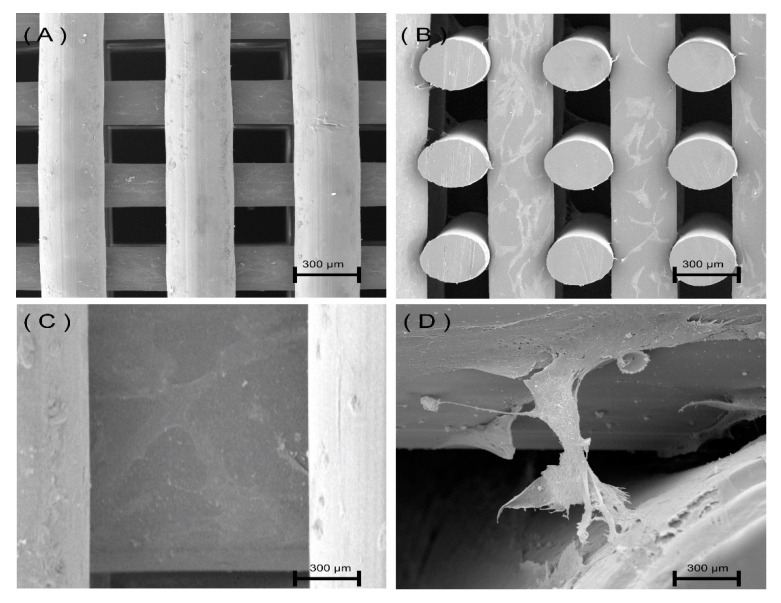
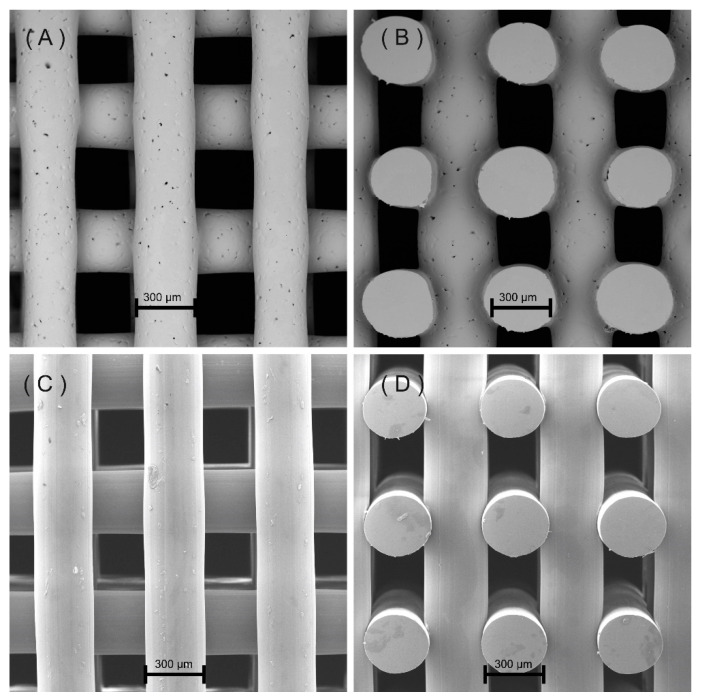
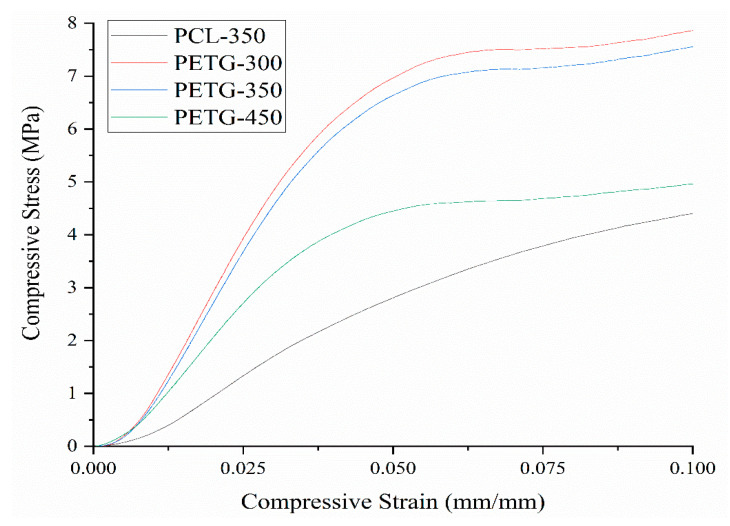
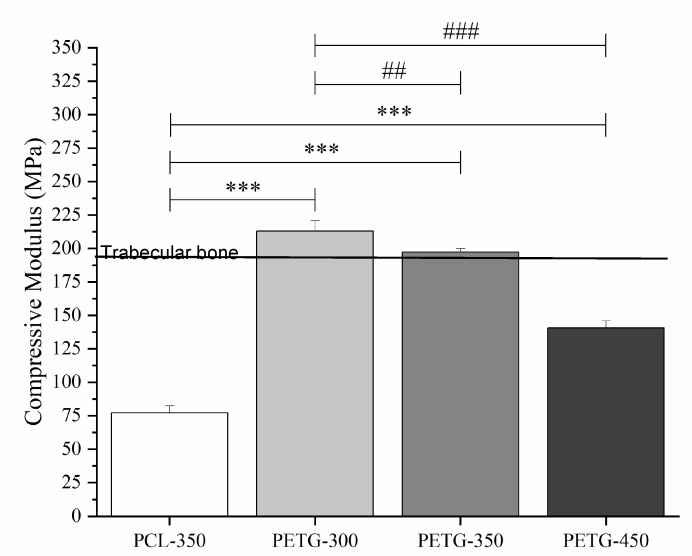
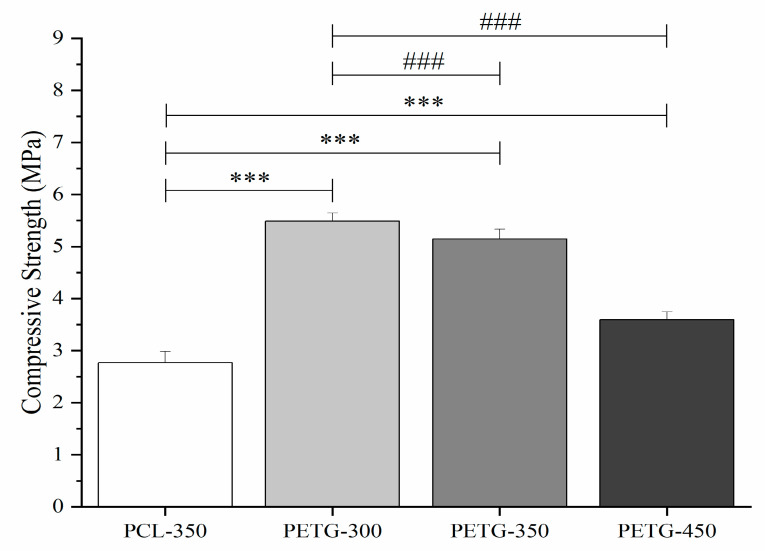
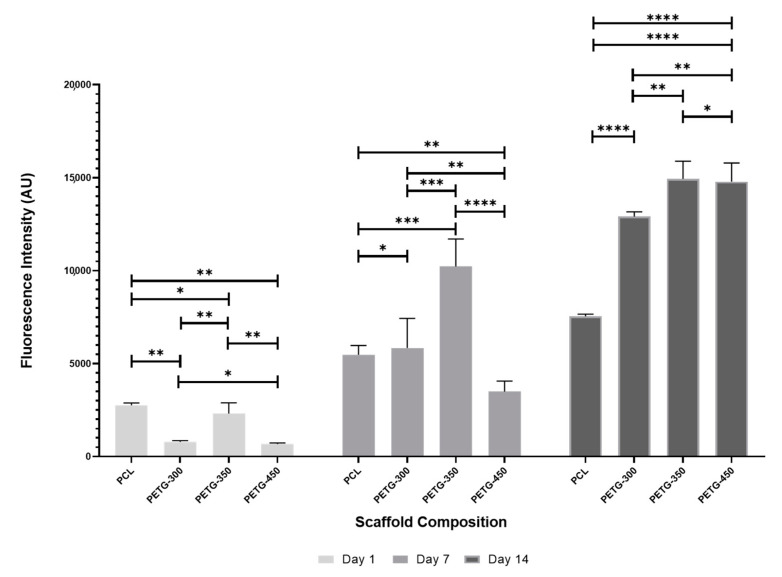
The search for materials with improved mechanical and biological properties is a major challenge in tissue engineering. This paper investigates, for the first time, the use of Polyethylene Terephthalate Glycol (PETG), a glycol-modified class of Polyethylene Terephthalate (PET), as a potential material for the fabrication of bone scaffolds. PETG scaffolds with a 0/90 lay-dawn pattern and different pore sizes (300, 350 and 450 µm) were produced using a filament-based extrusion additive manufacturing system and mechanically and biologically characterized. The performance of PETG scaffolds with 300 µm of pore size was compared with polycaprolactone (PCL). Results show that PETG scaffolds present significantly higher mechanical properties than PCL scaffolds, providing a biomechanical environment that promotes high cell attachment and proliferation.
寻找具有改善的机械和生物学特性的材料是组织工程中的一项重大挑战。本文首次研究了聚对苯二甲酸乙二酯二醇(PETG),一种聚对苯二甲酸乙二酯(PET)的二醇改性类别,作为制造骨支架的潜在材料。使用基于长丝的挤出增材制造系统制备了具有0/90铺层模式和不同孔径(300、350和450微米)的PETG支架,并对其进行了机械和生物学表征。将孔径为300微米的PETG支架的性能与聚己内酯(PCL)进行了比较。结果表明,PETG支架的机械性能明显高于PCL支架,提供了促进高细胞附着和增殖的生物力学环境。