Department of Life Sciences, MRC Centre for Molecular Bacteriology and Infection, Imperial College London, London, UK.
Cambridge Institute of Therapeutic Immunology & Infectious Disease (CITIID), Department of Medicine, University of Cambridge, Cambridge, UK.
Cell Microbiol. 2021 May;23(5):e13306. doi: 10.1111/cmi.13306. Epub 2021 Jan 17.
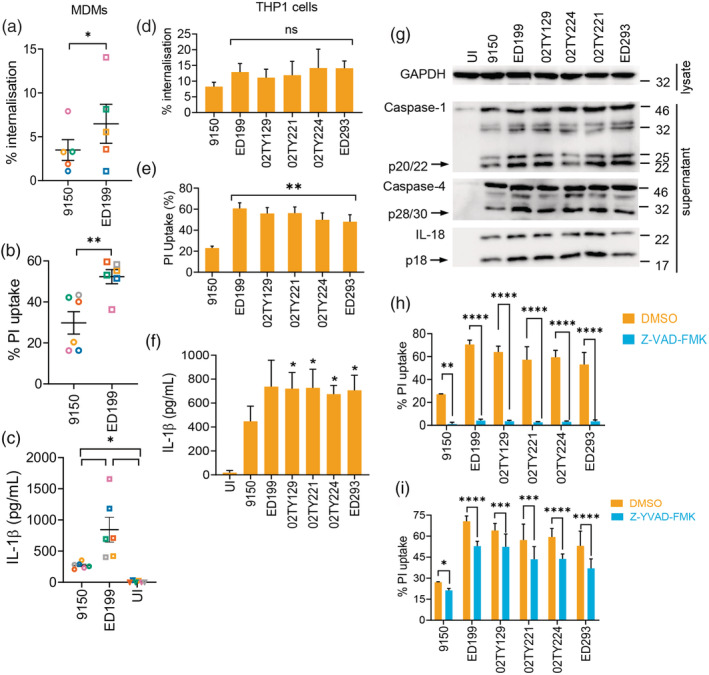
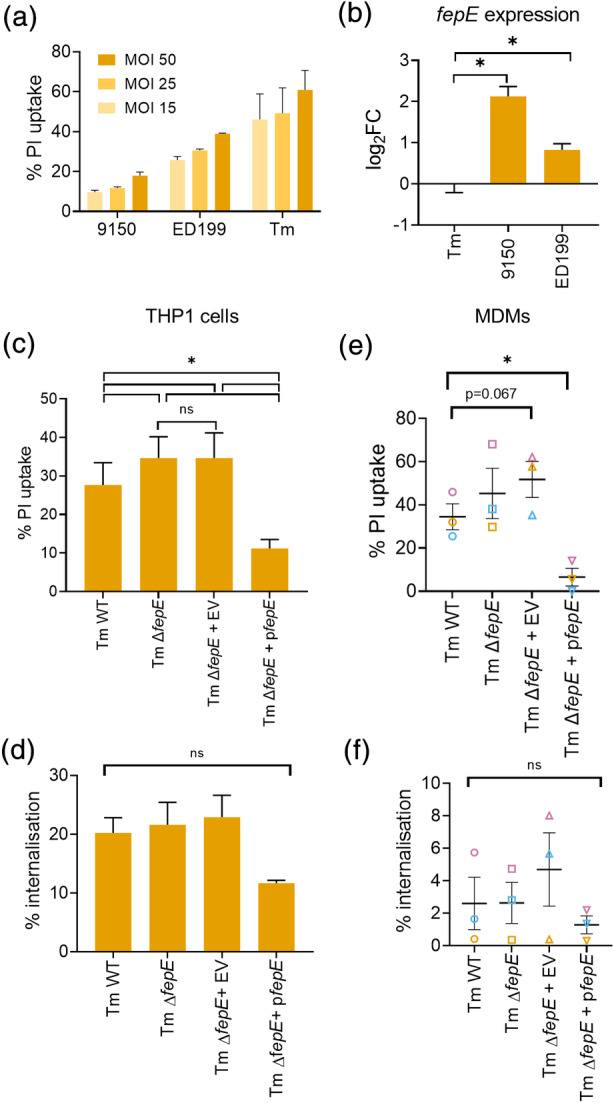
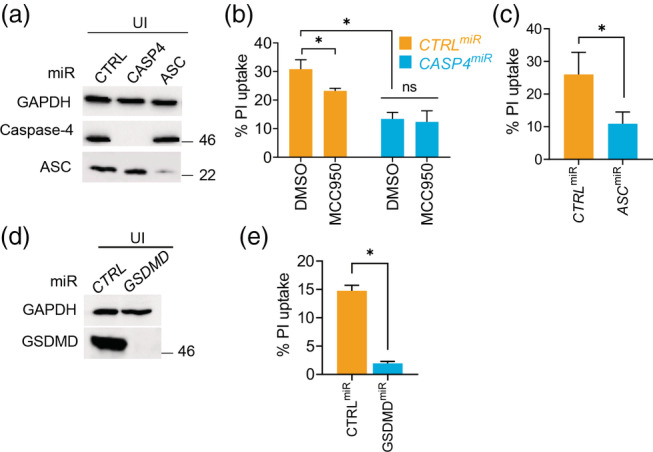
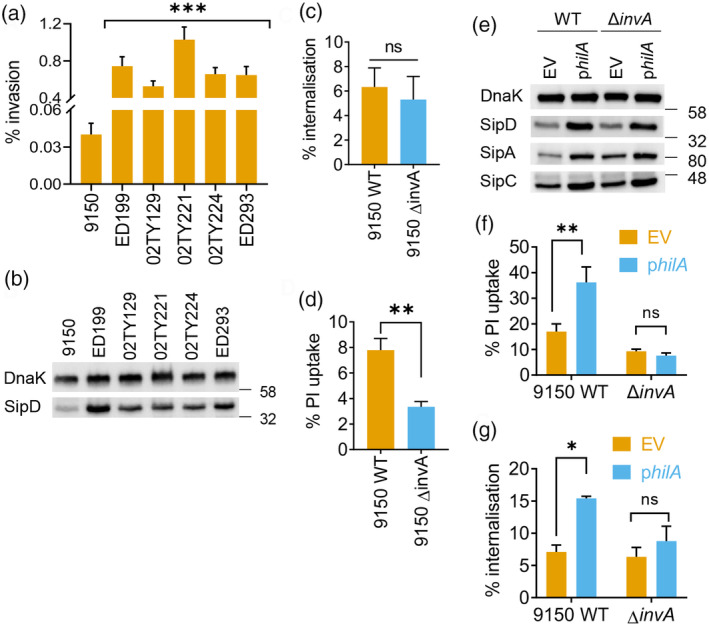
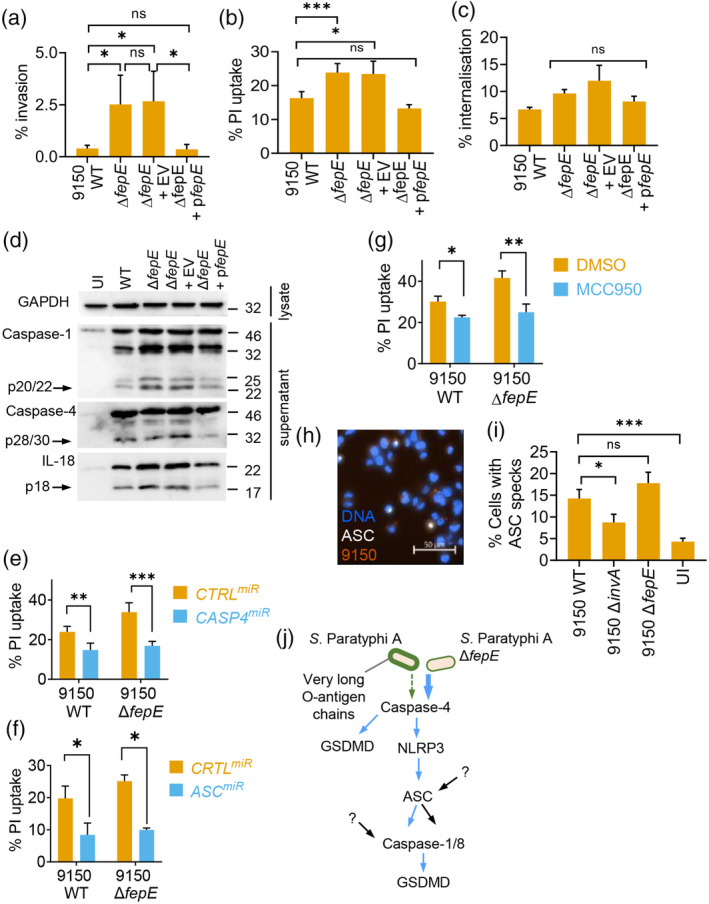
Salmonella Paratyphi A (SPtA) remains one of the leading causes of enteric (typhoid) fever. Yet, despite the recent increased rate of isolation from patients in Asia, our understanding of its pathogenesis is incomplete. Here we investigated inflammasome activation in human macrophages infected with SPtA. We found that SPtA induces GSDMD-mediated pyroptosis via activation of caspase-1, caspase-4 and caspase-8. Although we observed no cell death in the absence of a functional Salmonella pathogenicity island-1 (SPI-1) injectisome, HilA-mediated overexpression of the SPI-1 regulon enhances pyroptosis. SPtA expresses FepE, an LPS O-antigen length regulator, which induces the production of very long O-antigen chains. Using a ΔfepE mutant we established that the very long O-antigen chains interfere with bacterial interactions with epithelial cells and impair inflammasome-mediated macrophage cell death. Salmonella Typhimurium (STm) serovar has a lower FepE expression than SPtA, and triggers higher pyroptosis, conversely, increasing FepE expression in STm reduced pyroptosis. These results suggest that differential expression of FepE results in serovar-specific inflammasome modulation, which mirrors the pro- and anti-inflammatory strategies employed by STm and SPtA, respectively. Our studies point towards distinct mechanisms of virulence of SPtA, whereby it attenuates inflammasome-mediated detection through the elaboration of very long LPS O-polysaccharides.
甲型副伤寒沙门氏菌(SPtA)仍然是肠热症(伤寒)的主要原因之一。然而,尽管最近从亚洲患者中分离出的 SPtA 比例有所增加,但我们对其发病机制的了解并不完整。在这里,我们研究了感染 SPtA 的人巨噬细胞中的炎症小体激活。我们发现 SPtA 通过激活 caspase-1、caspase-4 和 caspase-8 诱导 GSDMD 介导的细胞焦亡。尽管在没有功能性沙门氏菌致病性岛-1(SPI-1)注入体的情况下观察不到细胞死亡,但 HilA 介导的 SPI-1 调控子的过表达增强了细胞焦亡。SPtA 表达 FepE,一种 LPS O-抗原长度调节剂,可诱导产生非常长的 O-抗原链。使用 ΔfepE 突变体,我们确定了非常长的 O-抗原链会干扰细菌与上皮细胞的相互作用,并损害炎症小体介导的巨噬细胞细胞死亡。鼠伤寒沙门氏菌(STm)血清型的 FepE 表达低于 SPtA,引发更高的细胞焦亡,相反,增加 STm 中的 FepE 表达会降低细胞焦亡。这些结果表明,FepE 的差异表达导致血清型特异性炎症小体调节,这反映了 STm 和 SPtA 分别采用的促炎和抗炎策略。我们的研究表明了 SPtA 具有不同的毒力机制,它通过产生非常长的 LPS O-多糖来减弱炎症小体介导的检测。