Department of Experimental, Diagnostic and Specialty Medicine, S. Orsola-Malpighi University Hospital, Bologna, Italy.
Division of Oncology, Azienda Ospedaliero-Universitaria di Bologna, Bologna, Italy.
Cancer Control. 2020 Jan-Dec;27(1):1073274820983013. doi: 10.1177/1073274820983013.
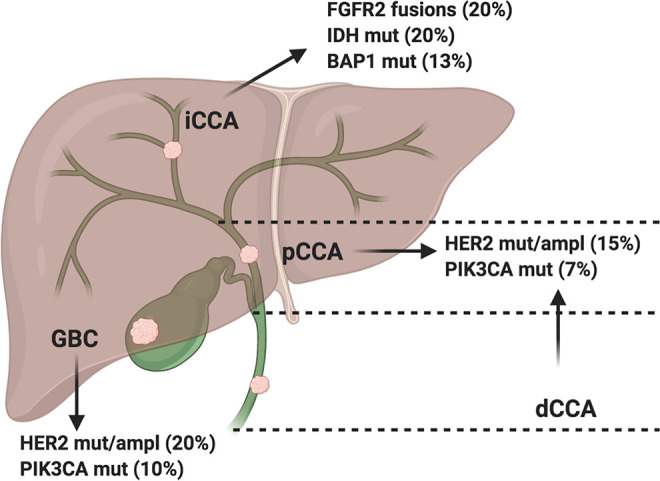
Biliary tract cancers (BTCs) represent a heterogeneous group of aggressive solid tumors with limited therapeutic options, and include gallbladder cancer (GBC), ampulla of Vater cancer (AVC), intrahepatic cholangiocarcinoma (iCCA) and extrahepatic cholangiocarcinoma (eCCA).
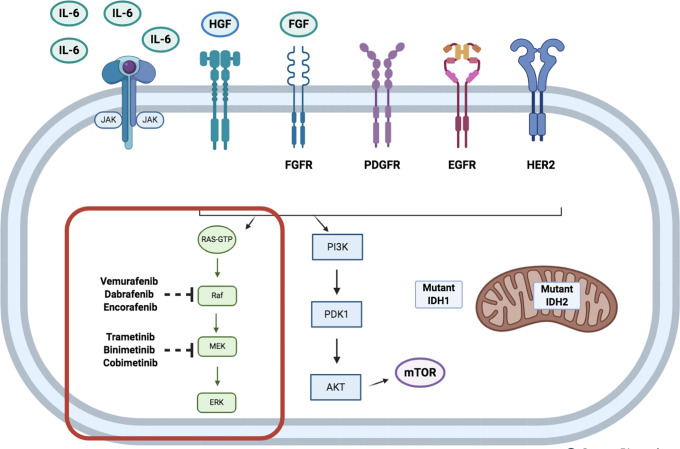
METHODS & RESULTS: In the current review, we will discuss recent results of clinical trials testing targeted therapies in BRAF-mutant BTCs, with a particular focus on the recently published Phase II ROAR trial and ongoing active and recruiting clinical trials.
Although the extended use of molecular profiling has paved the way toward a new era in BTC management, targeted therapies are limited to iCCA so far, and the prognosis of patients with metastatic disease has substantially not changed in the last decade. In this discouraging scenario, BRAF inhibition is currently emerging as a novel treatment option in patients harboring BRAF mutations.
胆道癌(BTC)是一组具有侵袭性的异质性实体肿瘤,治疗选择有限,包括胆囊癌(GBC)、壶腹癌(AVC)、肝内胆管癌(iCCA)和肝外胆管癌(eCCA)。
在本综述中,我们将讨论最近在 BRAF 突变型 BTC 中进行的临床试验中靶向治疗的结果,特别关注最近发表的 II 期 ROAR 试验和正在进行的活跃和招募临床试验。
尽管分子谱分析的广泛应用为 BTC 管理开辟了一个新时代,但到目前为止,靶向治疗仅限于 iCCA,而且在过去十年中,转移性疾病患者的预后并没有实质性改变。在这种令人沮丧的情况下,BRAF 抑制目前作为携带 BRAF 突变的患者的一种新的治疗选择出现。